
Can You Die From Anxiety? What Panic Can and Cannot Do to Your Body
Let us answer the question directly, because when you need this answer you usually need it quickly: no, you cannot die from a panic attack. Anxiety, even at its overwhelming worst, is not fatal. The NHS is explicit that panic attacks, while frightening, are not dangerous and should not cause you physical harm. The pounding heart, the tight chest, the certainty that something catastrophic is seconds away: these are symptoms of a fear response, not signs of a body shutting down.
That said, “can you die from anxiety” deserves a fuller answer than one reassuring sentence, because the fear has layers. What is panic actually doing to my heart? What about years of chronic stress? How do I know this chest pain is anxiety at all? This article works through each layer honestly, without alarm and without glossing over the genuine parts. It is part of our guide to the physical effects of anxiety.
Why panic feels life-threatening
A panic attack is the body’s emergency system firing at full strength without an emergency. Adrenaline floods the bloodstream. Your heart rate jumps, which we unpack in our guide to rapid heartbeat and anxiety. Breathing speeds up, the chest wall tightens, and muscles brace. Blood shifts towards the large muscles, the skin sweats and tingles, and over-breathing makes you dizzy and lightheaded. Some people feel the world go distant and dreamlike, a symptom called derealisation.
Every one of those sensations is designed to feel urgent. The system exists to make an ancestor sprint from a predator, and it works by demanding total attention. When it fires in a supermarket queue, the brain scans for an explanation, finds none, and concludes the threat must be internal: heart attack, suffocation, collapse. That conclusion is understandable, and it is wrong. A sense of impending doom is itself one of the recognised symptoms of a panic attack, listed as such on the NHS panic disorder page. The feeling of dying is part of the attack, not information about your body.
What a panic attack cannot do to you
- It cannot stop a healthy heart. A panic attack makes the heart beat fast because adrenaline tells it to, exactly as a hard hill climb does. A healthy heart is built for this. Racing at 120 or 140 beats per minute for some minutes is work the heart performs comfortably during ordinary exercise. The chest pain that often comes with panic is usually muscle tension and over-breathing, which is why it is worth reading our guide to anxiety chest pain when calm.
- It cannot stop your breathing. Panic makes you feel you cannot get air while you are actually breathing more than you need. That over-breathing, not a lack of oxygen, causes the dizziness and tingling. Your breathing is protected by automatic reflexes that no panic attack can switch off.
- It very rarely causes fainting. Fainting generally needs a drop in blood pressure, and panic raises blood pressure. The exception is blood and injury phobia, which triggers a different reflex; outside that specific situation, feeling faint during panic almost never ends in collapse.
- It cannot make you lose your mind. Feeling detached or unreal during intense fear is dissociation, a protective mechanism, not the beginning of psychosis. It fades as the adrenaline does.
Panic attacks are also self-limiting. The NHS notes most last somewhere between 5 and 30 minutes, because the body cannot sustain the surge: adrenaline is metabolised and the system resets. The attack always ends, whether or not you fight it.
Can anxiety cause a heart attack?
A panic attack does not cause a heart attack in a healthy heart. The confusion is understandable because the symptoms overlap so heavily, but the mechanisms are different: a heart attack involves blocked blood supply to heart muscle, and panic does not block anything.
Two honest caveats belong here. First, in people who already have significant heart disease, severe acute stress can occasionally act as a trigger for cardiac events, which is one reason new, unexplained chest symptoms deserve proper assessment even in a lifelong worrier. Second, there is a rare condition called takotsubo cardiomyopathy, sometimes called broken heart syndrome, in which sudden extreme shock, such as an unexpected bereavement, temporarily weakens the heart muscle. It is uncommon, it is usually reversible with treatment, and it is not what is happening during everyday panic attacks.
The practical rule that follows: get chest symptoms checked once, properly. If investigations are clear, you can treat your familiar pattern as panic with real confidence, and that confidence itself weakens future attacks.
What long-term anxiety does, and does not, do
Living with untreated anxiety for years is a different question from surviving a panic attack, and it deserves a straight answer too. Research links chronic stress with raised blood pressure over time and a somewhat higher long-term risk of cardiovascular problems. Part of this runs through the body’s stress systems, and part runs through what chronic anxiety does to daily life: worse sleep, more smoking and alcohol, less movement. We look at the blood pressure side in detail in our guide to anxiety and blood pressure.
Hold this fact gently, because it means the opposite of what fear says it means. It is an association built across decades, not a countdown, and every strand of it is modifiable. Treating anxiety, sleeping better, moving more and drinking less all bend the curve, at any age. The most immediate cost of untreated anxiety is not cardiac at all: it is the shrinking life of avoided trains, declined invitations and constant monitoring. That is also the part treatment reverses first.
Anxiety disorders are among the most treatable conditions in mental health. NICE recommends cognitive behavioural therapy (CBT) as a first-line treatment, and CBT for panic teaches your brain, through experience, that the sensations are survivable and the catastrophe never arrives. In England you can refer yourself directly to NHS Talking Therapies; elsewhere in the UK your GP can point you to local services. If attacks are recurring and the fear of the next one is organising your days, that pattern has a name, panic disorder, and a well-mapped way out, covered in our guide to panic disorder.
When symptoms need a 999 call
Reassurance must never become a reason to ignore a real emergency, so here is the boundary, stated once and plainly. Call 999 if chest pain feels like squeezing, heaviness or tightness across the chest, spreads to the arm, jaw, neck or back, arrives with sweating, nausea, severe breathlessness or fainting, or lasts more than 15 minutes. Call 999 too if this is your first severe episode or it feels clearly different from your usual anxiety. Emergency staff assess chest pain all day and would far rather see a panic attack than miss a heart attack; nobody will judge you, and a clear result is valuable treatment for the anxiety itself.
For urgent concerns that are not an emergency, NHS 111 can advise. And if fear ever tips into thoughts of harming yourself, call Samaritans free on 116 123, at any hour, or 999 if you are in immediate danger.
Riding out a panic attack
Knowing you are safe is half the work; the other half is having something to do for the next ten minutes. Name it: “this is a panic attack, it peaks and passes.” Lengthen your out-breath: in through the nose for four, out slowly for six. Anchor your senses with the 5-4-3-2-1 method from our grounding techniques for anxiety, and stay where you are if it is safe, because leaving teaches the brain that the place was the danger. For the full step-by-step, keep our guide on what to do during a panic attack somewhere easy to find.
One more pattern worth naming: if you spend hours between attacks checking your pulse, scanning your body and researching symptoms, the fear of illness may have become its own engine. Our guide to health anxiety is written for exactly that loop, and it responds to the same treatments.
The bottom line
You cannot die from a panic attack, and anxiety is not a fatal condition. Panic is a false alarm wired to feel true: a healthy body performing its emergency routine at the wrong moment, then standing down. The genuine long-term risks of chronic stress are real but gradual and changeable, and the fastest way to change them is to treat the anxiety, which is very treatable indeed. Get new symptoms checked once, take the clear result seriously, and then spend your energy not on surviving attacks, which your body already handles, but on the treatment that makes them rare.
Are you having a panic attack right now? Open the Panic SOS appFrequently Asked Questions
Can you die from a panic attack?
No. A panic attack cannot kill you. The NHS is clear that panic attacks, while frightening, are not dangerous and should not cause you physical harm. The racing heart, breathlessness and sense of doom are produced by adrenaline, peak within minutes and then subside. The feeling that you are dying is a symptom of panic, not a signal of what is actually happening.
Can anxiety cause a heart attack?
A panic attack does not cause a heart attack in a healthy heart. In people who already have heart disease, severe acute stress can occasionally act as a trigger for cardiac events, which is one reason new or unexplained chest symptoms should always be checked. Once your heart has been examined and cleared, recurring panic sensations can be treated confidently as anxiety.
Can you faint during a panic attack?
It is rare. Fainting usually requires a drop in blood pressure, and panic typically raises blood pressure rather than lowering it. The dizziness of a panic attack comes mainly from over-breathing and almost never leads to collapse. The main exception is blood and injury phobia, where a distinct reflex can cause fainting in response to needles or blood.
Does long-term anxiety shorten your life?
Years of untreated chronic stress are associated in research with higher blood pressure and somewhat higher cardiovascular risk, partly through lost sleep, smoking, alcohol and inactivity. This is an association built over decades, not a sentence, and every part of it is modifiable. Treating the anxiety and rebuilding sleep, movement and habits changes the trajectory.
How do I know if it is panic or a heart attack?
You cannot always tell from symptoms alone, and no one expects you to. Call 999 if chest pain feels like squeezing or heavy pressure, spreads to your arm, jaw, neck or back, comes with sweating, nausea or severe breathlessness, or lasts more than 15 minutes. If it is your first severe episode, or it feels different from your usual anxiety, get it checked. Once investigated and cleared, you can treat familiar episodes as panic with much more confidence.
Related Articles
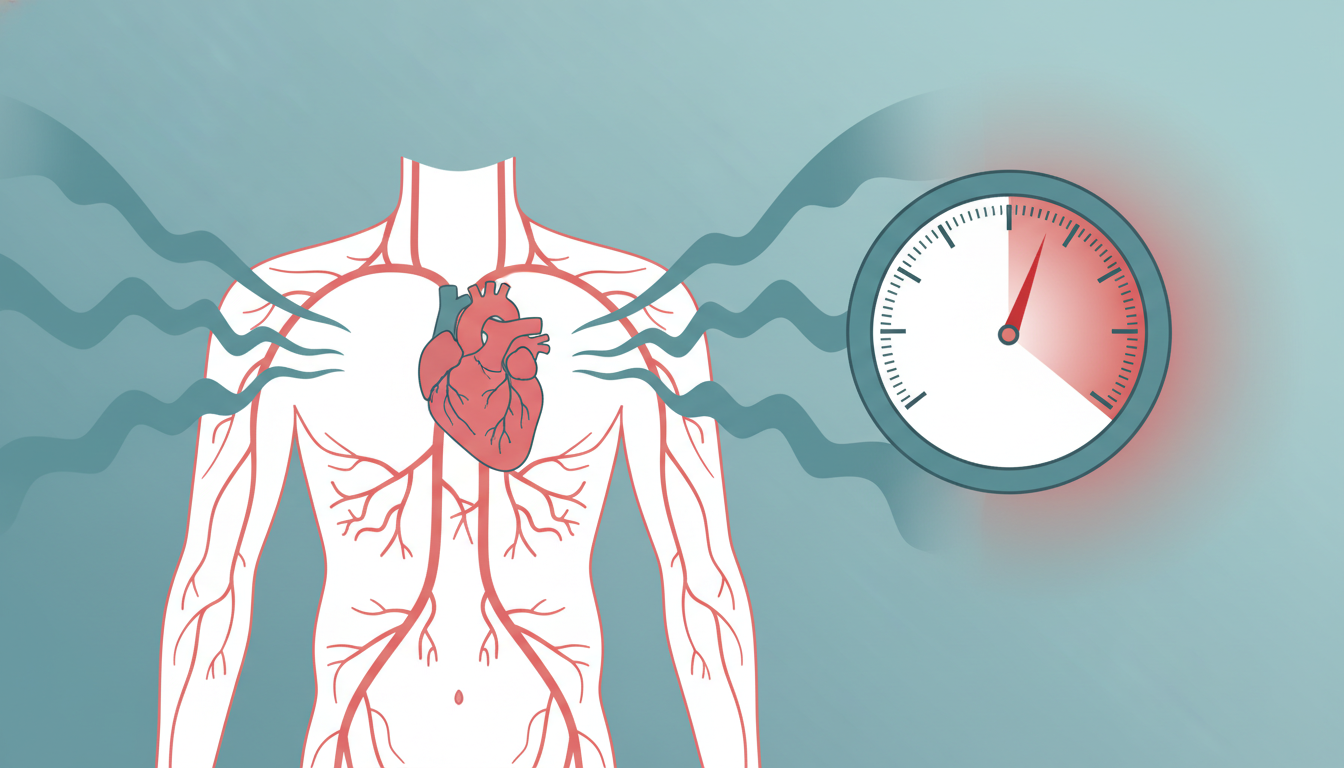
Anxiety and High Blood Pressure: Understanding the Connection
Can anxiety cause high blood pressure? Learn about the link between anxiety and blood pressure, what the research says, and how to manage both effectively.
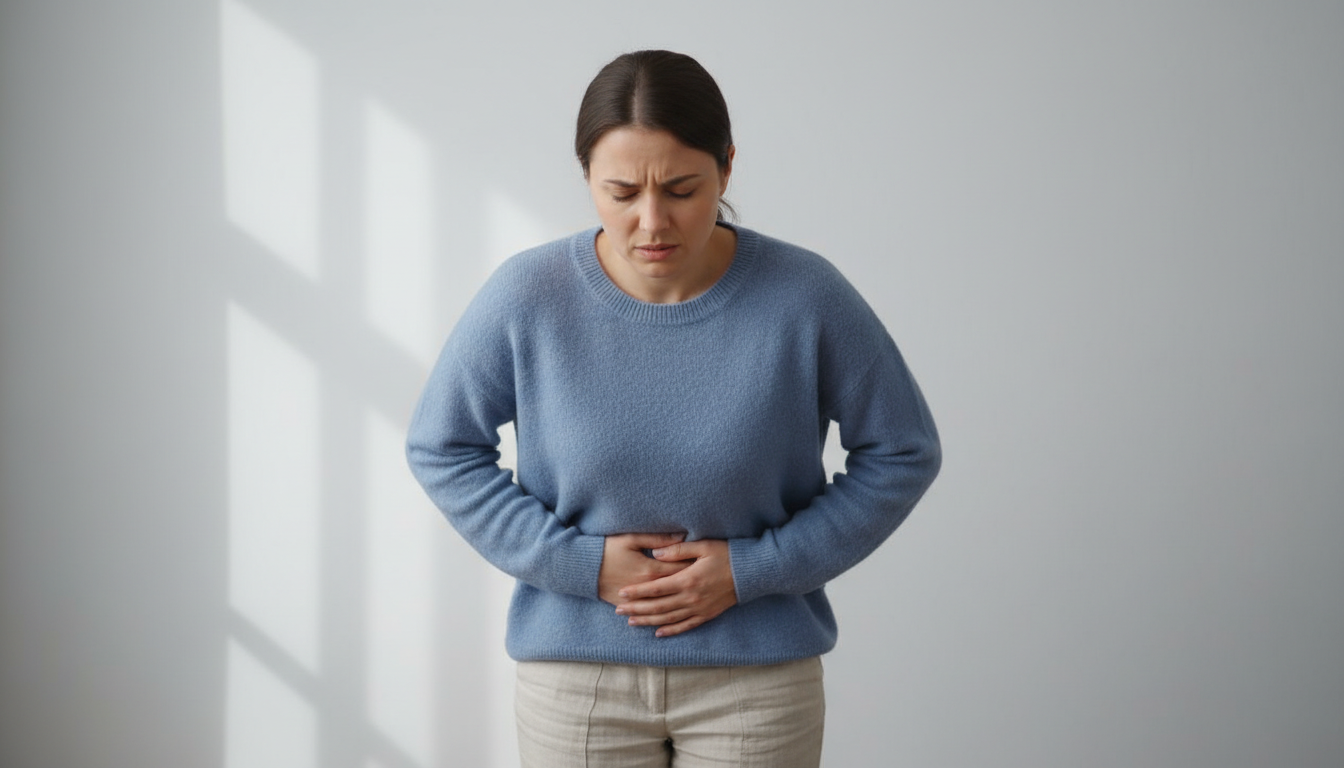
Anxiety Chest Pain: What It Feels Like, How Long It Lasts and How to Relieve It
Chest pain in an anxiety attack can feel terrifying. Learn how long anxiety chest pain lasts, how to relieve it, how it differs from a heart attack, and when to call 999.

How to Handle Health Anxiety: When Worry About Illness Takes Over
Health anxiety can take over your life. Learn how to handle health anxiety, stop the checking and googling cycle, and get effective help through the NHS.