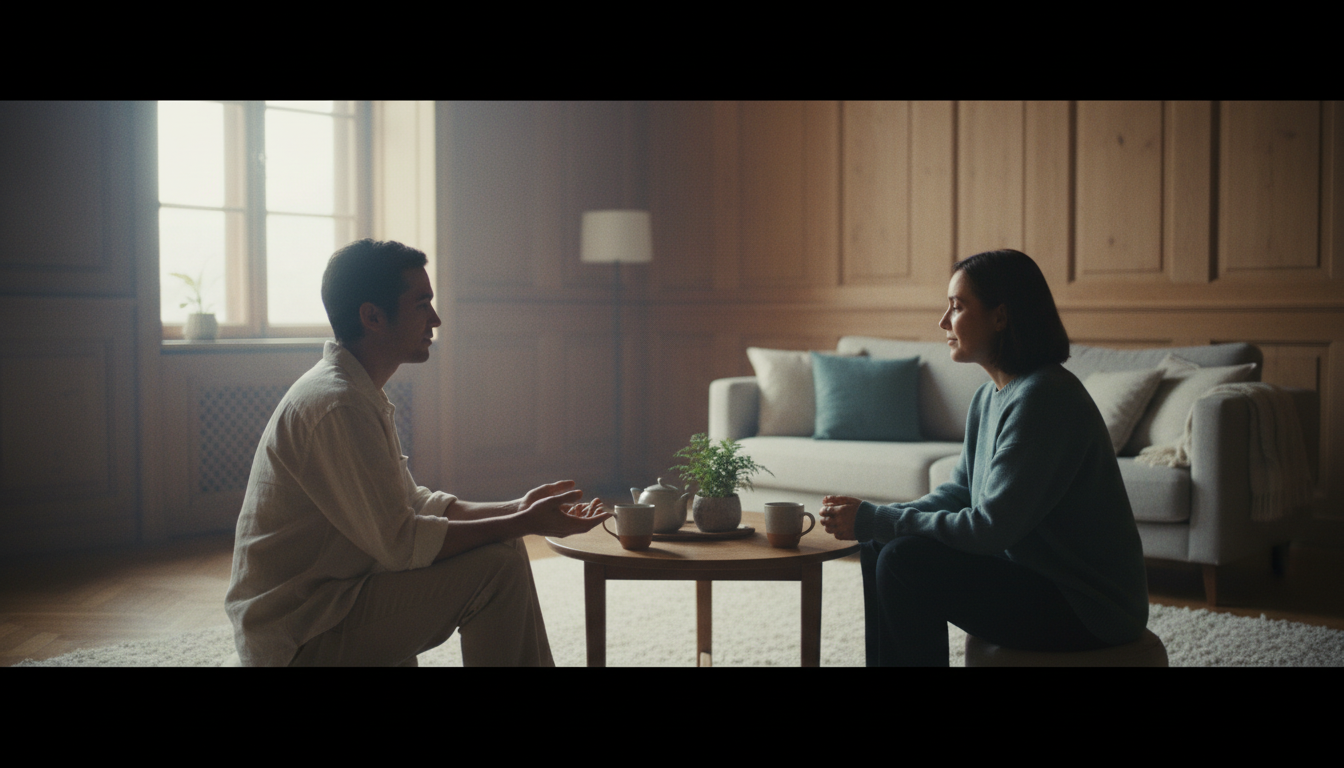
How to Stop a Panic Attack Fast: What to Do Step by Step
What Happens During a Panic Attack
A panic attack is your body’s alarm system switching on as if there were immediate danger. The brain releases stress hormones such as adrenaline, which speed up the heart and breathing and prepare the muscles to act. It is the right response to a genuine emergency, fired at the wrong moment.
Breathing usually becomes faster and shallower. This lowers carbon dioxide levels in the blood, which causes dizziness, tingling in the hands or lips and a strange sense that things are not quite real. Those sensations feel alarming, so the alarm system fires harder, and the panic feeds itself. Almost everything in the first aid below works by interrupting that loop.
The surge is intense but short. Symptoms typically peak within about 10 minutes, and most attacks pass within 5 to 30 minutes, because the body cannot sustain that level of activation for long. Common symptoms include a racing or pounding heart, chest tightness, breathlessness, sweating, trembling, nausea, pins and needles, and a powerful fear of losing control, collapsing or dying. Frightening as they are, panic attacks themselves are not life-threatening, as the NHS explains in its guidance on anxiety, fear and panic.
This page is part of our anxiety disorders resources and focuses on first aid: what to do in the minutes before, during and after an attack. If your attacks are frequent or you have started avoiding places because of them, our guide to panic disorder covers the bigger clinical picture and treatment. And if you are not sure whether what you experience is panic at all, start with the difference between anxiety attacks and panic attacks.
One caution before the steps. Panic can mimic medical emergencies, and some emergencies can be mistaken for panic. If this is your first episode, if you have heart or lung problems or other health risks, or if you have new, severe or unusual symptoms such as chest pain that does not ease, get medical assessment rather than assuming it is panic.
How to Stop a Panic Attack Fast: Six Steps
The aim is not to force the attack to stop. It is to stop feeding it, so the surge peaks and passes on its own. Keep the actions small and concrete.
1. Name it. Say to yourself, quietly or out loud: this is a panic attack, it is not dangerous, and it will pass. Putting words to the experience helps bring the thinking part of your brain back online and cuts the fear-of-the-fear that keeps the loop spinning.
2. Lengthen your out-breath. Slow breathing with a longer exhale is the fastest reliable way to engage the body’s calming response. Breathe in gently through your nose for about four counts, then out slowly through your mouth for about six. Do not force deep gulps of air, which can make the dizziness worse; slow and steady beats deep. Continue for at least a couple of minutes. If counting helps you, box breathing (four in, hold four, four out, hold four) works on the same principle. Our breathing exercises for anxiety walk through these patterns in detail.
3. Ground yourself through your senses. Press your feet into the floor and notice the weight of your body in the chair. Then run the 5-4-3-2-1 exercise: name five things you can see, four you can touch, three you can hear, two you can smell and one you can taste. Move slowly and describe each item to yourself. More options are in our guide to grounding techniques for anxiety.
4. Ride the wave. Let the sensations be there rather than wrestling with them. A panic attack is a wave: it rises, peaks and falls, usually within minutes. Fighting it, scanning your body for danger or willing your heart to slow down all add fuel. Acceptance sounds passive, but it is the most active thing you can do.
5. Unclench your body. Panic loads tension into the shoulders, jaw and hands. Deliberately tense your fists for five seconds, then release, and let your shoulders drop away from your ears. Working through a few muscle groups this way, known as progressive muscle relaxation, gives the adrenaline somewhere to go and signals that the emergency is over.
6. Stay where you are. If you are safe, resist the urge to escape. Leaving brings relief in the moment, but it teaches your brain that the supermarket, the train or the meeting room was the danger, which makes the next attack more likely there. Staying until the wave passes teaches the opposite lesson. If you are somewhere genuinely unsafe to pause, such as driving, pull over safely first.
How to Distract Yourself During a Panic Attack
Distraction is a useful bridge while the adrenaline burns off, especially early in an attack when breathing feels impossible to control. Options that work for many people:
- A strong, safe sensation: splash cold water on your face, hold an ice cube, or press your palms firmly together.
- Mental effort: count backwards from 100 in sevens, name an animal for every letter of the alphabet, or list every film you have seen this year.
- A repetitive task: tidy a drawer, sort coins, walk slowly and count your steps.
Two caveats. Test techniques when you are calm, so they are familiar under pressure. And use distraction as a bridge, not a wall: if you come to rely on it to escape every trace of anxiety, it can quietly turn into avoidance, which keeps panic alive.
What Not to Do
- Do not fight the symptoms. Struggling against the sensations intensifies them. The goal is to let the wave pass, not to win against it.
- Do not gulp deep breaths. Overbreathing lowers carbon dioxide further and worsens dizziness and tingling. Slow the breath instead, with a longer exhale.
- Do not flee if you are safe. Escape brings short-term relief and long-term reinforcement of the fear.
- Do not use alcohol or drugs to cope. They may blunt the moment but reliably worsen anxiety afterwards, and they get in the way of real treatment.
- Do not start avoiding the place it happened. Avoidance is how one bad afternoon becomes a no-go zone. Going back, ideally soon and with a plan, stops the fear spreading. If public places are the sticking point, see our guide to managing panic attacks in public spaces.
How to Help Someone Having a Panic Attack
If you are with someone mid-attack, your calm is the most useful tool in the room. The same approach works whether they would call it a panic attack or an anxiety attack.
- Stay, and stay calm. Speak slowly, softly and in short sentences. Your steadiness is contagious, and so is your alarm.
- Name it gently. Something like: it looks like a panic attack, it will pass, you are safe, I am staying with you.
- Breathe with them. Model a slow rhythm with a longer out-breath and invite them to follow. Doing it together works better than instructing.
- Ask, do not assume. Some people want a hand on the shoulder, others cannot bear being touched or crowded. Ask what helps.
- Skip the platitudes. Telling someone to calm down or that there is nothing to worry about tends to land as pressure. Reassure that the feeling is temporary, not that it is silly.
- Afterwards, offer water and a few quiet minutes, and let them decide when to talk about it.
Get urgent medical help if they have severe chest pain, severe breathlessness, they faint, or the symptoms are clearly different from anything they have experienced before.
After a Panic Attack
Expect to feel wrung out. Exhaustion, shakiness and feeling spaced out for a few hours are normal after-effects of a large adrenaline surge, not signs that something is still wrong.
Help your body settle: sip water, move gently, eat something if you have not eaten, and keep the rest of the day as normal as you can. If you feel fragile, park the post-mortem; you do not have to analyse the attack straight away.
When you are ready, make a short note of when and where it happened, what you were doing and what helped. If attacks repeat, this diary becomes genuinely useful to your GP or therapist for spotting patterns and planning treatment. And as far as possible, return to the place where it happened rather than steering around it, so the fear has no room to grow.
Reducing the Chance of Future Attacks
First aid manages the wave; prevention lowers the sea level. The factors that most reliably reduce panic frequency are unglamorous: regular and sufficient sleep, cutting down caffeine, keeping alcohol modest, staying physically active and practising breathing or relaxation daily rather than only in emergencies.
If panic attacks keep coming back, treatment works. NICE recommends cognitive behavioural therapy (CBT) for panic disorder, which targets the catastrophic interpretations and avoidance that keep panic going, often alongside gradual, planned exposure to feared situations. A GP can also discuss whether medication has a role while therapy is under way. Some medicines can ease symptoms in difficult periods but carry risks such as dependence, so they are prescribed with supervision and reviewed regularly; they are a decision to make with your GP, not a long-term substitute for treating the panic itself.
When to Seek Help
Call 999 or go to A&E if you or someone else has severe chest pain, severe shortness of breath, fainting or loss of consciousness, or any symptom that could signal a medical emergency. If it is your first ever episode and you are older or have heart risk factors, get medical assessment promptly rather than waiting.
For urgent mental health concerns that are not life-threatening, contact NHS 111. If you need to talk to someone at any hour, Samaritans are on 116 123, free from any phone.
See your GP if panic attacks are happening repeatedly, you have started avoiding places or activities, or day-to-day life is being affected. They can rule out physical causes and refer you onwards. In England you can also refer yourself directly to NHS Talking Therapies for free, evidence-based treatment; routes and services differ in Scotland, Wales and Northern Ireland, where your GP or local health board can point you to the equivalent support.
Are you having a panic attack right now? Open the Panic SOS appFrequently Asked Questions
How do you stop a panic attack fast?
Name what is happening, then slow your breathing so the out-breath is longer than the in-breath, and ground yourself through your senses with the 5-4-3-2-1 technique. Stay where you are if it is safe and let the wave pass rather than fighting it. Most panic attacks peak within about 10 minutes and pass within 5 to 30 minutes.
What should you do during a panic attack?
Keep it simple. Tell yourself this is a panic attack and it will pass, lengthen your out-breath, press your feet into the floor and notice what you can see, hear and touch. Avoid fleeing the situation if you are safe, because staying helps the episode end sooner and teaches your brain that you can cope.
How long does a panic attack last?
Panic attacks usually reach peak intensity within about 10 minutes and most pass within 5 to 30 minutes, because the body cannot sustain that level of activation for long. Feeling drained, shaky or spaced out for a few hours afterwards is a normal after-effect of the stress response, not the attack continuing.
How do you help someone having a panic attack?
Stay with them, keep your own voice slow and calm, and remind them gently that this is panic, that it will pass and that they are safe. Offer to breathe with them, making the out-breath longer than the in-breath, and avoid crowding them or telling them to calm down. If they have severe chest pain, faint or the symptoms are unlike anything they have had before, seek urgent medical help.
How long does an anxiety attack last?
An anxiety attack builds more gradually than a panic attack and can last from several minutes to a few hours, sometimes persisting at a lower level throughout the day while the underlying worry is active. The same first aid helps, with breathing, grounding and staying with the situation, but the settling tends to be more gradual.
Related Articles
Anxiety Attack Symptoms: How to Recognise and Stop an Attack Quickly
Learn to recognise anxiety attack symptoms and how to stop an anxiety attack quickly, with breathing and grounding steps plus clear NHS guidance on when to seek help.

Panic Attack vs Anxiety Attack: What’s the Difference?
Panic attack vs anxiety attack, compared clearly. How they differ in onset, intensity and duration, how long each lasts, and what to do in the moment. UK guidance.

Best Breathing Exercises for Anxiety: 8 Step-by-Step Techniques
The best breathing exercises for anxiety, with step-by-step instructions for diaphragmatic breathing, 4-7-8, box breathing and more, plus how to choose the right one.