Anxiety Chest Pain: What It Feels Like, Causes and When to Seek Help
Last updated:
⚠️ Important: If you are experiencing chest pain and are unsure of the cause, call 999 immediately. Do not wait. The information below is for educational purposes only.
What Does Anxiety Chest Pain Feel Like?
Anxiety chest pain can feel deeply alarming. In the midst of an anxious episode or panic attack, the sensations in your chest can be so intense that many people genuinely believe they are having a heart attack. Understanding what anxiety chest pain commonly feels like can help you recognise it more quickly and reduce the fear that often makes it worse.
Common Sensations
People who experience anxiety-related chest pain describe a wide range of sensations. You may experience one or several of the following:
- Sharp or stabbing pain: A sudden, piercing sensation, often felt in a specific area of the chest. This is one of the most commonly reported types of anxiety chest pain. It may come and go quickly, lasting only seconds at a time.
- Tightness or constriction: A feeling that a band is being tightened around your chest, or that something is pressing down on you. This is often associated with muscle tension in the chest wall and intercostal muscles (the muscles between your ribs).
- Burning sensation: A hot, burning feeling in the chest, sometimes extending up towards the throat. This can be related to acid reflux, which is triggered or worsened by anxiety, or to heightened sensitivity in the chest wall nerves.
- Dull, persistent ache: A low-grade, ongoing discomfort that may last for hours. This is more common in people with generalised anxiety disorder (GAD), where the body remains in a state of tension for extended periods.
- Shooting or moving pain: Pain that seems to dart around the chest or shift location. Unlike cardiac pain, which tends to be more constant in its location, anxiety chest pain often moves.
- Difficulty taking a deep breath: A feeling of breathlessness or that you cannot quite fill your lungs completely. This is frequently linked to hyperventilation and changes in breathing patterns during anxiety.
- Fluttering or pounding: A sensation of your heart pounding, skipping beats, or fluttering (palpitations). While these are not strictly chest pain, they often accompany it and contribute to the sense that something is wrong with your heart.
Duration and Timing
Anxiety chest pain typically lasts anywhere from a few seconds to around 20 minutes, though it can persist for longer if the underlying anxiety remains elevated. During a panic attack, chest pain usually peaks within 10 minutes and then gradually subsides as the attack passes. For people with generalised anxiety, a milder chest discomfort may come and go throughout the day, particularly during periods of heightened stress.
The pain often occurs during or immediately after a period of intense worry, a panic attack, or a stressful event. However, it can also appear seemingly without an obvious trigger, particularly if your body has been in a sustained state of heightened arousal.
Anxiety Chest Pain vs Heart Attack: How to Tell the Difference
One of the most frightening aspects of anxiety chest pain is the fear that it might be a heart attack. While only a medical professional can make a definitive diagnosis, understanding the typical differences between the two can help reduce your fear. However, if you are in any doubt, always err on the side of caution and seek immediate medical help.
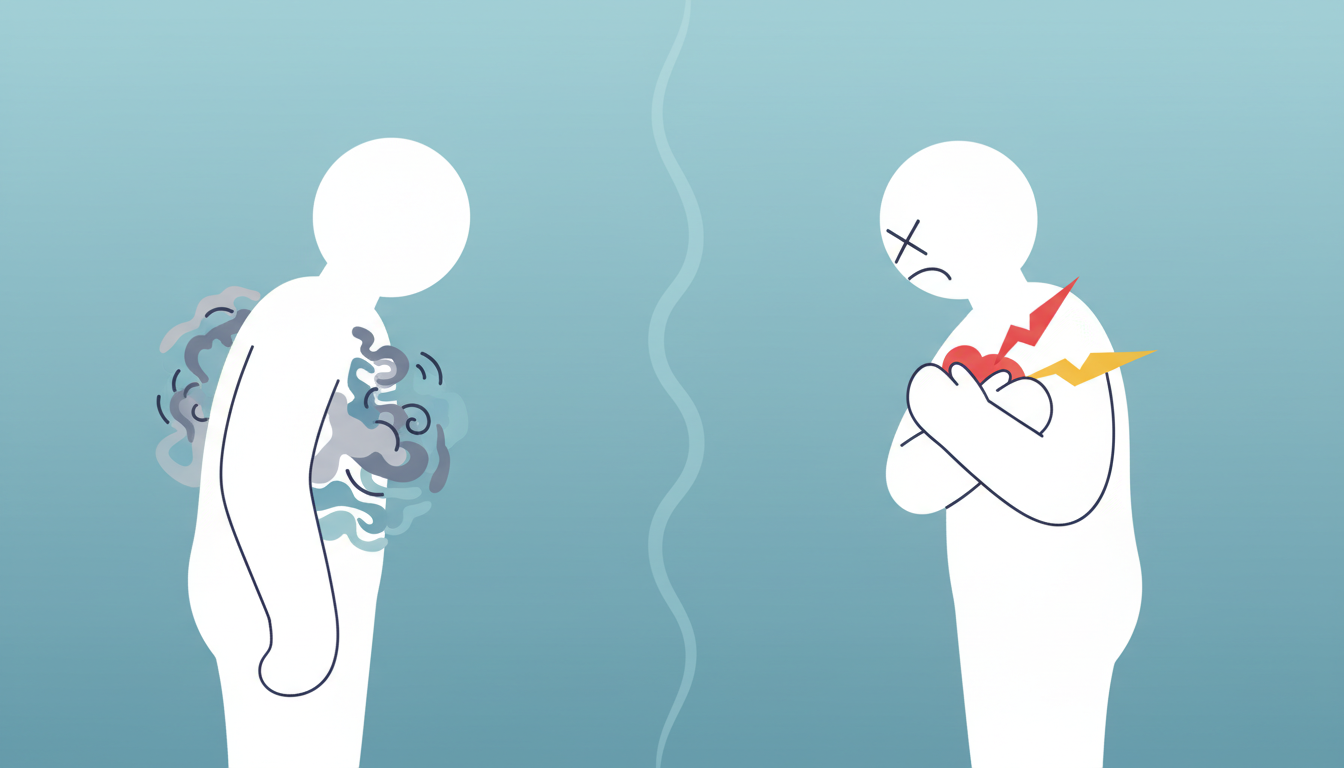
Anxiety Chest Pain: Typical Characteristics
- Tends to be sharp, stabbing or needle-like rather than a heavy, crushing pressure
- Is often localised to a specific area of the chest — you can usually point to where it hurts
- May be affected by breathing — it can worsen when you take a deep breath or change position
- Typically occurs alongside other anxiety symptoms such as racing thoughts, a sense of dread, tingling in the hands, dizziness or feeling detached from reality
- Often occurs at rest rather than during physical exertion
- Usually passes within 10-20 minutes, particularly if you use calming techniques
- May worsen when you focus attention on it and improve when you are distracted
- Does not typically radiate to the arm, jaw or back
Heart Attack: Typical Characteristics
- Often described as a crushing, squeezing or heavy pressure in the centre of the chest
- May radiate to the left arm, jaw, neck, back or stomach
- Is often accompanied by nausea, vomiting, cold sweating or breathlessness that is not related to feeling anxious
- May occur during or after physical exertion
- Does not improve with deep breathing, relaxation techniques or distraction
- May last longer than 15-20 minutes without subsiding
- The person may look pale or grey and feel a sense of impending doom beyond typical anxiety
Important Caveats
It is crucial to understand that these are general patterns, not rules. Heart attacks do not always present in the “classic” way, particularly in women, older adults and people with diabetes. Similarly, anxiety chest pain can sometimes mimic cardiac symptoms very closely. The British Heart Foundation emphasises that you should never try to self-diagnose chest pain. If you are experiencing chest pain and you are not certain of the cause, always call 999.
It is also worth knowing that having anxiety does not protect you from having a cardiac event. If your chest pain feels different from your usual anxiety symptoms, or if something simply does not feel right, seek medical attention immediately.
What Causes Anxiety Chest Pain?
Anxiety chest pain is not imaginary. It is caused by real physiological changes that happen in your body when your nervous system perceives a threat. Understanding these mechanisms can help reduce the fear that makes the symptoms worse.
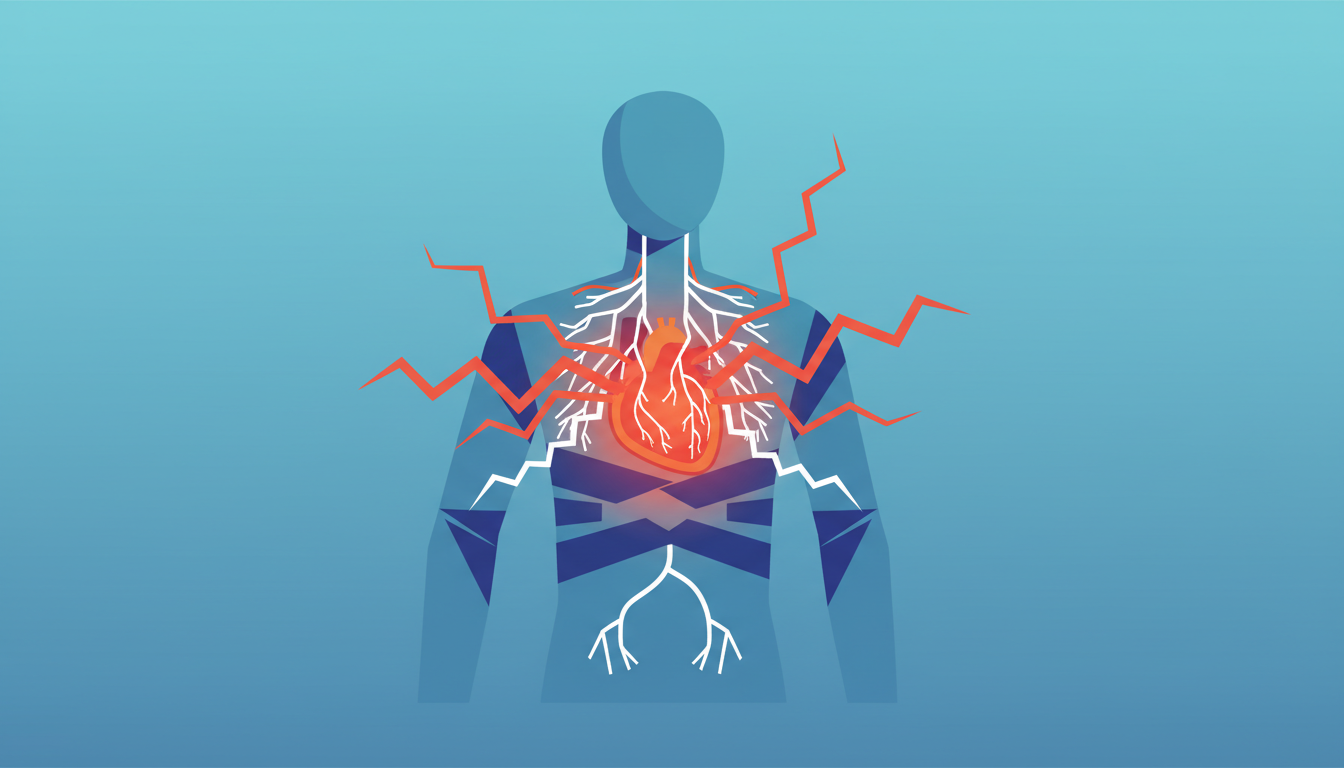
The Autonomic Nervous System and the Fight-or-Flight Response
When your brain detects a threat — whether it is a genuine danger or an anxious thought — it activates the sympathetic nervous system, triggering the well-known fight-or-flight response. Your adrenal glands release adrenaline and cortisol, causing a cascade of physical changes designed to prepare your body for action:
- Your heart rate increases and the force of each heartbeat strengthens, which can feel like pounding, racing or fluttering in your chest
- Your blood vessels constrict, raising blood pressure and creating a sensation of tightness
- Your breathing rate increases, becoming more rapid and shallow
- Blood is redirected away from your digestive system and towards your muscles
- Your muscles tense in preparation for action
All of these changes can directly produce sensations of chest pain, tightness or discomfort. The system evolved to deal with short-term physical threats (such as encountering a predator), but in modern life it can be activated by psychological stressors such as work pressure, financial worry or health concerns.
Muscle Tension
One of the most common causes of anxiety-related chest pain is tension in the intercostal muscles — the muscles that sit between your ribs and help with breathing. When you are anxious, you may unconsciously tense these muscles for extended periods without realising it. This sustained, involuntary muscle tension can create a dull ache, sharp pain, or a sensation of tightness across the chest.
The muscles of the upper back and shoulders are also frequently affected by anxiety-related tension, and this can refer pain to the chest area. The NHS notes that musculoskeletal chest pain is one of the most common types of non-cardiac chest pain seen in primary care settings.
Hyperventilation
Anxiety commonly causes changes in breathing patterns. When you are anxious, you tend to breathe more rapidly and shallowly, using your chest muscles rather than your diaphragm. This pattern, known as hyperventilation, reduces the level of carbon dioxide in your blood (a condition called respiratory alkalosis).
The drop in carbon dioxide causes several symptoms that can contribute to chest pain:
- Blood vessels constrict slightly, reducing blood flow and intensifying the sensation of chest tightness
- Nerve cells become more excitable, increasing sensitivity to pain
- The chest wall muscles fatigue from the rapid, shallow breathing
- Tingling, dizziness and light-headedness often accompany the chest symptoms, adding to the sense of alarm
Cortisol and Chronic Stress
While adrenaline produces the immediate, acute symptoms of anxiety, cortisol plays a longer-term role. When anxiety is chronic — as in generalised anxiety disorder — cortisol levels can remain elevated for extended periods. Research published in the journal Psychoneuroendocrinology has shown that sustained high cortisol can increase inflammation in the body, heighten pain sensitivity, and contribute to persistent muscle tension.
This is particularly relevant for people who experience chest discomfort not just during acute anxiety episodes, but as a near-constant background sensation. Chronic elevation of stress hormones essentially keeps the body in a state of low-level alarm, even during periods of relative calm.
Central Sensitisation
One of the most frustrating aspects of anxiety-related chest pain is that it can seem to worsen over time. This is often due to a process called central sensitisation, where the nervous system becomes increasingly reactive to stimuli that it has previously encountered.
When you have experienced chest pain during anxiety on multiple occasions, your brain begins to anticipate the pain. This anticipation increases anxiety, which increases the likelihood of experiencing pain, creating a self-reinforcing cycle. Furthermore, the fear of chest pain itself becomes a source of anxiety — you may begin to constantly monitor your body for signs of chest discomfort (a behaviour known as hypervigilance), which actually amplifies the sensations and makes the pain feel more intense.
Oesophageal Spasm and Acid Reflux
Anxiety can also affect your digestive system. Stress hormones increase stomach acid production and can cause the oesophagus to spasm, both of which can produce pain in the chest area that closely mimics cardiac symptoms. Gastro-oesophageal reflux disease (GORD) is more common in people with anxiety disorders, and the burning chest pain it causes can be particularly alarming. NICE clinical guidelines acknowledge the link between stress, anxiety and functional gastrointestinal symptoms.
Nocturnal Anxiety Chest Pain
Some people experience anxiety-related chest pain primarily at night, and this can be especially distressing. Waking from sleep with chest pain or tightness naturally triggers fears about cardiac problems, and the disorientation of being woken can make it harder to rationalise the experience.
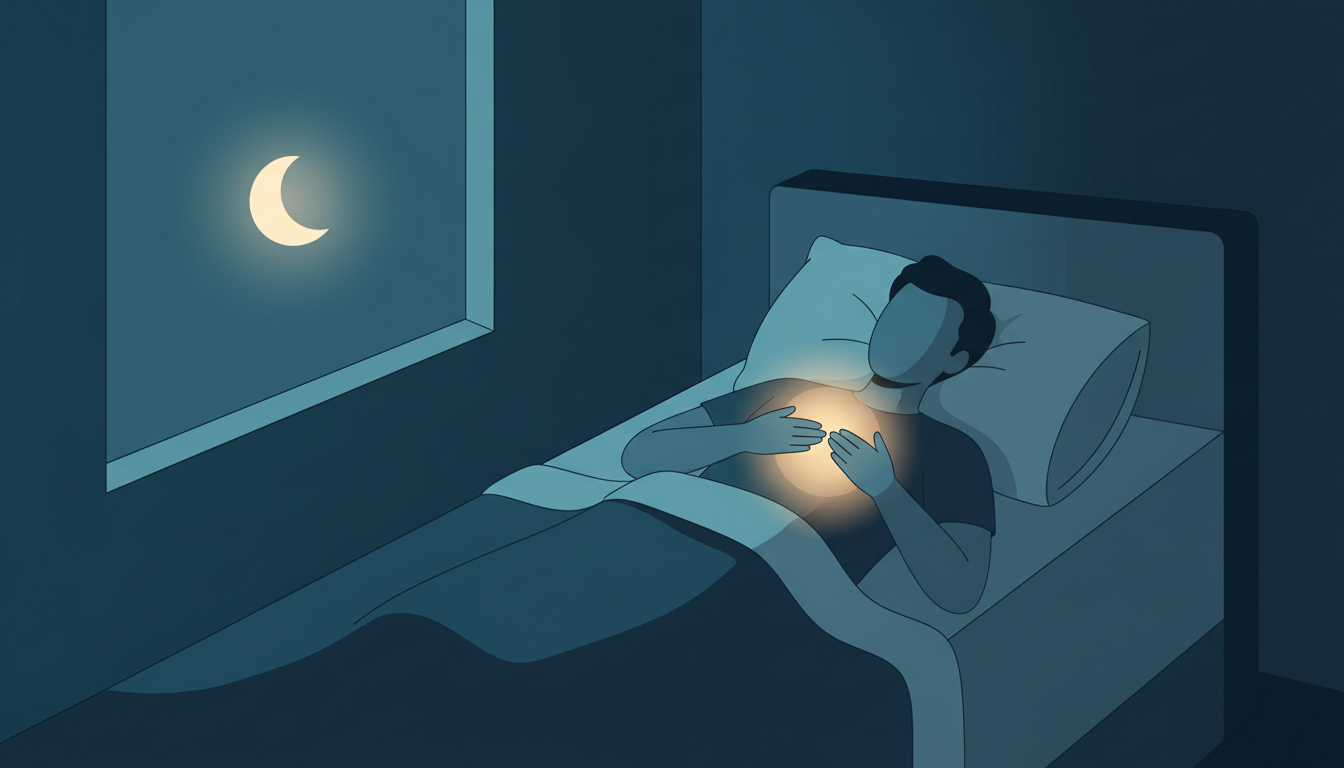
Why Does It Happen at Night?
Several factors contribute to nocturnal anxiety chest pain:
- Reduced distractions: During the day, activities, conversations and tasks can keep your mind occupied and your attention away from physical sensations. At night, in the quiet and stillness, anxious thoughts and bodily sensations become much more prominent.
- Positional changes: Lying down can alter pressure on the chest wall and change breathing patterns. Some people breathe more shallowly when lying flat, which can contribute to chest tightness.
- Nocturnal panic attacks: These are panic attacks that occur during sleep, waking you suddenly with intense physical symptoms including chest pain, racing heart, sweating and a sense of terror. They are well-documented in clinical literature and can occur even in people who do not experience daytime panic attacks.
- Processing of the day’s stress: Your brain continues to process emotional information during sleep. If you have experienced stress or worry during the day, this processing can trigger physical anxiety responses during the night.
- Acid reflux: Lying down can worsen acid reflux, as gravity no longer helps keep stomach acid where it belongs. The resulting chest burning can be mistaken for — or compounded by — anxiety symptoms.
Managing Nocturnal Chest Pain
- Establish a calming bedtime routine that includes wind-down time away from screens and stimulating content
- Avoid caffeine after midday and heavy meals within 3 hours of bedtime
- If acid reflux is a factor, try elevating the head of your bed slightly or sleeping on your left side
- Keep a notepad by your bed to write down worries before sleep — externalising them can reduce their intensity
- If you wake with chest pain, use diaphragmatic breathing (described below) to activate your body’s calming response
- Remind yourself: “I know what this is. It is anxiety. It is unpleasant but it is not dangerous, and it will pass.”
What to Do When Anxiety Causes Chest Pain
When anxiety chest pain strikes, it can feel overwhelming. Having a set of strategies ready to use in the moment can help you manage the symptoms more quickly and break the cycle of pain and fear.
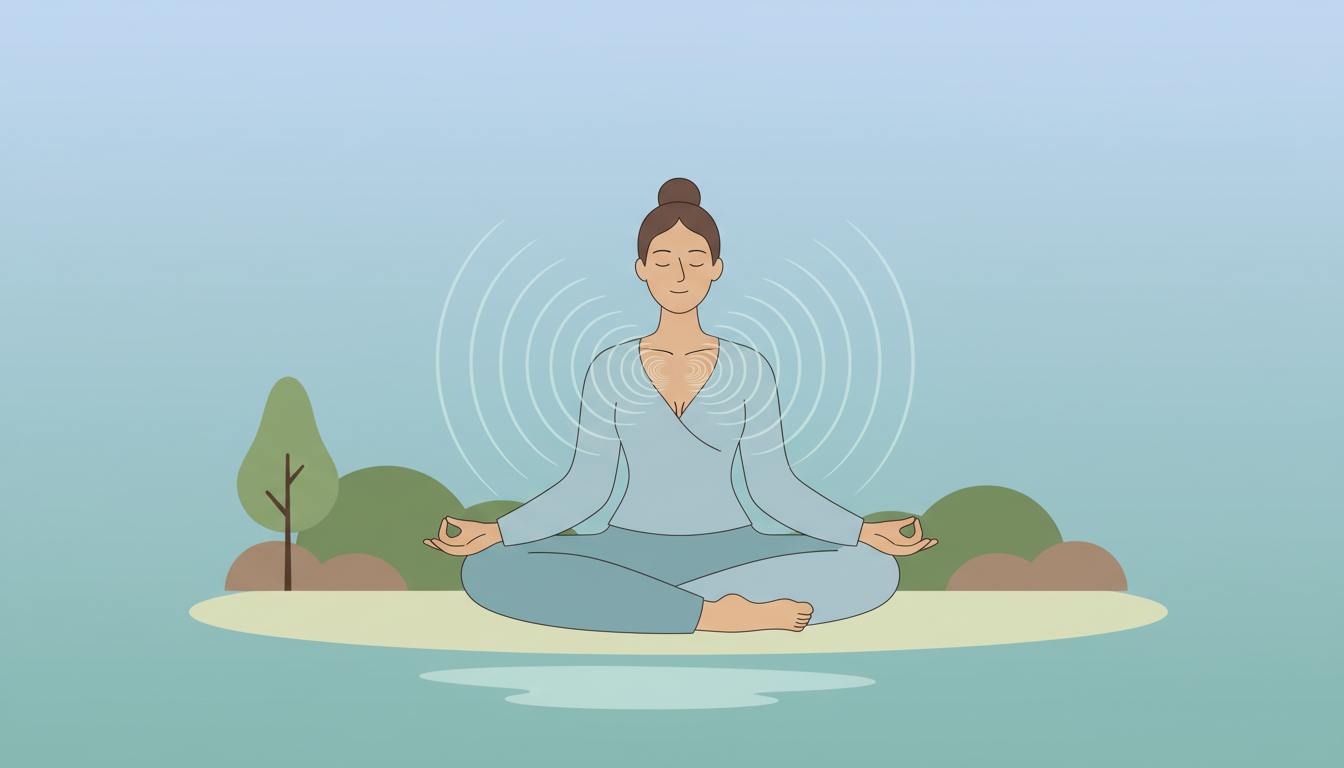
Diaphragmatic Breathing
This is often the single most effective technique for reducing anxiety chest pain in the moment, because it directly counteracts hyperventilation and activates the parasympathetic nervous system — your body’s natural calming system.
- Sit or stand comfortably. Place one hand on your chest and one on your stomach.
- Breathe in slowly through your nose for a count of 4, directing the breath into your belly. Your stomach hand should rise while your chest hand stays relatively still.
- Hold your breath gently for a count of 2.
- Breathe out slowly through your mouth for a count of 6, as if you are blowing through a straw.
- Continue for 3-5 minutes, or until you feel the chest tightness beginning to ease.
The extended exhale is key — it stimulates the vagus nerve, which activates the parasympathetic nervous system and sends a signal to your body that it is safe to stand down from the fight-or-flight response.
The 5-4-3-2-1 Grounding Technique
This grounding exercise redirects your attention away from the chest pain and the anxious thoughts feeding it, anchoring you in the present moment:
- 5 things you can see: Look around and name five things in your environment — a clock on the wall, a book on the table, a car outside the window.
- 4 things you can touch: Feel the texture of your clothing, the surface of a table, the warmth of a mug.
- 3 things you can hear: Listen for sounds — traffic, birdsong, the hum of a refrigerator.
- 2 things you can smell: Notice any scents — coffee, fresh air, a candle.
- 1 thing you can taste: Take a sip of water or notice the taste already in your mouth.
By engaging all five senses, you pull your attention out of the anxious spiral and back into the physical reality around you, which helps to reduce both the psychological and physical symptoms of anxiety.
Progressive Muscle Relaxation (PMR)
Since muscle tension is one of the main causes of anxiety chest pain, deliberately tensing and then releasing your muscles can provide significant relief:
- Start with your feet. Tense the muscles as tightly as you can for 5 seconds.
- Release suddenly and notice the sensation of relaxation for 10 seconds.
- Work your way up through your calves, thighs, buttocks, stomach, chest, arms, hands, shoulders, neck and face.
- Pay particular attention to your shoulders, upper back and chest — these are the areas most commonly affected by anxiety tension.
- After completing the full body, sit quietly for a few minutes, noticing how different your body feels.
Cold Water Technique
Applying cold water to your face can trigger the diving reflex, a physiological response that quickly slows your heart rate and activates the parasympathetic nervous system:
- Hold your breath and splash cold water on your face, focusing on the area around your eyes and cheeks.
- Alternatively, hold a cold, damp flannel against your face for 15-30 seconds.
- If possible, fill a bowl with cold water and briefly submerge your face.
This technique can provide surprisingly rapid relief from the physical symptoms of acute anxiety, including chest tightness and rapid heart rate.
Self-Reassurance
When chest pain strikes, your mind naturally jumps to worst-case scenarios. Having a prepared, rational self-talk script can help interrupt this pattern:
- “I have had this before and I know it is anxiety. It feels awful but it is not dangerous.”
- “My body is having a stress response. It will pass, as it always does.”
- “I have had my heart checked and it is healthy. This is my nervous system being overprotective.”
- “I do not need to fight this or fix it. I just need to let it pass.”
Long-Term Treatment for Anxiety Chest Pain
While the techniques above can help manage chest pain in the moment, addressing the underlying anxiety is essential for long-term relief. Several evidence-based treatments can help.
Cognitive Behavioural Therapy (CBT)
CBT is recommended by NICE as the first-line psychological treatment for anxiety disorders, including panic disorder and generalised anxiety disorder — the two conditions most commonly associated with chest pain. CBT for anxiety-related chest pain typically involves:
- Cognitive restructuring: Identifying and challenging catastrophic thoughts about chest pain (such as “This means I’m having a heart attack”) and developing more balanced interpretations
- Behavioural experiments: Gradually testing feared situations to build evidence that the chest pain is not dangerous
- Interoceptive exposure: Deliberately inducing mild physical sensations similar to anxiety symptoms (such as running on the spot to increase heart rate) to reduce the fear of those sensations
- Breathing retraining: Learning to breathe using your diaphragm rather than your chest muscles, which directly addresses hyperventilation
You can access CBT free on the NHS through the Talking Therapies programme. In most areas of England, you can self-refer directly without needing a GP referral. A meta-analysis in the Cochrane Database of Systematic Reviews confirmed that CBT significantly reduces both the frequency and severity of chest pain episodes in people with panic disorder.
Medication
For some people, medication is an important part of treatment. Your GP can discuss the most appropriate options for your specific situation. NICE guidelines recommend the following for anxiety disorders:
- SSRIs (selective serotonin reuptake inhibitors): Sertraline is typically the first-choice SSRI for anxiety disorders in the UK. It can take 4 to 6 weeks to reach full effect. During the first 1-2 weeks, some people experience a temporary increase in anxiety — this is normal and usually settles.
- SNRIs (serotonin-noradrenaline reuptake inhibitors): Venlafaxine or duloxetine may be offered if SSRIs are not effective or not well tolerated.
- Propranolol: A beta-blocker that can help manage the physical symptoms of anxiety, including rapid heartbeat, chest tightness and trembling. It works quickly and can be particularly helpful for situational anxiety. However, it does not treat the underlying anxiety itself.
- Pregabalin: May be prescribed for generalised anxiety disorder if other medications are not suitable or have not worked.
Medication works best when combined with psychological therapy. Always discuss any medication changes with your GP or prescriber, and do not stop taking prescribed medication suddenly without medical advice.
Lifestyle Changes
Alongside therapy and medication, several lifestyle changes can help reduce both anxiety and the physical symptoms it causes:
- Regular exercise: Aim for the NHS-recommended 150 minutes of moderate-intensity activity per week. Exercise naturally reduces cortisol levels, releases endorphins, and improves your body’s resilience to stress. Walking, swimming, cycling and yoga are all excellent options.
- Reduce caffeine: Caffeine stimulates the sympathetic nervous system and can directly worsen anxiety symptoms, including chest tightness and palpitations. Consider reducing or eliminating coffee, strong tea and energy drinks, particularly if you notice a link between caffeine consumption and your symptoms.
- Limit alcohol: While alcohol may seem to reduce anxiety in the short term, it actually worsens anxiety as it wears off and can disrupt sleep. The NHS recommends no more than 14 units of alcohol per week, spread over three or more days.
- Prioritise sleep: Poor sleep and anxiety have a bidirectional relationship — each makes the other worse. Maintain a consistent sleep schedule, create a calming bedtime routine, and keep your bedroom dark, cool and quiet.
- Reduce stress where possible: While you cannot eliminate all stress from your life, identifying your key stressors and making changes where possible (such as setting boundaries at work, delegating tasks, or saying no to commitments that drain you) can make a meaningful difference.
- Stay connected: Isolation tends to worsen anxiety. Maintaining social connections, even when you do not feel like it, provides emotional support and can help break the cycle of withdrawal and worry.
When to See Your GP
You should make an appointment with your GP if:
- You are experiencing chest pain regularly and it is affecting your quality of life
- You have not had your chest pain assessed before and want to rule out physical causes
- Your anxiety is severe enough that it is interfering with work, relationships or daily activities
- You have tried self-help strategies for several weeks without improvement
- You would like to discuss medication options
- You are experiencing other physical symptoms alongside the chest pain that concern you
Your GP can carry out a physical examination, arrange blood tests or an ECG if appropriate, and refer you to specialist services if needed. Having a cardiac cause ruled out by a medical professional can itself be enormously reassuring and can help break the anxiety-chest pain cycle.
When to Call 999
The NHS advises that you should call 999 immediately if you experience any of the following:
- Chest pain that is sudden and spreading to your arms, back, neck or jaw
- Chest pain that feels like pressure, squeezing or heaviness in the centre of your chest
- Chest pain accompanied by nausea, sweating, shortness of breath or feeling faint
- Chest pain that lasts more than 15 minutes and is not improving
- Chest pain that is different from any anxiety-related pain you have experienced before
It is always better to call 999 and have medical professionals assess you than to wait at home and hope it passes. Paramedics, A&E doctors and cardiologists would always rather see you and confirm that your symptoms are anxiety-related than have you delay seeking help for a genuine cardiac event. There is no shame in calling for help — it is the responsible thing to do.
UK Resources and Support
If anxiety chest pain is affecting your life, help is available. You do not have to manage this alone.
- NHS 111: For urgent medical advice when it is not a 999 emergency. Call 111 or visit 111.nhs.uk. Available 24 hours a day.
- NHS Talking Therapies: Free talking therapy including CBT. You can self-refer in most areas of England. Visit nhs.uk/talking-therapies
- British Heart Foundation Heart Helpline: If you have concerns about your heart health, the BHF Heart Helpline is staffed by cardiac nurses who can provide information and reassurance. Call 0300 330 3311, Monday to Friday, 9am to 5pm. Visit bhf.org.uk
- Anxiety UK: A charity dedicated to supporting people with anxiety disorders, offering therapy, support groups and information. Helpline: 03444 775 774. Visit anxietyuk.org.uk
- Mind: Provides information, advice and local support services for anyone experiencing mental health difficulties. Infoline: 0300 123 3393. Visit mind.org.uk
- No Panic: A charity offering support for panic attacks, phobias, OCD and other anxiety disorders. Helpline: 0300 772 9844. Visit nopanic.org.uk
- Samaritans: Available 24 hours a day for emotional support. Call 116 123 (free) or email jo@samaritans.org. Visit samaritans.org
Frequently Asked Questions
Can anxiety really cause chest pain?
Yes, absolutely. Anxiety chest pain is caused by real physiological changes in your body. When your nervous system activates the fight-or-flight response, it triggers muscle tension in the chest wall, increased heart rate and blood pressure, changes in breathing patterns, and the release of stress hormones — all of which can directly produce chest pain. Research published in the British Journal of General Practice confirms that a significant proportion of patients presenting to chest pain clinics in the UK have anxiety-related symptoms rather than cardiac disease. The pain is not imaginary — your body is genuinely responding to perceived threat.
How long does anxiety chest pain last?
The duration varies depending on the type of anxiety involved. During a panic attack, chest pain typically peaks within 10 minutes and usually resolves within 20-30 minutes as the attack subsides. For people with generalised anxiety disorder, a milder chest tightness or discomfort may come and go throughout the day, sometimes persisting for hours. If you use calming techniques such as diaphragmatic breathing, you can often reduce the duration significantly. If your chest pain lasts more than 15-20 minutes and is not responding to calming techniques, or if it is accompanied by symptoms suggestive of a cardiac event, call 999.
How do I know if my chest pain is anxiety or my heart?
While only a medical professional can give you a definitive answer, there are some general patterns. Anxiety chest pain tends to be sharp or stabbing, localised to one area, accompanied by other anxiety symptoms (such as racing thoughts, tingling or a sense of dread), and often improves with calming techniques. Cardiac chest pain tends to feel more like a crushing or squeezing pressure, may radiate to the arm, jaw or back, can be accompanied by nausea, sweating or breathlessness, and does not improve with relaxation. However, these are general guidelines — not rules. If you are ever in doubt, call 999. It is always better to be checked and reassured than to take a risk.
Can anxiety chest pain happen every day?
Yes, it can. People with generalised anxiety disorder or chronic stress may experience chest tightness or discomfort on a daily basis. This is often related to sustained muscle tension, chronic hyperventilation patterns, and elevated cortisol levels. While daily chest pain from anxiety is not dangerous, it is a signal that your anxiety needs attention. If you are experiencing daily symptoms, it is worth speaking to your GP and considering a course of CBT or other evidence-based treatment to address the underlying anxiety.
Should I go to A&E for anxiety chest pain?
If you have never had your chest pain investigated, or if this episode feels different from your usual anxiety symptoms, you should seek medical attention — either by calling 999 or attending A&E. There is absolutely no shame in going to A&E for chest pain, regardless of the cause. Medical staff are trained to assess chest pain quickly and will not judge you if it turns out to be anxiety-related. Once cardiac causes have been ruled out, you will have valuable reassurance that can help reduce the fear cycle. If you have already had thorough cardiac investigations and your doctors have confirmed your chest pain is anxiety-related, you can usually manage subsequent episodes at home using the techniques described in this article. However, always seek help if something feels different or if you are concerned.
What medication helps anxiety chest pain?
Several medications can help, depending on your specific situation. SSRIs such as sertraline are the most commonly prescribed first-line medications for anxiety disorders in the UK, in line with NICE guidelines. They take 4-6 weeks to reach full effect but can significantly reduce anxiety and its physical symptoms over time. Beta-blockers such as propranolol can provide quicker relief from the physical symptoms of anxiety, including chest tightness, palpitations and trembling — they are particularly useful for situational anxiety. SNRIs such as venlafaxine may be offered if SSRIs are not effective. Pregabalin is sometimes prescribed for generalised anxiety disorder. Always discuss medication options with your GP, who can recommend the most appropriate choice based on your individual circumstances and medical history.
Related Articles
Anxiety and High Blood Pressure: Understanding the Connection
Can anxiety cause high blood pressure? Learn about the link between anxiety and blood pressure, what the research says, and how to manage both effectively.
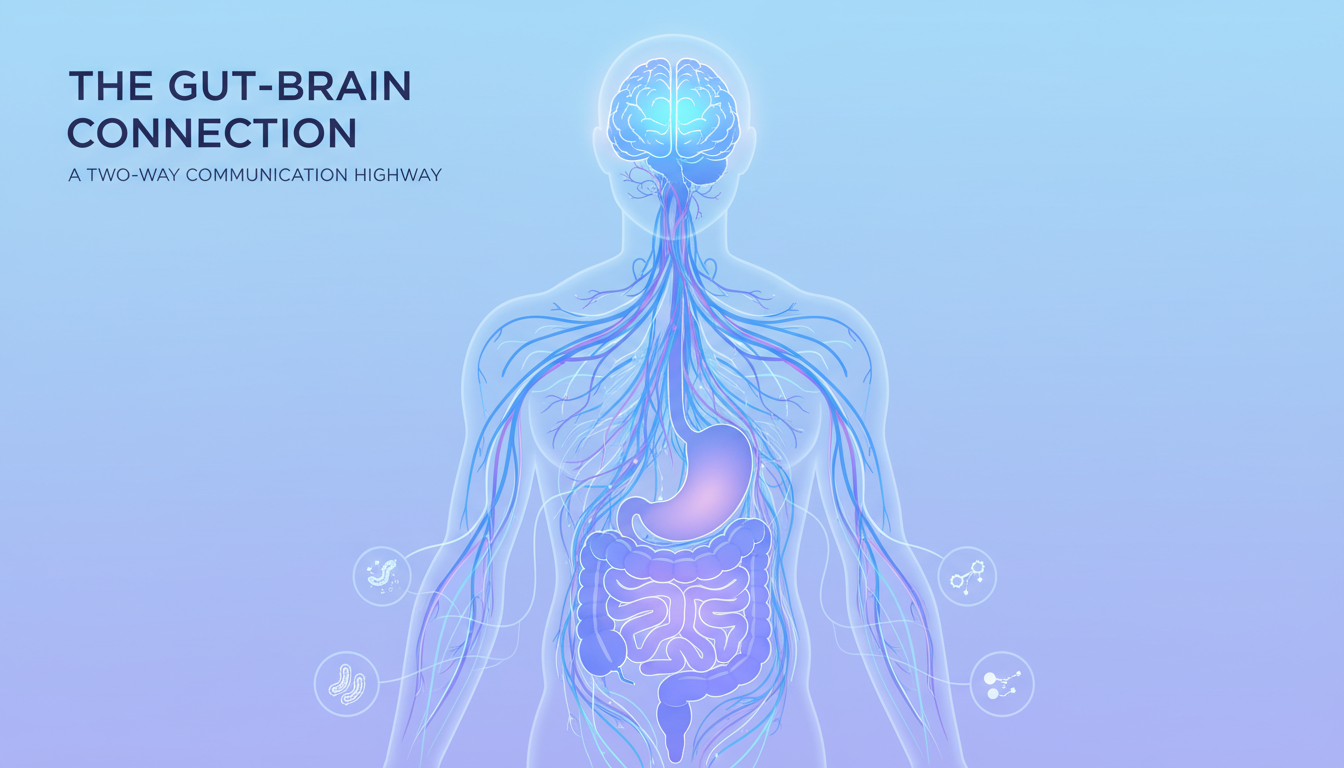
Anxiety and Stomach Problems: Why Anxiety Affects Your Gut
Discover why anxiety causes stomach problems and what you can do about it. Learn about the brain-gut connection, common symptoms, and evidence-based relief.
Anxiety Tremors: Why You Shake and How to Manage It
Anxiety tremors can be distressing but are very common. Understand why anxiety makes you shake and how to manage it effectively.