Health Anxiety: When Worry About Illness Takes Over
Last updated:
What Is Health Anxiety?
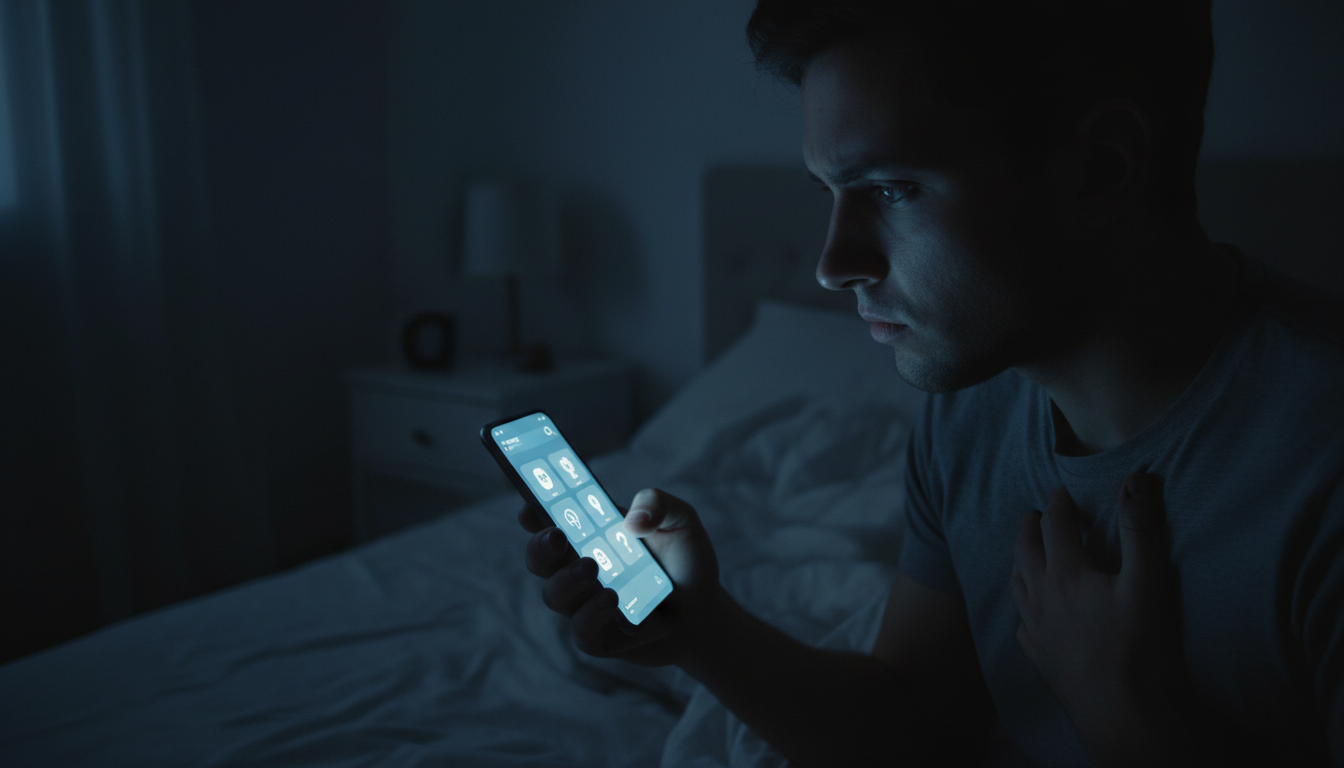
Health anxiety is a condition in which a person becomes excessively preoccupied with the idea that they are seriously ill or about to become seriously ill, despite having no symptoms or only mild symptoms that do not warrant such concern. Previously known as hypochondria or hypochondriasis, the condition is now more commonly referred to as health anxiety or illness anxiety disorder.
Everyone worries about their health from time to time, and a degree of health awareness is perfectly reasonable and even protective. Health anxiety goes beyond this: it involves persistent, distressing and often debilitating worry that dominates your thinking, drives repeated checking and reassurance-seeking behaviours, and continues despite medical tests and examinations showing that nothing is wrong.
Health anxiety is more common than many people realise. Research suggests it affects around 4-5% of the general population, though some studies place the figure higher. It can develop at any age but often begins in early to middle adulthood. It is equally common in men and women.
Symptoms of Health Anxiety
Cognitive Symptoms
- Persistent, intrusive thoughts about having a serious illness (such as cancer, heart disease, motor neurone disease or a brain tumour)
- Interpreting normal bodily sensations as evidence of serious disease (for example, a headache as a brain tumour, or a muscle twitch as a neurological condition)
- Difficulty accepting medical reassurance, or feeling reassured only briefly before doubt creeps back in
- Constantly researching symptoms online (sometimes called “cyberchondria”)
- Thinking about illness and death frequently throughout the day
- Believing that doctors have missed something or made a mistake
Behavioural Symptoms
- Repeatedly checking your body for signs of illness (feeling for lumps, checking your skin, monitoring your pulse)
- Making frequent GP appointments or A&E visits for reassurance
- Seeking reassurance from family, friends or the internet
- Requesting repeated medical tests and investigations
- Avoiding health-related information (news about illness, hospitals, medical programmes) — or, conversely, compulsively seeking it out
- Avoiding physical activity for fear of triggering symptoms or worsening an imagined condition
Physical Symptoms
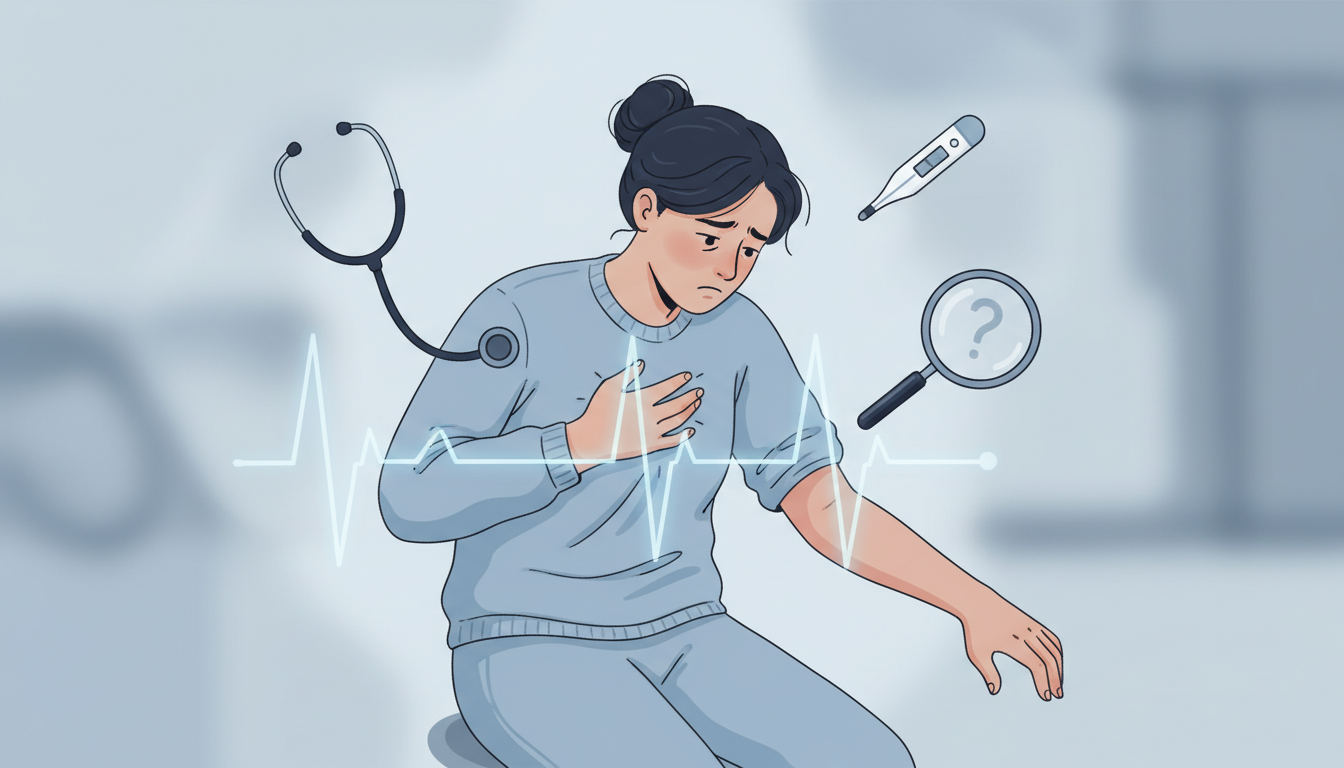
Ironically, health anxiety itself produces genuine physical symptoms through the stress response. Anxiety can cause headaches, muscle tension, stomach problems, dizziness, fatigue, tingling sensations and changes in heart rate — all of which can be misinterpreted as evidence of the feared illness, fuelling the cycle further.
The Health Anxiety Cycle
Understanding the cycle that maintains health anxiety is crucial to breaking free from it. The cycle typically works as follows:
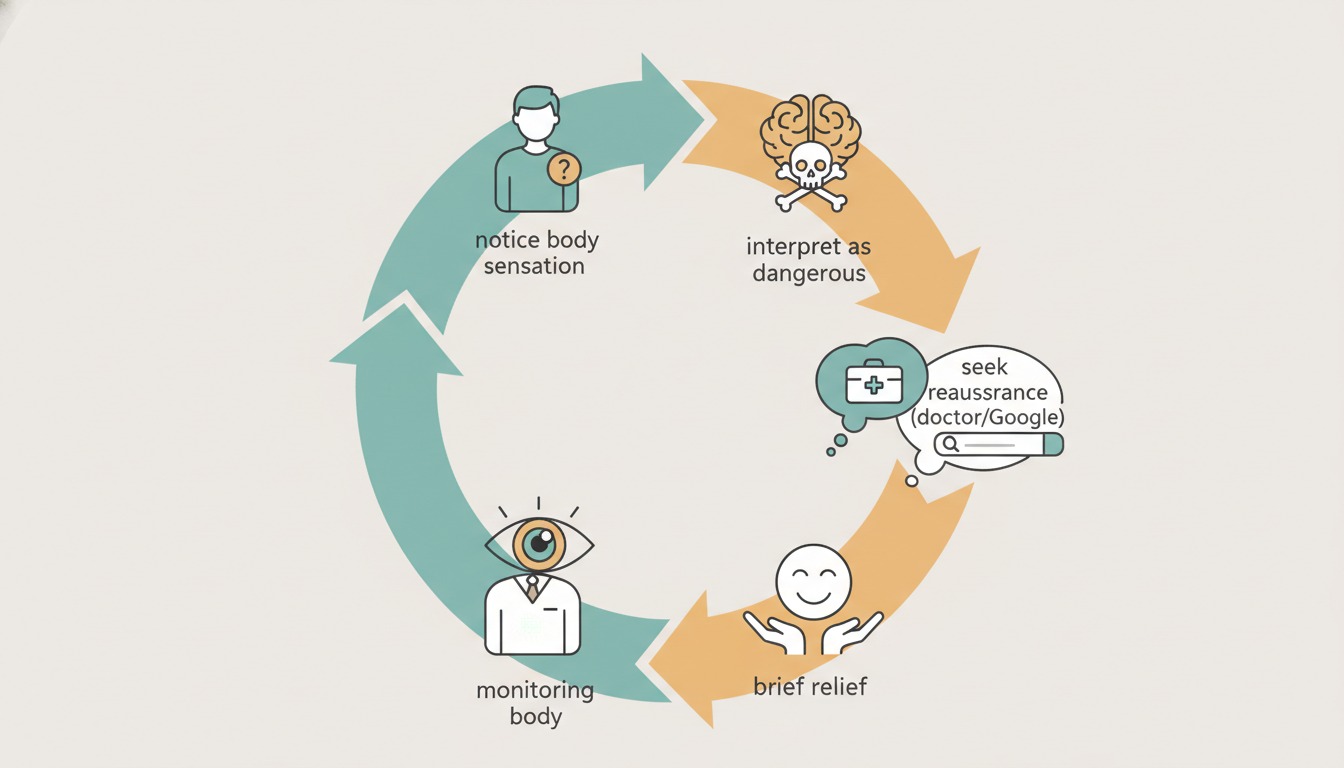
- A trigger: You notice a bodily sensation (a twinge, a headache, a mole, a change in bowel habits) or encounter health-related information (a news story, a friend’s diagnosis).
- Catastrophic interpretation: You interpret this as a sign that something is seriously wrong (“This headache must be a brain tumour”).
- Anxiety increases: You feel frightened and distressed.
- Checking and reassurance-seeking: You check the symptom (pressing the area, looking it up online), ask others for reassurance or book a GP appointment.
- Temporary relief: The reassurance provides brief comfort.
- Doubt returns: Within hours or days, a new doubt emerges (“But what if the doctor missed something?”), and the cycle begins again.
The problem with reassurance is that it works in the short term but fails in the long term. Each time you seek and receive reassurance, you teach your brain that the only way to manage health worry is to get more reassurance. You never learn that you can tolerate the uncertainty and that the feared outcome does not materialise.
What Causes Health Anxiety?
Personal Experience of Illness
Having a serious illness yourself, or watching a family member go through one, can understandably make you more vigilant about health. If a parent died of cancer, for example, it is natural to be alert to potential symptoms in yourself. Health anxiety develops when this vigilance becomes excessive and all-consuming.
Childhood Experiences
Growing up with parents who were excessively worried about health, who frequently discussed illness, or who responded to normal childhood complaints with high levels of anxiety can shape the way you relate to your own body as an adult. Childhood experiences of medical procedures, hospital stays or a family member’s serious illness can also contribute.
Personality and Thinking Style
People who are naturally more anxious, who have difficulty tolerating uncertainty, or who tend towards catastrophic thinking may be more vulnerable to health anxiety. Perfectionism and a strong need for control can also be contributing factors.
Information Overload
The internet has made health anxiety significantly more challenging. Unlimited access to medical information, symptom checkers and health forums means that anyone can find alarming information about their symptoms within minutes. Research from the UK has shown that “Googling symptoms” frequently leads to increased anxiety rather than reassurance.
Treatment for Health Anxiety
Cognitive Behavioural Therapy (CBT)
CBT is the recommended treatment for health anxiety according to NICE guidelines. CBT for health anxiety specifically targets the maintaining cycle described above. Treatment typically involves:
- Psychoeducation: Understanding how anxiety affects the body and how the cycle of checking and reassurance maintains the problem.
- Identifying and challenging catastrophic misinterpretations: Learning to generate alternative, more balanced interpretations of bodily sensations.
- Reducing checking and reassurance-seeking behaviours: Gradually cutting down on body checking, internet searching, GP visits and asking others for reassurance.
- Attention training: Learning to redirect your focus away from internal bodily monitoring.
- Behavioural experiments: Testing out predictions (for example, “If I do not check this lump today, something terrible will happen”) to see what actually occurs.
- Developing tolerance for uncertainty: Accepting that absolute certainty about health is impossible for anyone, and learning to live with a normal level of not-knowing.
A landmark randomised controlled trial published in The Lancet found that CBT for health anxiety was highly effective, with 70% of participants showing clinically significant improvement compared to 14% receiving standard care alone.
Medication
SSRIs may be recommended alongside or instead of CBT, particularly if symptoms are severe or if there is co-existing depression. Fluoxetine and sertraline are commonly used options. NICE advises that medication should usually be offered alongside psychological therapy rather than as a sole treatment.
Health Anxiety and the NHS
Health anxiety can place a considerable burden on NHS services. Research suggests that people with health anxiety visit their GP significantly more frequently than average and may undergo numerous investigations and referrals. This is not something to feel guilty about — it is a natural consequence of the condition. However, it highlights the importance of recognising health anxiety early and accessing appropriate treatment.
If you think you may have health anxiety, being open with your GP about your worries and your patterns of reassurance-seeking can be extremely helpful. A good GP will take your concerns seriously while also gently exploring whether health anxiety might be contributing to your distress. They can then refer you for appropriate psychological treatment rather than continuing a cycle of investigations that ultimately do not address the underlying problem.
Self-Help Strategies
- Set limits on health-related internet searching: Try designating a specific, limited time for looking up health information, and then work towards eliminating it altogether. Consider using website blockers for medical sites.
- Delay and reduce reassurance-seeking: When you feel the urge to check your body or ask for reassurance, try to wait 30 minutes before acting on it. Over time, extend the delay.
- Practise mindfulness: Mindfulness can help you observe bodily sensations without immediately interpreting them as threatening.
- Keep a thought record: Write down your anxious prediction, rate your anxiety, and then record what actually happened. Over time, this builds evidence that your predictions are usually wrong.
- Communicate with your GP: If you have health anxiety, it can be helpful to discuss this with your GP so they can support you appropriately, rather than inadvertently reinforcing the reassurance cycle with unnecessary tests.
When to Seek Help
Seek professional support if:
- Worry about illness is taking up a significant portion of your day and causing you distress
- You are frequently checking your body, researching symptoms online or visiting the GP for reassurance
- Health anxiety is affecting your work, relationships or quality of life
- You are avoiding activities, places or information because of health fears
- Medical reassurance only provides brief relief before the worry returns
- You feel low, hopeless or are having thoughts of self-harm
It is worth noting that having health anxiety does not mean you can never have a genuine health problem. If you develop a new symptom that is objectively concerning (for example, unexplained weight loss, a persistent lump or blood in your stools), it is still appropriate to see your GP. If you are unsure whether a symptom warrants medical attention, one visit to your GP for assessment is reasonable. The issue is not seeking help once, but seeking repeated reassurance for the same concern.
Where to get help in the UK:
- NHS Talking Therapies: Self-refer for free CBT. Visit nhs.uk to find your local service.
- Your GP: Can discuss your symptoms and refer you for specialist help.
- Anxiety UK: Provides support, information and access to therapy for all anxiety conditions. Helpline: 03444 775 774.
- Mind: Information and support for all mental health conditions. Infoline: 0300 123 3393.
- SANEline: Emotional support for those experiencing mental health difficulties. Call 0300 304 7000 (4:30pm–10:30pm daily).
Frequently Asked Questions
What Is Health Anxiety?
Health anxiety is a condition in which a person becomes excessively preoccupied with the idea that they are seriously ill or about to become seriously ill, despite having no symptoms or only mild symptoms that do not warrant such concern. Previously known as hypochondria or hypochondriasis, the condition is now more commonly referred to as health anxiety or illness anxiety disorder.
What Causes Health Anxiety?
Having a serious illness yourself, or watching a family member go through one, can understandably make you more vigilant about health. If a parent died of cancer, for example, it is natural to be alert to potential symptoms in yourself. Health anxiety develops when this vigilance becomes excessive and all-consuming.
What are the main signs of health anxiety disorder?
For Health Anxiety, this question is best answered with personalised guidance. If you are concerned, speak to your GP or contact NHS 111. The article above outlines the most relevant evidence-based approaches.
Related Articles

Anxiety Attack vs Panic Attack: What’s the Difference?
Anxiety attack vs panic attack - what's the difference? Understand the key distinctions so you can respond effectively in the moment.

Chronic Anxiety: When Anxiety Won’t Go Away
When anxiety won't go away, it can feel overwhelming. Understand chronic anxiety and discover strategies to break the long-term cycle.
Generalised Anxiety Disorder (GAD): The Complete Guide
Everything you need to know about generalised anxiety disorder: symptoms, causes, diagnosis, and treatment options including NHS pathways and self-help strategies.