
Panic Disorder: Understanding Panic Attacks and Treatment Options
Last updated:
What Is Panic Disorder?
Panic disorder is an anxiety condition in which a person experiences recurrent, unexpected panic attacks and develops an ongoing fear of having further attacks. It is more than simply having the occasional panic attack — it involves a pattern of attacks combined with significant changes in behaviour or persistent anxiety about when the next attack might strike.
According to the NHS, panic disorder affects around 1 in 10 people at some point in their lives, though not all will go on to develop the full disorder. It typically begins in late adolescence or early adulthood and is about twice as common in women as in men. However, it can develop at any age and affects people from all walks of life.
What distinguishes panic disorder from other anxiety conditions is the central role of the panic attack itself. While people with generalised anxiety disorder worry constantly about many things, and those with phobias fear specific objects or situations, panic disorder revolves around the terrifying experience of the panic attack and the fear that it will happen again.
What Happens During a Panic Attack?
A panic attack is a sudden surge of intense fear or discomfort that reaches a peak within minutes. During a panic attack, you may experience some or all of the following symptoms:
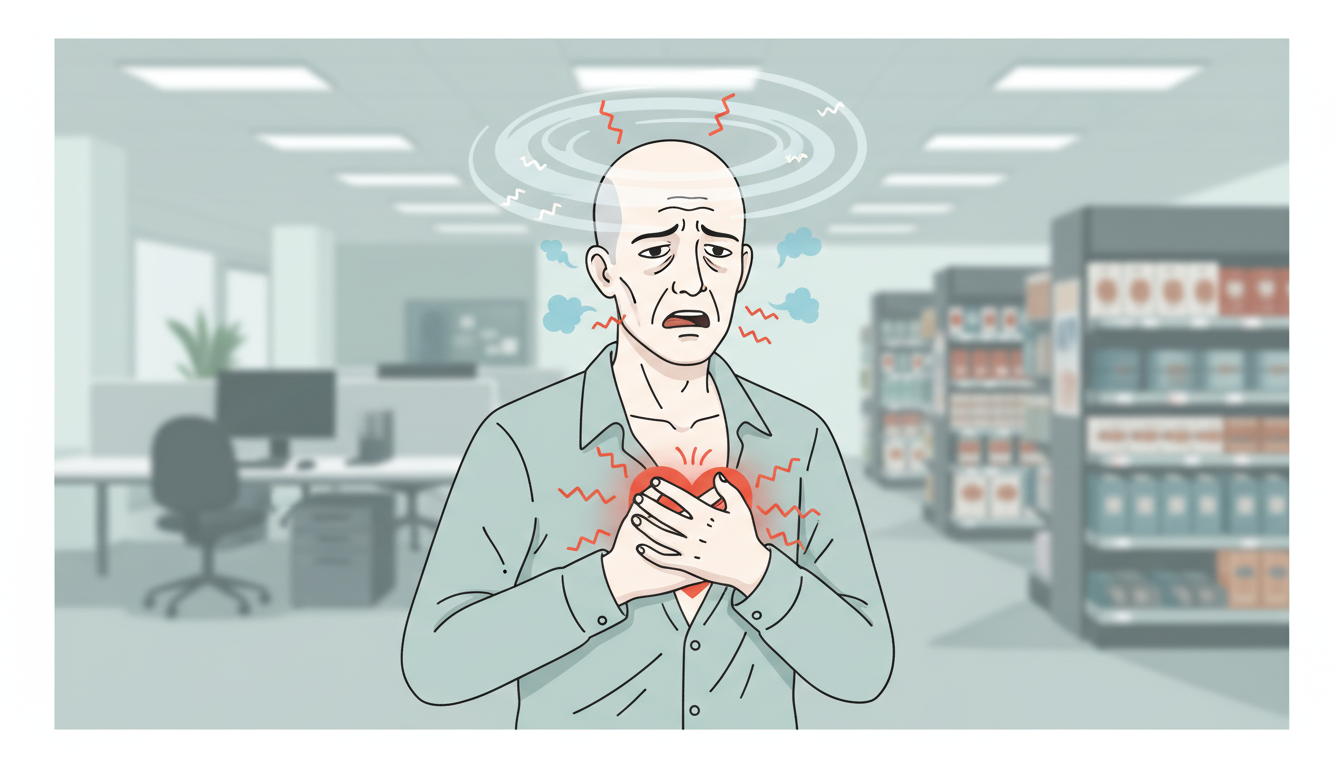
- A pounding, racing or irregular heartbeat
- Chest pain or tightness
- Shortness of breath or a feeling of being unable to breathe
- Dizziness, light-headedness or feeling faint
- Trembling or shaking
- Sweating, often profusely
- Nausea or churning stomach
- Tingling or numbness in your hands, feet or face
- Hot flushes or chills
- A choking sensation
- A feeling of unreality (derealisation) or detachment from yourself (depersonalisation)
- An overwhelming fear that you are dying, having a heart attack or going mad
Panic attacks typically last between 5 and 20 minutes, although some people report attacks lasting up to an hour. The physical sensations can be so severe that many people experiencing their first panic attack call 999 or go to A&E, genuinely believing they are having a heart attack or other medical emergency.
Why Panic Attacks Feel So Terrifying
The symptoms of a panic attack are caused by your body’s fight-or-flight response — the same survival mechanism that would prepare you to face a genuine physical threat. When this system activates, your body floods with adrenaline, your heart rate increases, your breathing becomes rapid and shallow, and blood is redirected away from your digestive system towards your muscles.
In a truly dangerous situation, these changes would help you fight or run away. But in a panic attack, this response fires without an external threat, leaving you with a body primed for action and a mind desperately searching for the danger. It is this mismatch — extreme physical sensations without an obvious cause — that makes panic attacks so frightening.
The Panic Cycle
Understanding the panic cycle is crucial to understanding why panic attacks keep happening. Cognitive behavioural models of panic disorder, developed by psychologist David Clark, describe a vicious cycle that maintains the condition:
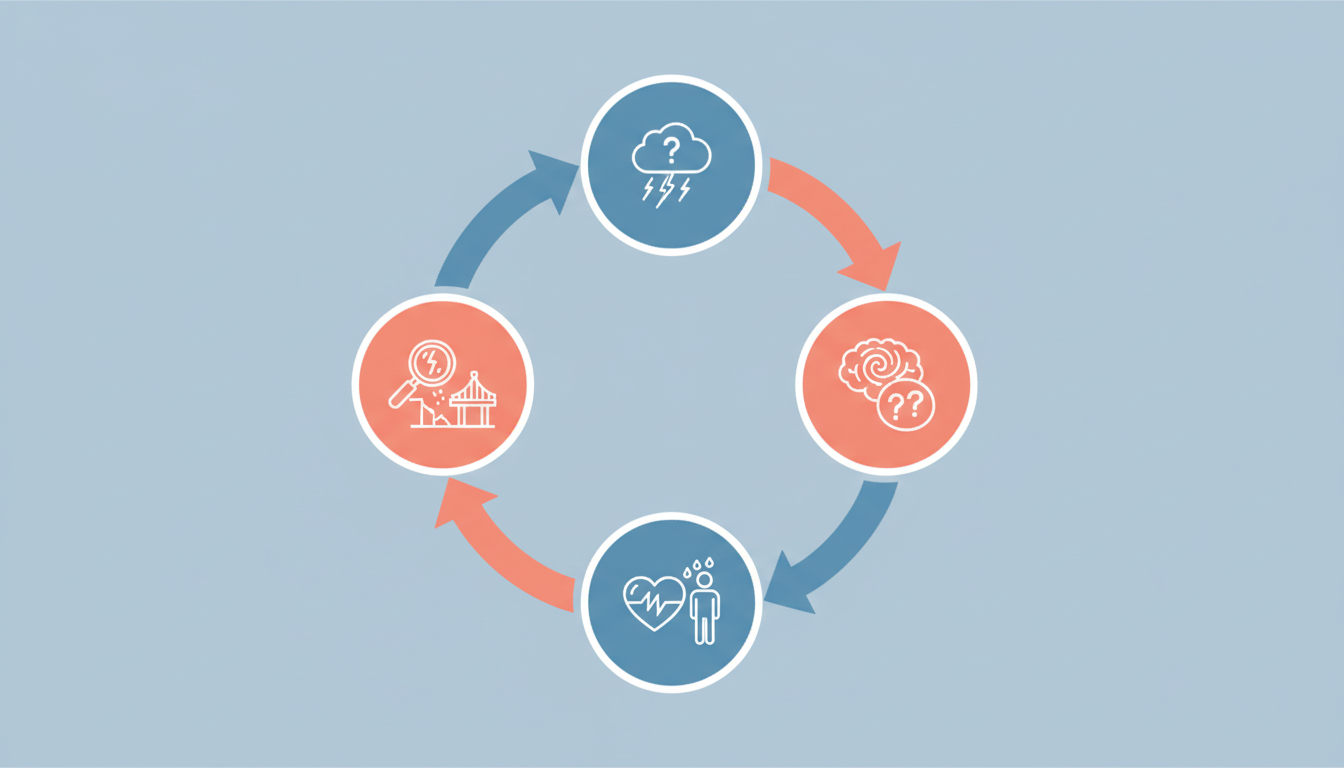
- A trigger: This might be a physical sensation (such as a slightly elevated heart rate), a thought or an external situation.
- Catastrophic misinterpretation: You interpret the sensation as a sign of imminent danger (“My heart is racing — I must be having a heart attack”).
- Anxiety increases: This fearful interpretation triggers more anxiety.
- More physical symptoms: Increased anxiety produces more physical symptoms (faster heart rate, more breathlessness).
- The cycle escalates: These new symptoms are interpreted as further evidence of danger, and the cycle spirals into a full-blown panic attack.
Over time, people with panic disorder often become hypervigilant about their own bodily sensations, constantly scanning for the first signs of another attack. This vigilance, combined with the tendency to catastrophically misinterpret normal physical feelings, keeps the cycle going.
Causes of Panic Disorder
Like most mental health conditions, panic disorder typically results from a combination of factors:
Genetics
Research indicates that panic disorder runs in families. If you have a first-degree relative with the condition, you are up to eight times more likely to develop it yourself. Twin studies suggest that around 30-40% of the vulnerability to panic disorder is genetic.
Brain Chemistry
Imbalances in neurotransmitters, particularly serotonin and noradrenaline, appear to play a role. The brain’s “alarm system,” centred on the amygdala, may be more easily triggered in people with panic disorder.
Stressful Life Events
Panic disorder often begins during a period of significant stress. Bereavement, relationship breakdown, job loss, serious illness or major life transitions can all act as triggers. Some people trace their first panic attack to a specific stressful event, while for others it seems to develop gradually.
Childhood Experiences
Adverse experiences in childhood, including parental anxiety, overprotective parenting, abuse or loss, can increase vulnerability to panic disorder in later life.
When Panic Leads to Avoidance: Agoraphobia
Many people with panic disorder begin to avoid situations where they fear a panic attack might occur or where escape might be difficult. Common avoidance behaviours include staying away from crowded places, public transport, supermarkets, driving or being far from home.
When this avoidance becomes significant and widespread, it may be diagnosed as agoraphobia. Contrary to popular belief, agoraphobia is not simply a fear of open spaces — it is more accurately understood as a fear of situations where having a panic attack would be particularly distressing or difficult to manage. The NHS estimates that around a third of people with panic disorder develop agoraphobia.
Avoidance provides short-term relief but worsens the problem in the long run. Each time you avoid a feared situation, you reinforce the belief that the situation is genuinely dangerous and that you cannot cope, making it harder to face next time.
Treatment for Panic Disorder
Panic disorder is one of the most treatable anxiety conditions. NICE guidelines recommend the following approaches:
Cognitive Behavioural Therapy (CBT)
CBT is the most effective psychological treatment for panic disorder and is recommended as the first-line intervention by NICE. A course of CBT for panic disorder typically involves 7 to 14 sessions and addresses the condition through several key components:
- Psychoeducation: Understanding exactly what happens in the body during a panic attack and why, which immediately reduces the fear of the symptoms.
- Cognitive restructuring: Identifying and challenging the catastrophic misinterpretations that drive the panic cycle.
- Behavioural experiments: Testing out your feared predictions in a structured, gradual way to learn that the catastrophic outcome you fear does not actually occur.
- Interoceptive exposure: Deliberately inducing mild panic-like sensations (such as through hyperventilation or spinning) in a controlled setting to reduce your fear of the sensations themselves.
- Graded exposure: Gradually and systematically facing situations you have been avoiding.
Research shows that CBT for panic disorder has a success rate of around 80-90%, making it one of the most effective psychological treatments available for any mental health condition.
Medication
NICE recommends SSRIs as the first-choice medication for panic disorder. Sertraline is typically tried first; if it is not effective, other SSRIs or the SNRI venlafaxine may be considered. It is important to note that NICE specifically advises against the use of benzodiazepines for panic disorder, except in crisis situations, due to the risk of dependence and the fact that they interfere with the effectiveness of CBT.
Medication can be used alongside CBT or on its own if psychological therapy is not available or preferred. However, the combination of CBT and medication tends to produce the best outcomes for moderate to severe panic disorder.
Self-Help
For milder symptoms, guided self-help based on CBT principles may be offered as a first step. This might involve working through a structured workbook or online programme with support from a practitioner. The NHS Talking Therapies programme provides access to these resources.
What to Do During a Panic Attack
If you are in the midst of a panic attack, these strategies can help:
- Remind yourself it will pass: Panic attacks always end. They cannot harm you, even though they feel terrible.
- Breathe slowly: Focus on slow, deep breathing. Breathe in for a count of four, hold for a count of two, and breathe out for a count of six. This helps counteract hyperventilation.
- Stay where you are: If it is safe to do so, try to stay in the situation rather than fleeing. Leaving reinforces the idea that the situation was dangerous.
- Ground yourself: Focus on your immediate surroundings. Name five things you can see, four you can touch, three you can hear. This helps bring you back to the present moment.
- Challenge catastrophic thoughts: Remind yourself: “This is anxiety, not a heart attack. I have felt this before and it has always passed.”
When to Seek Help
You should seek professional help if:
- You are having recurrent panic attacks
- You are spending a lot of time worrying about when the next attack will happen
- You are avoiding places or situations because of fear of having a panic attack
- Panic attacks are affecting your ability to work, socialise or carry out daily activities
- You are using alcohol or drugs to cope with panic symptoms
- You feel unable to leave your home
If you are experiencing chest pain for the first time and are unsure whether it is a panic attack or a cardiac event, always seek immediate medical attention to rule out a physical cause.
Where to get help in the UK:
- Your GP: A good starting point for assessment and referral to appropriate treatment.
- NHS Talking Therapies: Self-refer for free CBT and other talking therapies at nhs.uk.
- No Panic: A charity specifically supporting people with panic disorder. Helpline: 0300 772 9844.
- Mind: Information, advice and local support. Infoline: 0300 123 3393.
- Samaritans: Available 24/7 on 116 123 if you are in distress.
Frequently Asked Questions
What Is Panic Disorder?
Panic disorder is an anxiety condition in which a person experiences recurrent, unexpected panic attacks and develops an ongoing fear of having further attacks. It is more than simply having the occasional panic attack — it involves a pattern of attacks combined with significant changes in behaviour or persistent anxiety about when the next attack might strike.
What Happens During a Panic Attack?
A panic attack is a sudden surge of intense fear or discomfort that reaches a peak within minutes. During a panic attack, you may experience some or all of the following symptoms:
Why Panic Attacks Feel So Terrifying?
The symptoms of a panic attack are caused by your body’s fight-or-flight response — the same survival mechanism that would prepare you to face a genuine physical threat. When this system activates, your body floods with adrenaline, your heart rate increases, your breathing becomes rapid and shallow, and blood is redirected away from your digestive system towards your muscles.
When Panic Leads to Avoidance: Agoraphobia?
Many people with panic disorder begin to avoid situations where they fear a panic attack might occur or where escape might be difficult. Common avoidance behaviours include staying away from crowded places, public transport, supermarkets, driving or being far from home.
What to Do During a Panic Attack?
If you are in the midst of a panic attack, these strategies can help:
Related Articles

Emetophobia: Complete Guide to Understanding and Overcoming the Fear of Vomiting
A complete guide to emetophobia, the fear of vomiting: symptoms, causes and effective treatments including CBT and exposure therapy. Expert-informed help.
Generalized Anxiety Disorder (GAD): The Comprehensive Guide to Understanding and Recovery
A comprehensive guide to generalised anxiety disorder (GAD): symptoms, the GAD-7 score, causes, and effective treatments to ease chronic, excessive worry.
How to overcome panic attacks due to agoraphobia: understanding, coping and recovery
How to overcome panic attacks linked to agoraphobia: understand the connection, learn coping techniques, and follow practical steps towards recovery.