How to Overcome Agoraphobia: Symptoms, Causes and NHS Treatment
Last updated:
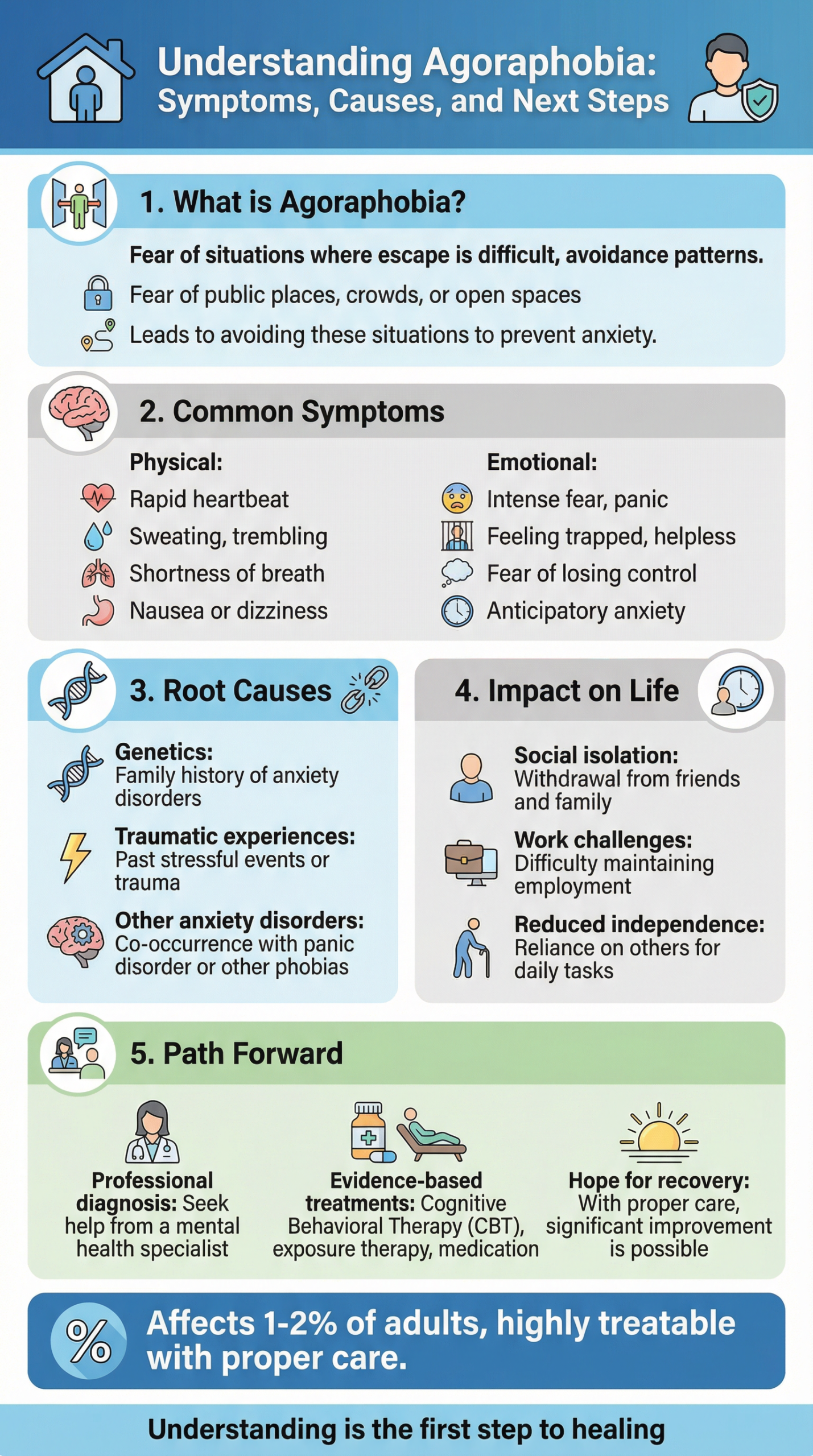
Agoraphobia is more than a dislike of open places. It is an intense, persistent fear of being in situations where escape might be difficult, or help unavailable, if panic-like or disabling symptoms occurred. That fear drives avoidance that can shrink daily life, sometimes down to the four walls of home. It is also one of the most treatable anxiety disorders: psychological therapy, especially cognitive behavioural therapy with graded exposure, is effective and available on the NHS. This guide covers what agoraphobia actually is, the symptoms and causes, and how to overcome agoraphobia step by step.
What Is Agoraphobia?
Agoraphobia involves marked fear or anxiety about two or more of the following types of situation:
- Public transport (buses, trains, planes)
- Open spaces (car parks, bridges, large fields)
- Enclosed spaces (shops, cinemas, small rooms)
- Crowds or standing in a queue
- Being outside the home alone
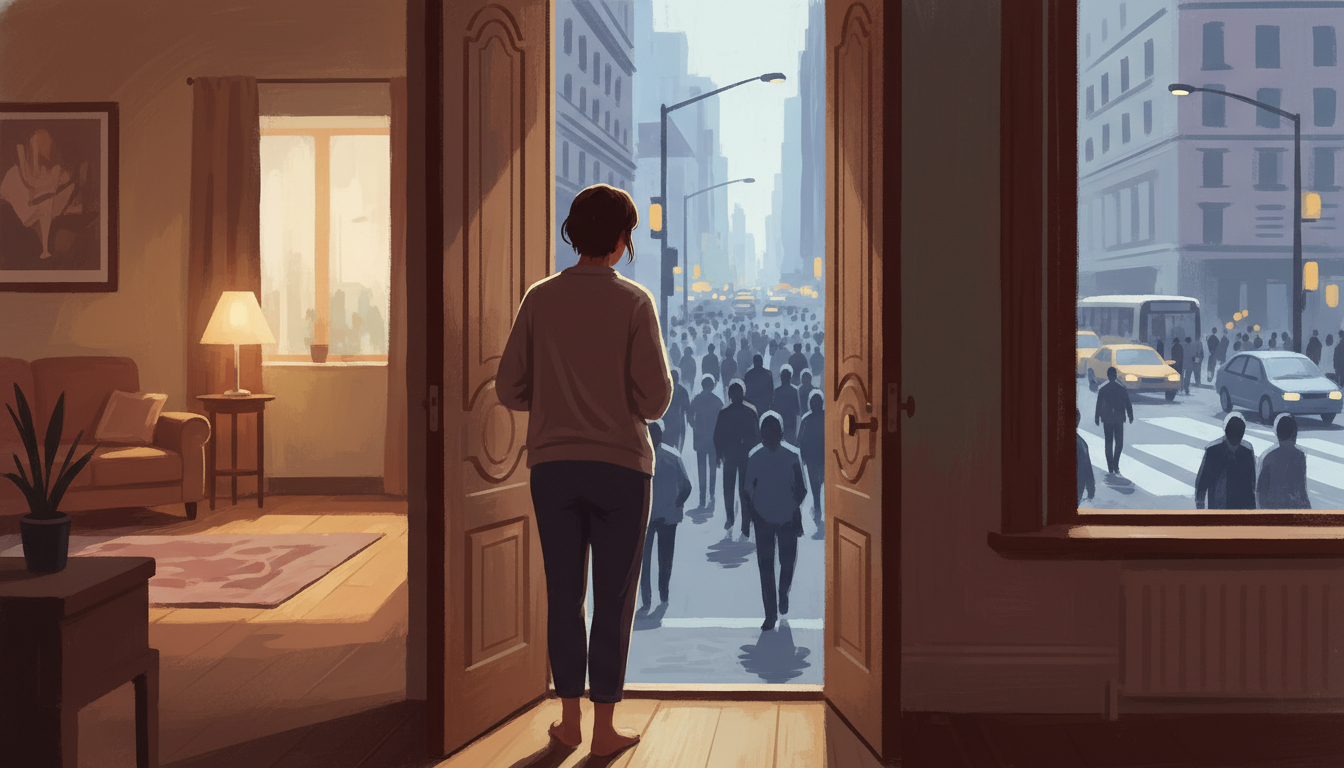
The key issue is not the place itself. It is the worry that you could not easily get away, or would not receive help, if you had a panic attack or other frightening symptoms there. People with agoraphobia tend to avoid these situations, endure them with intense distress, or rely on a companion to face them. Severity ranges from unease about specific places to being unable to leave home at all.
Agoraphobia and panic disorder are closely linked but distinct. Many people develop agoraphobia after repeated panic attacks, yet others have it without ever experiencing a full attack: their fears may centre on dizziness, nausea, fainting or losing control rather than a classic panic episode. It also differs from social anxiety, where the core fear is judgement by other people rather than being trapped or helpless.
Symptoms of Agoraphobia
Physical symptoms
When facing, or even anticipating, a feared situation, the body reacts much as it does in a panic attack:
- Rapid heartbeat and palpitations
- Sweating and trembling
- Breathlessness or hyperventilation
- Dizziness or feeling faint
- Nausea and stomach upset
- Chest pain or tightness
Cognitive symptoms
- Catastrophic thoughts such as “I’ll faint”, “I’ll lose control” or “no one will help me”
- Fear of embarrassment from having a visible panic attack in public
- Anticipatory anxiety, sometimes for days before a planned outing
- Heightened attention to bodily sensations, constantly scanning for the first sign of trouble
Behavioural symptoms
- Avoiding public transport, crowded shops or unfamiliar places
- Only going out accompanied, or carrying “safety” items everywhere
- Sitting near exits and planning escape routes in advance
- Limiting life to “safe” zones near home, and in severe cases becoming housebound
What Causes Agoraphobia?
There is no single cause. Agoraphobia usually arises from an interaction of vulnerability, triggering events and maintaining behaviours:
- Panic disorder is the most common precursor. The NHS notes that around a third of people with panic disorder go on to develop agoraphobia, as attacks become associated with the places where they happened.
- Family history of anxiety disorders and a temperament that reacts strongly to stress increase vulnerability.
- Stressful life events, such as bereavement, job loss, an assault or a frightening health episode, often precede the first symptoms.
- Learned avoidance: each avoided situation delivers short-term relief that quietly strengthens the fear.
The Avoidance Cycle: What Keeps Agoraphobia Going
Agoraphobia maintains itself through a simple, powerful loop. An alarming episode in a particular place leads to avoiding that place. Avoidance brings immediate relief, which teaches the brain that the place really was dangerous and that avoiding it was what kept you safe. Over time the avoidance generalises to more and more situations.
Safety behaviours work the same way in miniature. Always travelling with a companion, gripping a phone, carrying medication “just in case” or hovering near exits all prevent you from ever discovering that you would have coped without them. Combined with hypervigilance to bodily sensations and catastrophic interpretations of those sensations, they keep the fear system on permanent alert. Effective treatment is designed to break exactly this cycle.
How to Overcome Agoraphobia: NHS Treatment Options
The NHS uses a stepped approach for agoraphobia, matching the intensity of treatment to the severity of the problem.
CBT with graded exposure
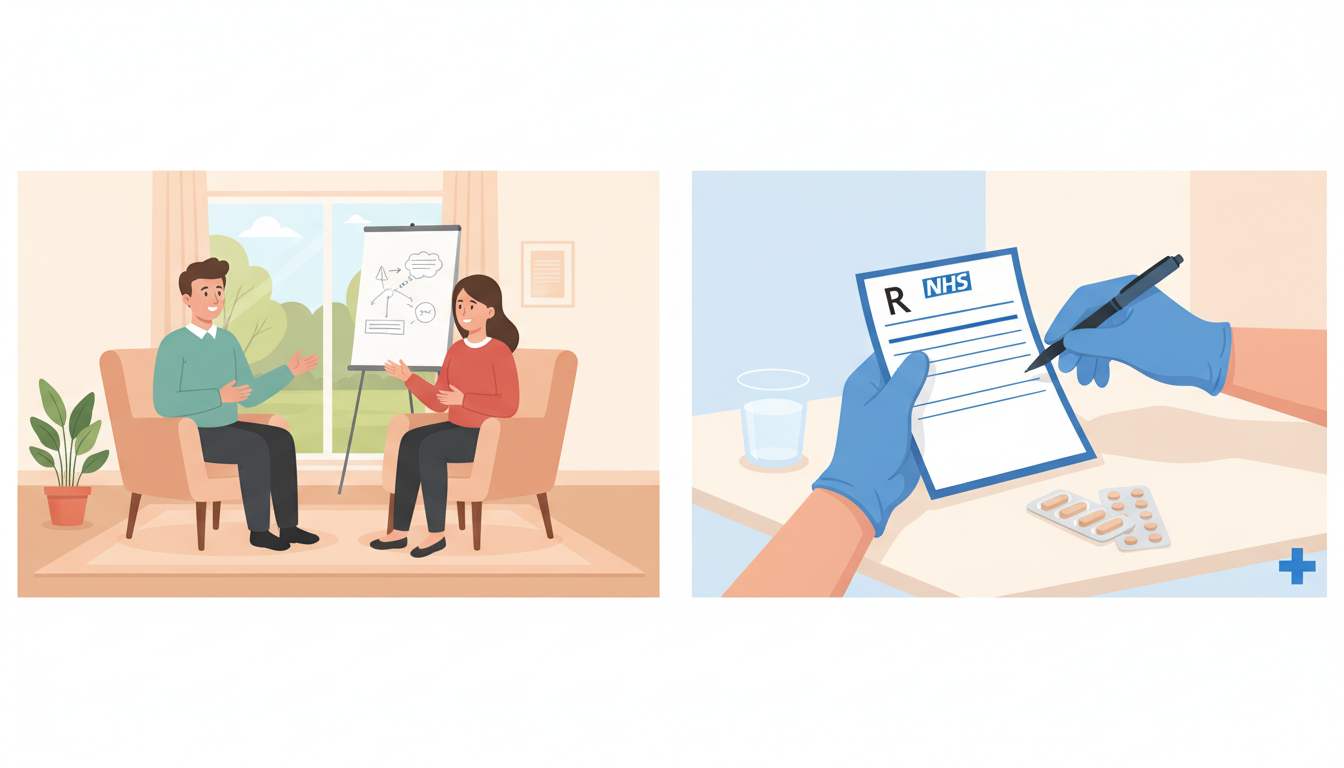
Cognitive behavioural therapy that includes graded, supported exposure is the recommended first-line treatment, in line with NICE guidance on panic disorder and agoraphobia. It works on two fronts:
- Changing unhelpful thoughts: identifying catastrophic predictions and testing them against reality.
- Reducing avoidance step by step: building a personal ladder of feared situations and climbing it gradually, so the brain relearns that the feared catastrophe does not happen.
A course might begin with standing at the front door for a few minutes, then a short walk to the postbox, then a local shop at a quiet time, then a bus ride of one stop with a companion, then alone. Each completed step is repeated until it feels manageable before moving up.
Guided self-help
For mild to moderate agoraphobia, the NHS often starts with guided self-help: structured CBT-based workbooks or online programmes with regular support from a trained practitioner. This can be a practical first step when leaving home for appointments feels impossible.
Medication
Medication can help some people reduce distress to the point where they can engage with exposure work:
- SSRIs (selective serotonin reuptake inhibitors), such as sertraline, are the usual first choice when medication is offered.
- SNRIs, such as venlafaxine, may be considered as an alternative.
- Pregabalin is sometimes prescribed when SSRIs are unsuitable.
- Benzodiazepines may ease acute distress but are generally avoided beyond short-term use because of dependence risks, and because they can blunt the learning that exposure therapy depends on.
Decisions about starting, changing or stopping medication should always be made with a GP or psychiatrist.
Support for severe agoraphobia
If leaving home is very difficult, treatment can still reach you. Ask your GP about home visits, and about beginning therapy by phone or video before building towards in-person exposure with support. For complex cases, community mental health teams provide intensive outpatient support, home visits and crisis intervention.
Accessing Help Through the NHS
- Step 1: your GP. Book an appointment, describe your symptoms and how they limit your life, and ask about local options.
- Step 2: NHS Talking Therapies. In England you can refer yourself directly to NHS Talking Therapies, the service formerly known as IAPT, for CBT and guided self-help. Referral routes differ in Scotland, Wales and Northern Ireland, so ask your GP or local health board.
- Step 3: specialist services. Complex or severe cases may be referred to specialist anxiety services or a psychiatrist for medication review.
Look for therapists trained in CBT for anxiety disorders with experience of exposure work; that combination matters more than any other credential for agoraphobia.
Overcoming Agoraphobia Step by Step
Alongside formal treatment, these strategies support recovery:
- Build your own exposure ladder. List feared situations from easiest to hardest and practise the easiest until boredom sets in, then move up. Consistency beats heroics.
- Learn to ride out panic. Slow breathing exercises and grounding help you stay in a situation long enough for anxiety to fall on its own. Our guide to overcoming panic attacks linked to agoraphobia covers this in depth.
- Keep a diary. Note triggers, predictions and what actually happened. The gap between predicted and actual catastrophe is where recovery lives.
- Make daily life work for you. Practical routines, planned rest and realistic goals reduce background stress; see our coping strategies for agoraphobia in daily life.
- Recruit support. A trusted friend or family member who understands graded exposure can accompany early steps, then gradually step back.
Can you overcome agoraphobia fast?
Be wary of anything promising an instant cure. Flooding yourself with the scariest situation first occasionally works in supervised settings, but rushed, unsupported exposure more often backfires and deepens avoidance. Realistically, many people notice meaningful improvement within about 6 to 12 weeks of starting structured CBT, and fuller recovery over several months. The fastest reliable route is steady, repeated practice at the right level of challenge.
Recovery Outlook
The outlook for agoraphobia is genuinely good. Most people who complete CBT with exposure see significant improvement, and combining therapy with medication can help when symptoms are moderate to severe. Early treatment tends to produce better outcomes, so it is worth seeking help as soon as avoidance starts to limit your life. Setbacks along the way are normal and do not erase progress; they are simply information about where more practice is needed.
When to Seek Help
See your GP if anxiety is stopping you working, socialising or caring for yourself, if you increasingly need someone with you to go out, or if symptoms are worsening. For urgent mental health advice that is not life-threatening, contact NHS 111. If you feel at immediate risk of harming yourself, call 999 or go to A&E, and the Samaritans are available around the clock on 116 123 if you need to talk.
New physical symptoms that are sudden or severe, such as chest pain, should always be assessed by a clinician to rule out medical causes rather than assumed to be anxiety.
Frequently Asked Questions
Is agoraphobia just a fear of open spaces?
No. The name misleads. Agoraphobia is a fear of situations where escape feels difficult or help unavailable, which can mean crowds, queues, buses and small shops just as much as open fields. For some people it means being unable to leave home at all.
Can agoraphobia be treated if I cannot leave the house?
Yes. Tell your GP that leaving home is the obstacle. Therapy can start by phone or video, home visits can be arranged, and a stepped exposure plan can begin literally at your front door.
How long does it take to overcome agoraphobia?
Many people see initial improvement within 6 to 12 weeks of starting CBT with graded exposure, with fuller recovery over months. Long-standing or severe agoraphobia takes longer but still responds to treatment.
Do I need medication to overcome agoraphobia?
Not necessarily. CBT with exposure is the first-line treatment. Medication such as an SSRI can be a useful bridge when anxiety is too high to begin therapy, and that decision belongs with you and your GP or psychiatrist.
Frequently Asked Questions
Is agoraphobia just a fear of open spaces?
No. Agoraphobia is a fear of situations where escape might be difficult or help unavailable if panic-like or disabling symptoms occurred. That can include public transport, queues, crowds and enclosed spaces as well as open ones, and in severe cases being outside the home at all.
Can agoraphobia be treated if I cannot leave the house?
Yes. Ask your GP about home visits, and about starting therapy by phone or video before building up to in-person exposure work. NHS services can adapt treatment for people who are housebound, and community mental health teams can support severe cases at home.
How long does it take to overcome agoraphobia?
There is no overnight fix, but treatment works. Many people notice initial improvement within roughly 6 to 12 weeks of starting CBT with graded exposure, while fuller recovery can take several months or longer depending on severity. Gradual, consistent practice beats rushing.
Do I need medication to overcome agoraphobia?
Not necessarily. CBT with graded exposure is the recommended first-line treatment. Medication such as an SSRI can help some people reduce anxiety enough to engage with therapy, and decisions about it should be made with your GP or psychiatrist.
Related Articles

CBT for Anxiety: How It Works, Techniques and How to Access It
Learn how CBT helps with anxiety, including 5 proven techniques you can practise at home. Find out how to access CBT on the NHS or privately in the UK.

Coping strategies for agoraphobia: Practical tips for everyday challenges
Practical coping strategies for living with agoraphobia: gradual exposure, grounding and routines to face everyday places and situations with less fear.
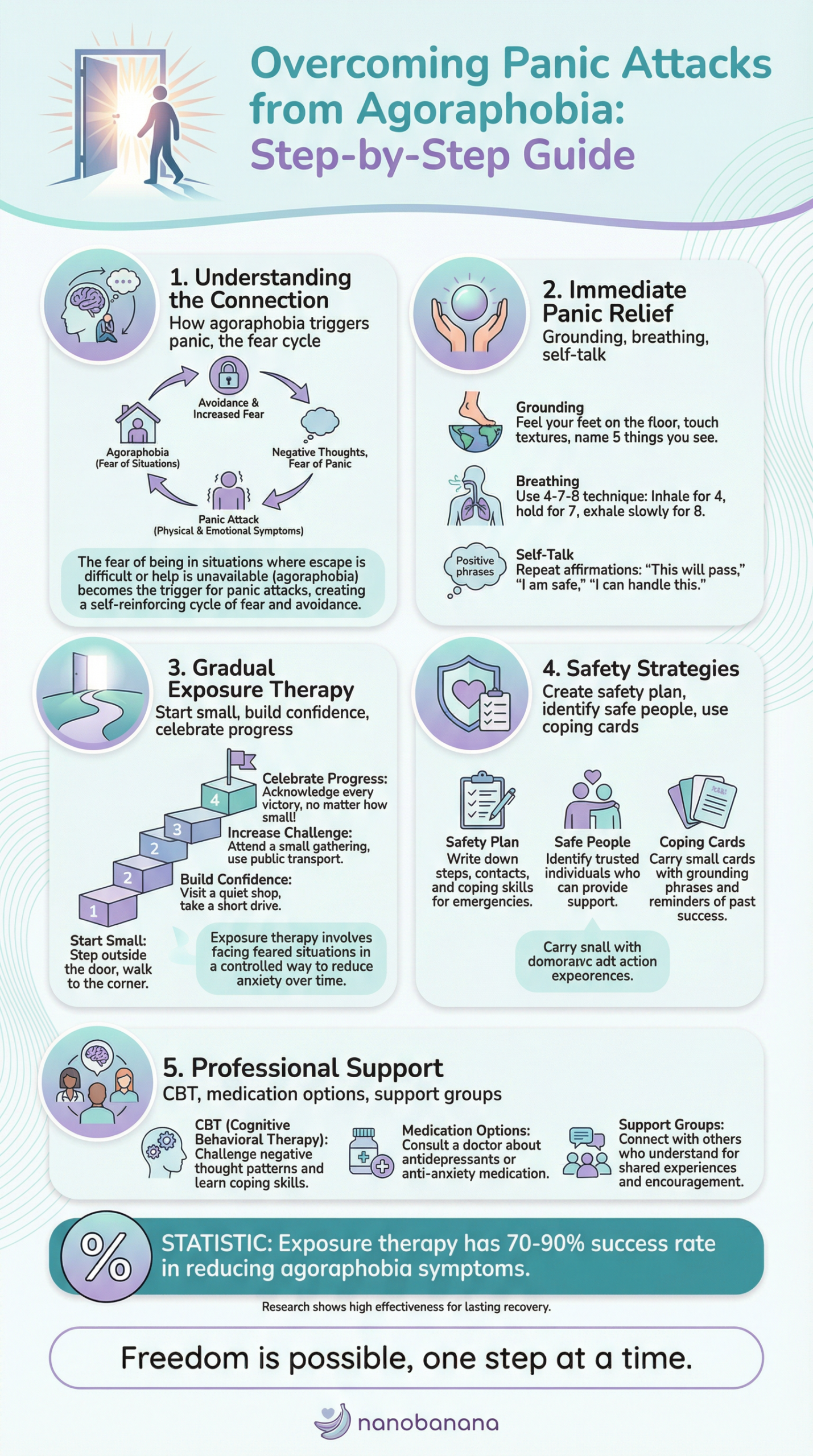
How to overcome panic attacks due to agoraphobia: understanding, coping and recovery
How to overcome panic attacks linked to agoraphobia: understand the connection, learn coping techniques, and follow practical steps towards recovery.