
Social Anxiety: Symptoms, Causes and How to Get Help
Last updated:
What Is Social Anxiety?
Social anxiety disorder (sometimes called social phobia) is a persistent and overwhelming fear of social situations. It goes far beyond the ordinary nervousness that most people feel before a job interview or public speaking engagement. For someone with social anxiety, everyday interactions — making a phone call, eating in front of others, attending a meeting or even walking into a room — can provoke intense anxiety and dread.
The core fear in social anxiety is the belief that you will do or say something that leads others to judge you negatively, think badly of you or reject you. This fear can be so powerful that it leads people to avoid social situations altogether, or to endure them with such distress that life becomes severely restricted.
Social anxiety is remarkably common. Research suggests it affects around 7-13% of the population at some point in their lives, making it one of the most prevalent mental health conditions worldwide. In the UK, Mind estimates that millions of people live with social anxiety, though many never seek help because they believe their difficulties are simply part of their personality.
Symptoms of Social Anxiety
Social anxiety affects thoughts, feelings, physical sensations and behaviour. Recognising all four components can help you understand the condition more fully.
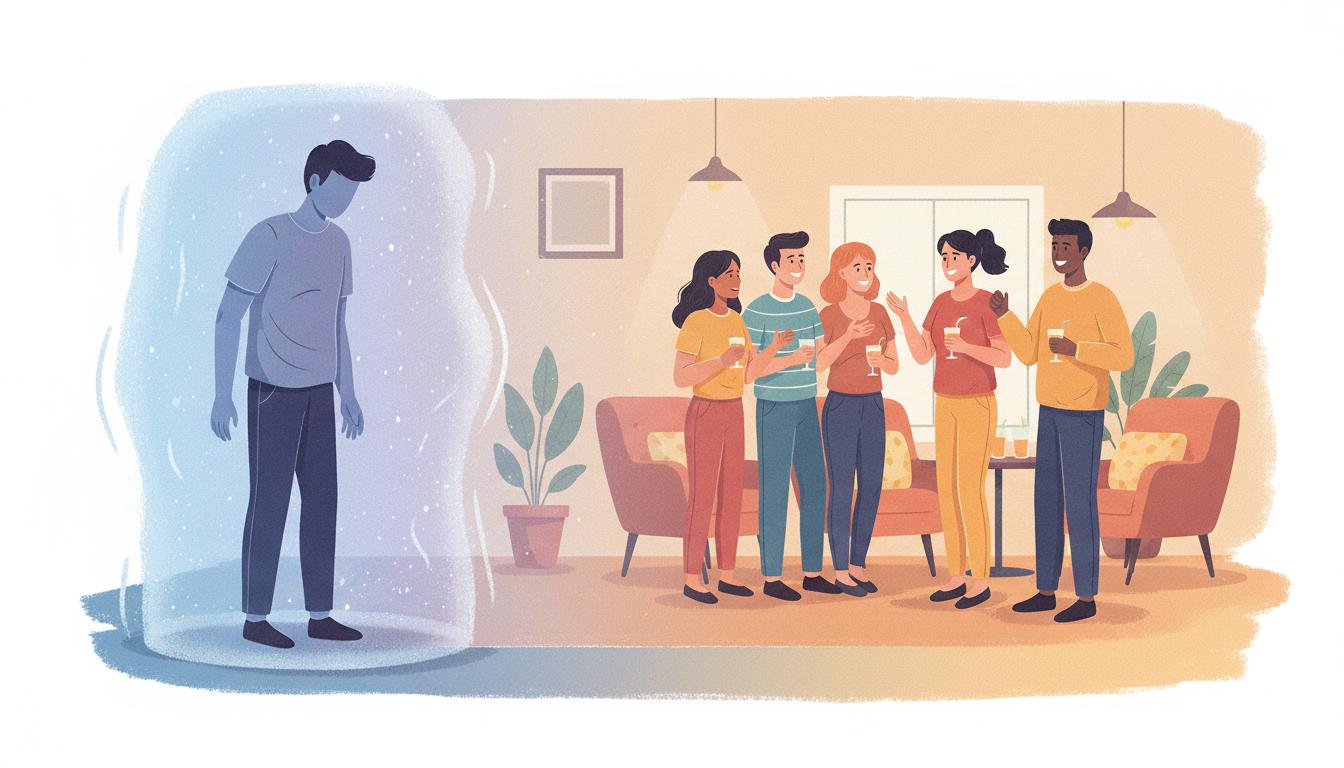
Cognitive Symptoms (Thoughts)
People with social anxiety tend to experience a characteristic pattern of negative thinking before, during and after social situations:
- Anticipating the worst before social events (“Everyone will notice I am nervous”)
- Believing others are constantly evaluating you negatively
- Assuming you will say or do something embarrassing
- Dwelling on past social interactions, replaying them and focusing on perceived mistakes (“post-event rumination”)
- Setting impossibly high standards for your own social performance
- Mind-reading — assuming you know what others are thinking about you, and that it is negative
Physical Symptoms
The physical symptoms of social anxiety are often a major source of distress, partly because sufferers fear that others will notice them:
- Blushing
- Sweating
- Trembling or shaking (particularly hands and voice)
- Nausea or churning stomach
- Rapid heartbeat
- Difficulty speaking or a shaky voice
- Going blank or losing your train of thought
- Needing the toilet urgently
- Feeling dizzy or faint
Behavioural Symptoms
Social anxiety drives two key behavioural patterns: avoidance and safety behaviours.
Avoidance might include declining invitations, missing social events, avoiding eye contact, not speaking up in meetings, choosing self-checkout to avoid speaking to a cashier or taking different routes to avoid encountering people.
Safety behaviours are subtle strategies people use to prevent the feared outcome. These might include rehearsing what you will say, gripping a glass tightly to hide hand tremors, wearing extra layers to conceal sweating, arriving early to avoid walking into a full room, staying on the periphery of groups or drinking alcohol to cope with social situations.
While safety behaviours may feel helpful in the moment, research shows they actually maintain social anxiety by preventing you from learning that the feared catastrophe would not have occurred even without the safety behaviour.
Common Situations That Trigger Social Anxiety
Social anxiety can be triggered by a wide range of situations. Some people fear most social interactions, while others have anxiety only in specific contexts. Common triggers include:
- Public speaking or giving presentations
- Meeting new people or making small talk
- Being the centre of attention
- Eating or drinking in front of others
- Using the telephone
- Attending parties or social gatherings
- Job interviews
- Speaking up in meetings or classes
- Using public toilets
- Writing or signing in front of others
- Entering a room where others are already seated
What Causes Social Anxiety?
Early Experiences
Social anxiety often has its roots in childhood and adolescence. Experiences such as bullying, teasing, rejection, humiliation, criticism or exclusion can plant the seeds of social anxiety. Growing up with overly critical, controlling or anxious parents can also contribute, as can having limited opportunities to socialise during childhood.
Temperament
Some children are naturally more behaviourally inhibited — cautious, reserved and wary of unfamiliar situations and people. While this temperament does not inevitably lead to social anxiety, it does appear to be a risk factor, particularly when combined with negative social experiences.
Cognitive Factors
The Clark and Wells (1995) cognitive model of social anxiety, which underpins the most effective treatments, identifies several maintaining factors: a negative self-image in social situations (often seeing yourself from an observer’s perspective), high standards for social performance, anticipatory worry and post-event rumination, and the use of safety behaviours and avoidance.
Social and Cultural Factors
Social media can exacerbate social anxiety by encouraging constant social comparison and creating pressure to present an idealised version of oneself. Cultural expectations around social performance and the increasing emphasis on personal branding can also contribute to social anxiety in modern life.
Social Anxiety vs Shyness
It is important to distinguish between ordinary shyness and social anxiety disorder. Shyness is a common personality trait that most people experience to some degree. While a shy person may feel uncomfortable in certain social situations, they can generally push through and participate in life without significant distress or impairment.
Social anxiety disorder, by contrast, causes marked distress and significantly interferes with daily functioning. A person with social anxiety may turn down job promotions, avoid forming relationships, drop out of education or become increasingly isolated. The distinction is not about the type of feeling, but its intensity, persistence and the degree to which it restricts your life.
Treatment for Social Anxiety
Cognitive Behavioural Therapy (CBT)
NICE guidelines recommend individual CBT based on the Clark and Wells model as the first-line treatment for social anxiety disorder. This is a highly structured and effective therapy that typically involves 12 to 16 sessions. Key components include:
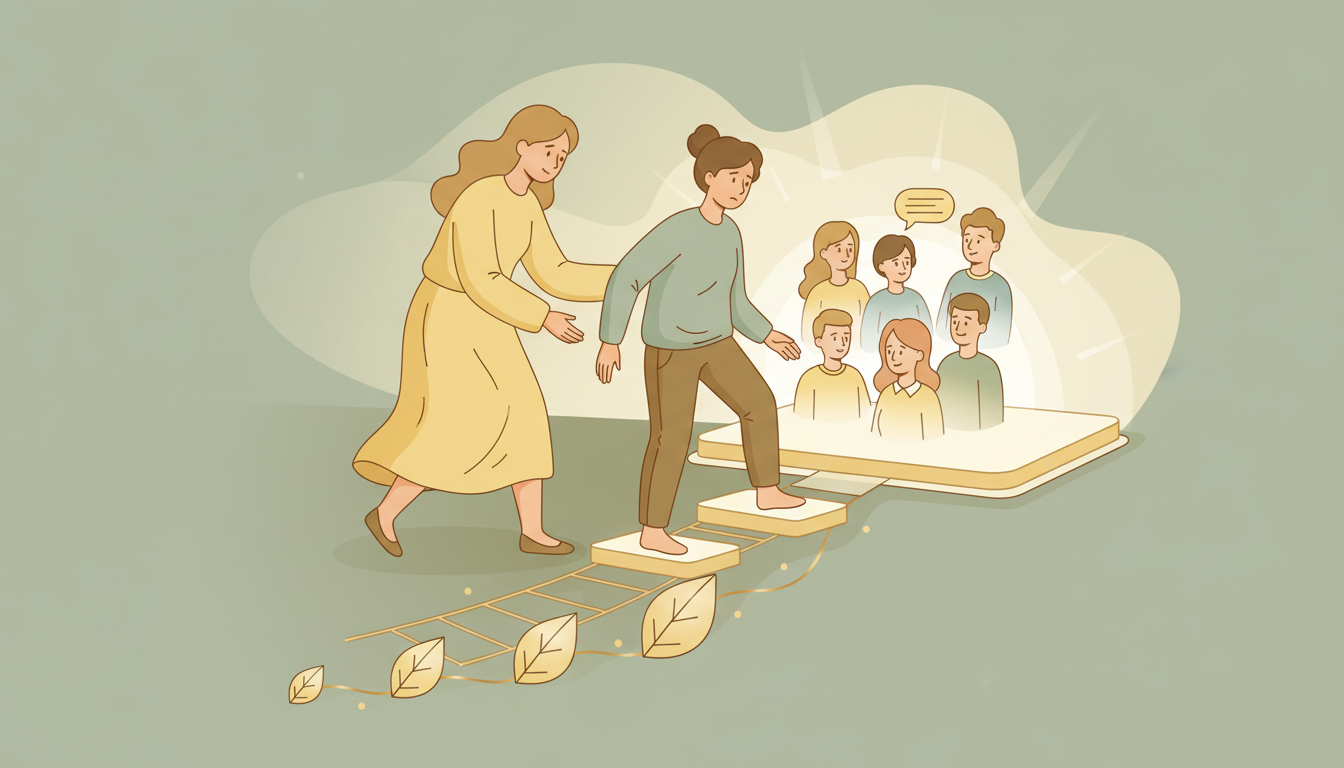
- Developing an individualised model: Understanding how your specific thoughts, behaviours and feelings interact to maintain your social anxiety.
- Video feedback: Many people with social anxiety have a distorted mental image of how they appear to others. Video feedback allows you to see yourself as others actually see you, which is often far more positive than expected.
- Attention training: Learning to shift your focus from internal self-monitoring to the external environment and the people around you.
- Dropping safety behaviours: Gradually eliminating the subtle avoidance strategies that maintain anxiety.
- Behavioural experiments: Testing out feared predictions in real social situations to gather evidence about what actually happens.
- Addressing post-event rumination: Learning to break the habit of replaying and analysing social interactions after the event.
Research trials have shown that CBT based on the Clark and Wells model produces recovery rates of around 70-80% for social anxiety disorder, making it one of the most effective psychological treatments available.
Medication
If CBT is not available, not preferred or has not been sufficient on its own, NICE recommends considering medication. SSRIs (such as escitalopram or sertraline) are the first-choice medications. They should be taken for at least 12 months if effective, as social anxiety has a high relapse rate when medication is stopped too early.
Group CBT and Other Approaches
Group CBT can also be effective for social anxiety and has the added benefit of providing a built-in social situation to practise in. However, NICE rates individual CBT as the preferred option. Psychodynamic psychotherapy may be considered if CBT and medication have not worked.
Self-Help Strategies
While professional treatment is recommended for moderate to severe social anxiety, the following strategies can complement therapy or help with milder difficulties:
- Gradual exposure: Create a hierarchy of feared situations, from least to most anxiety-provoking, and work through them gradually. Start with situations that feel manageable and build up over time.
- Challenge your predictions: Before a social event, write down what you expect will happen. Afterwards, review whether your prediction came true. Over time, you will build evidence that outcomes are usually better than expected.
- Shift your attention outward: When in social situations, practise focusing on the other person and what they are saying, rather than monitoring your own anxiety.
- Reduce post-event analysis: When you catch yourself replaying a social interaction, try to redirect your attention to a present-moment activity.
- Be honest about your anxiety: For some people, selectively disclosing their anxiety to trusted friends or colleagues can reduce the pressure of trying to hide it.
When to Seek Help
Consider seeking professional support if:
- Fear of social situations is causing you to avoid important activities, relationships or opportunities
- You experience significant distress before, during or after social interactions
- Social anxiety has persisted for six months or more
- You are relying on alcohol or other substances to get through social situations
- Your self-confidence and quality of life are being significantly affected
- You feel increasingly isolated or low in mood
Where to get help in the UK:
- NHS Talking Therapies: Self-refer for free CBT without needing a GP referral at nhs.uk.
- Your GP: Can assess your symptoms, discuss medication options and refer you to specialist services if needed.
- Social Anxiety UK: A charity run by people with lived experience, offering online support groups, forums and resources at social-anxiety.org.uk.
- Mind: Information and support. Infoline: 0300 123 3393.
- Anxiety UK: Support and resources for all anxiety conditions. Helpline: 03444 775 774.
Frequently Asked Questions
What Is Social Anxiety?
Social anxiety disorder (sometimes called social phobia) is a persistent and overwhelming fear of social situations. It goes far beyond the ordinary nervousness that most people feel before a job interview or public speaking engagement. For someone with social anxiety, everyday interactions — making a phone call, eating in front of others, attending a meeting or even walking into a room — can provoke intense anxiety and dread.
What Causes Social Anxiety?
Social anxiety often has its roots in childhood and adolescence. Experiences such as bullying, teasing, rejection, humiliation, criticism or exclusion can plant the seeds of social anxiety. Growing up with overly critical, controlling or anxious parents can also contribute, as can having limited opportunities to socialise during childhood.
When to Seek Help?
Consider seeking professional support if:
Related Articles
Anxiety Attack Symptoms: How to Recognise and Respond
Learn to recognise anxiety attack symptoms quickly. Understand what's happening in your body and how to respond with confidence.

Chronic Anxiety: When Anxiety Won’t Go Away
When anxiety won't go away, it can feel overwhelming. Understand chronic anxiety and discover strategies to break the long-term cycle.
CBT Techniques Social Anxiety UK: Effective NHS-Approved Methods for Self-Help and Recovery
How CBT treats social anxiety disorder: proven techniques, NHS talking therapies access, and self-help strategies UK readers can use for lasting relief.