
Acupressure Points for Anxiety and Depression: An Honest Guide
Search for acupressure points for anxiety and depression and you will find two kinds of pages: breathless promises that pressing your wrist rewires your nervous system, and dismissals that never explain what the research actually found. This guide, part of our managing anxiety resources, tries to be the third kind: it shows you the points people use, how to press them safely, and grades the evidence honestly so you know exactly what you are getting.
The short version up front: acupressure is safe, free, and pleasant for most people, and small studies suggest it can take the edge off anxiety in the moment. It is not a treatment for an anxiety disorder or for depression, and nobody should delay proper care to press points instead.
What acupressure is
Acupressure applies steady finger pressure to specific body points. It comes from the same traditional Chinese medicine map as acupuncture, but uses fingertips instead of needles, which makes it something you can do yourself, anywhere, in a minute or two.
You do not need to accept the traditional theory of energy meridians for the practice to be worth examining. What matters practically is simpler: does pressing these points reduce anxious arousal, and is it safe? The second answer is clearly yes for most people. The first deserves an honest look.
What the evidence really shows
Researchers have tested acupressure mostly in short-term, high-stress situations: patients before surgery, people undergoing dialysis, students before exams. Across systematic reviews of these small trials, acupressure tends to beat doing nothing at reducing self-reported anxiety in the moment.
Three honest caveats belong next to that finding:
- The trials are small and hard to blind. You know when someone is pressing your wrist, so expectation effects are baked in, and “sham point” comparisons often show smaller differences than comparisons with no treatment at all.
- The effect is short-term. The evidence is about feeling calmer in the following minutes and hours, not about changing the course of an anxiety disorder.
- It is not in UK clinical guidance. NICE does not recommend acupressure or acupuncture for treating anxiety disorders or depression. That does not make it useless as self-care; it does mean no one should sell it to you as therapy.
A fair reading: some of the benefit is probably the ritual itself, slowing down, breathing, focusing on a single physical sensation, which is exactly what grounding techniques do. If pressing a point is the anchor that gets you to do that, it is doing real work, whatever the mechanism.
Five points people use, and how to find them
For each point: press firmly but comfortably with a fingertip or thumb, hold steady pressure or make small slow circles for one to two minutes, and breathe slowly the whole time, ideally in for four counts and out for six. Press on both sides where the point exists on both.
1. PC6 (Neiguan), the inner wrist. Three finger-widths below the wrist crease, on the inner forearm, between the two central tendons. This is the point anti-sickness wristbands target, with modest evidence for nausea, which makes it a natural choice when anxiety unsettles your stomach. See our guide to nausea from anxiety for the bigger picture on anxious stomachs.
2. HT7 (Shen Men), the wrist crease. On the palm side of the wrist crease, in the small hollow in line with the little finger. Traditionally the classic “calming” point, and conveniently discreet: you can press it under a desk or on a train without anyone noticing.
3. LI4 (Hegu), the hand web. In the fleshy mound between thumb and index finger. Squeeze it between the opposite thumb and index finger. This is the “pressure point on the hand” most people are searching for. Important: avoid stimulating LI4 during pregnancy, as it is traditionally believed to influence uterine activity.
4. Yintang, between the eyebrows. The soft spot just above the bridge of the nose, sometimes called the third eye point. Press very gently with one fingertip, or stroke slowly upward towards the hairline. Yintang is one of the better-studied points for pre-procedure anxiety, and many people find touch here naturally soothing.
5. GB20 (Fengchi), the base of the skull. In the hollows either side of the spine, where the neck muscles meet the skull. Press upward and inward with both thumbs while dropping your shoulders. Less about tradition, more about mechanics: anxiety parks tension in exactly these muscles, and slow pressure here releases it.
Making it work: pair pressure with breath
Used alone, a pressure point is a small lever. Used as an anchor for slow breathing, it becomes a genuinely practical routine:
- Sit comfortably and choose one point, PC6 or HT7 are the easiest.
- Press with steady, comfortable firmness.
- Breathe in through your nose for a count of four, out for a count of six, and keep your attention on the sensation under your finger.
- Continue for two minutes, then swap sides.
That is a two-minute practice combining acupressure, paced breathing and single-point focus, three calming mechanisms stacked together. If you like this style of body-first tool, our guides to breathing exercises and the wider menu of relaxation techniques build on the same principle with stronger evidence behind them.
Safety and who should be cautious
Acupressure is low-risk, with a few sensible rules:
- Press to comfortable firmness, never sharp pain, and stop if a point hurts.
- Do not press on broken skin, bruises, swollen areas, varicose veins or recent scars or surgical sites.
- If you are pregnant, check with your midwife or GP first and avoid traditionally contraindicated points such as LI4.
- If you have a bleeding disorder or take anticoagulants, use light pressure and check with a clinician if unsure.
- Acupressure never replaces medical assessment for new or severe physical symptoms.
The depression part, honestly
Because the search that brings many people here pairs anxiety with depression, this deserves its own plain paragraph. Low mood and anxiety often travel together, and gentle self-care rituals like acupressure can be a kind, low-effort thing to offer yourself on a hard day. But depression is not treatable by pressure points, and the evidence for mood benefits is far weaker even than for momentary anxiety relief.
If your low mood has lasted more than a couple of weeks, or you have lost interest in things you normally care about, that is GP territory, and effective help exists. Our guide to anxiety and depression together explains how the two interact and what actually helps both.
When to seek help
Self-help has a ceiling. See your GP if anxiety or low mood is persistent, worsening, or interfering with work, sleep or relationships. In England you can also refer yourself directly to NHS Talking Therapies for evidence-based treatment; elsewhere in the UK your GP can point you to local services. If you or someone else is in immediate danger, call 999 or go to A&E. For urgent mental health advice that is not life-threatening, contact NHS 111, and Samaritans are available around the clock on 116 123.
Try the points. Enjoy the two quiet minutes they give you. Just keep them in their rightful place: a small, safe tool in a bigger kit, not the treatment itself.
Frequently Asked Questions
Do acupressure points actually work for anxiety?
The honest answer is maybe, modestly, for some people. Small trials, often in pre-surgery or dental settings, suggest brief acupressure can lower anxiety in the moment, but the studies are small, hard to blind, and a good part of the effect is likely expectation and the calming ritual itself. It is safe and free, so it is a reasonable thing to try, but it is not a treatment for an anxiety disorder.
Which pressure point on the hand calms anxiety?
The best-known hand point is LI4, called Hegu, in the fleshy web between thumb and index finger. Press it firmly with the opposite thumb for one to two minutes while breathing slowly, then swap hands. Avoid stimulating LI4 during pregnancy, as it is traditionally believed to influence uterine activity. The wrist point HT7, on the crease below the little finger, is a discreet alternative.
Can acupressure help nausea from anxiety?
The point with the most evidence for nausea is PC6, or Neiguan, on the inner forearm about three finger-widths below the wrist crease. It is the point that anti-sickness wristbands press, and studies support it modestly for some types of nausea. Since anxiety often unsettles the stomach, pressing PC6 while slowing your breathing tackles both at once for some people.
Is acupressure safe during pregnancy?
Mostly, but with caveats. Certain points, including LI4 on the hand, are traditionally avoided in pregnancy because they are believed to stimulate the uterus. The evidence either way is weak, but the cautious approach is to check with your midwife or GP before using acupressure while pregnant, and to avoid the traditionally contraindicated points.
Can acupressure treat depression?
No. Some small studies report mood benefits, but the evidence is far too weak to call acupressure a treatment, and NICE does not recommend it for depression. Depression responds to talking therapies, lifestyle support and, where appropriate, medication. Acupressure can sit alongside proper care as a calming self-care ritual, never instead of it.
Related Articles
Can You Have Anxiety and Depression at the Same Time? Yes: 5 Strategies
Anxiety and depression at the same time is common, and mixed anxiety and depressive disorder is one of the UK's most frequent diagnoses. How to spot it and five strategies that help.

Best Breathing Exercises for Anxiety: 8 Step-by-Step Techniques
The best breathing exercises for anxiety, with step-by-step instructions for diaphragmatic breathing, 4-7-8, box breathing and more, plus how to choose the right one.
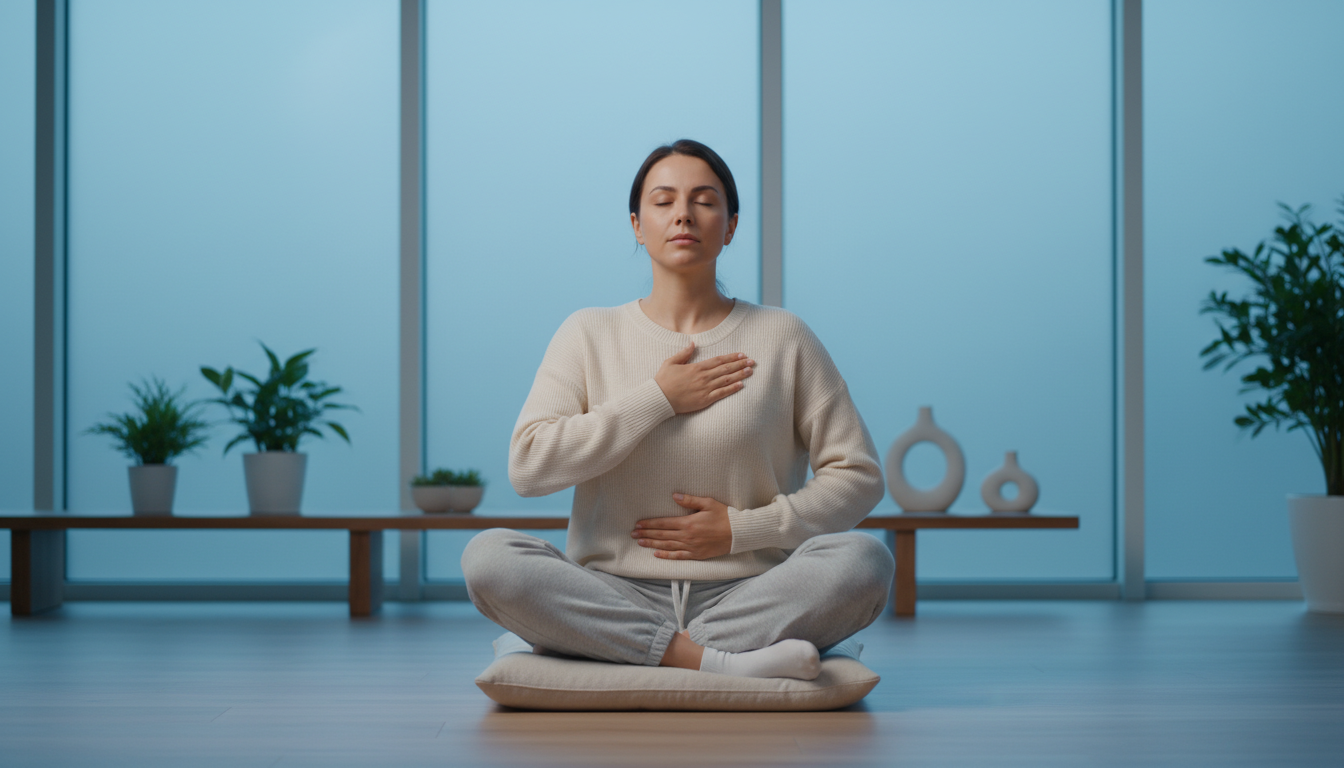
Grounding Techniques for Anxiety: Exercises to Try Now
Grounding techniques can stop anxiety in its tracks. Learn what grounding techniques are and try simple, effective exercises to come back to the present moment.