Mental Symptoms of Anxiety: How Anxiety Affects Your Mind
Last updated:
Introduction: The Hidden Battle in Your Mind
While the physical symptoms of anxiety, the racing heart, the knotted stomach, the trembling hands, are often the most immediately noticeable, it is the mental and emotional symptoms that many people find most distressing and disabling. The relentless worry that never switches off. The catastrophic thoughts that spiral out of control. The brain fog that makes it impossible to concentrate on the simplest task. The constant, gnawing sense that something terrible is just about to happen.
These mental symptoms can be harder to recognise than physical ones, partly because they happen invisibly inside your head and partly because anxious thinking can feel so convincing that you do not question it. When your mind tells you that disaster is imminent, it does not feel like anxiety talking. It feels like the truth.
Understanding how anxiety affects your mind is crucial because it allows you to step back from anxious thoughts and see them for what they are: products of an overactive alarm system, not accurate reflections of reality. This article will help you understand the full range of mental and emotional symptoms of anxiety, explain why they happen, and show you what can be done about them.
How Anxiety Changes the Way You Think
Anxiety fundamentally alters the way your brain processes information. When the stress response is activated, brain activity shifts away from the prefrontal cortex, which handles rational thinking, planning, and decision-making, and towards the amygdala, the brain’s emotional and threat-detection centre.
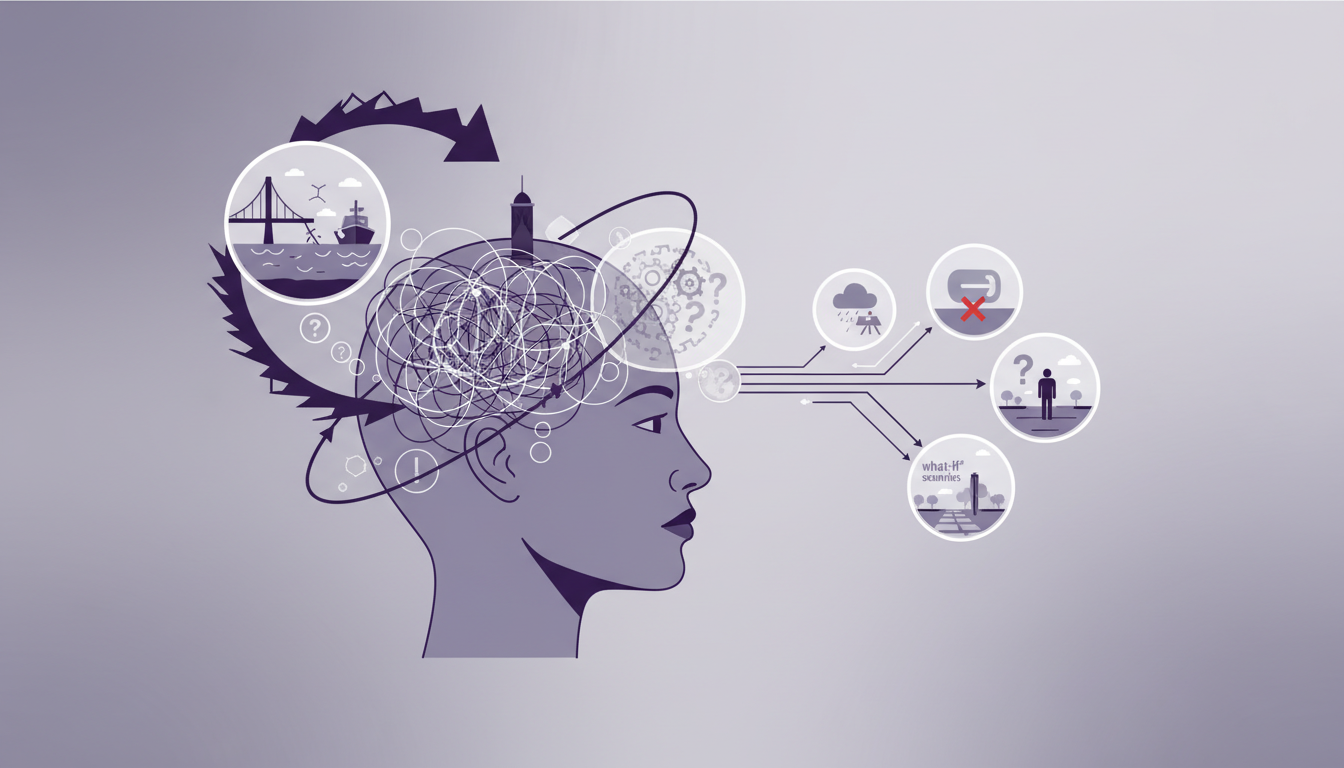
The result is a brain that is primed for danger: hypervigilant, focused on potential threats, and less able to think logically, weigh evidence, or consider alternative perspectives. This is not a choice you make or a weakness in your character. It is a neurological shift that happens automatically.
Persistent, Uncontrollable Worry
The central mental symptom of anxiety, particularly generalised anxiety disorder (GAD), is persistent, excessive worry that is extremely difficult to control. This is not ordinary concern about a specific problem. It is a constant stream of “what if” thoughts that can jump rapidly from one topic to another.
You might worry about your health, then your finances, then your children’s safety, then whether you said the wrong thing in a conversation last week, then whether you locked the front door. The topics change, but the worry never stops. NICE guidelines describe this kind of worry as being present “on more days than not” for at least six months in the case of GAD.
What makes this worry particularly distressing is the feeling that you cannot control it. You may tell yourself to stop worrying, recognise that your concerns are irrational, and still find yourself unable to switch off the anxious thoughts. This is because the worry is being driven by an activated threat system that operates largely outside of conscious control.
Racing Thoughts
Many people with anxiety describe their thoughts as “racing” or say that their mind feels as though it is going at a hundred miles an hour. Thoughts may tumble over each other, making it hard to focus on any single one. This can be particularly distressing at night, when the absence of daytime distractions allows anxious thoughts to flood in.
Racing thoughts are driven by the brain’s heightened state of alertness. When the threat detection system is overactive, the brain generates a rapid stream of potential dangers and scenarios, trying to anticipate and prepare for every possible threat.
Catastrophic Thinking
Catastrophising, or automatically assuming the worst-case scenario, is one of the most common thinking patterns in anxiety. A minor headache becomes a brain tumour. A delayed reply to a text message means the person hates you. A small mistake at work means you will be sacked. A strange noise in the house means an intruder.
This pattern occurs because the anxious brain is biased towards threat. It overestimates the likelihood of negative outcomes and underestimates your ability to cope with them. Research in cognitive psychology has shown that anxious individuals process ambiguous information more negatively than non-anxious individuals, interpreting neutral situations as threatening.
Difficulty Concentrating and “Brain Fog”
Anxiety significantly impairs concentration and cognitive function. You may find it hard to focus at work, follow the plot of a television programme, read a book, or hold a conversation. Many people describe this as “brain fog,” a feeling that their thinking is slow, muddled, or cloudy.
This happens for two main reasons. First, anxiety commandeers a significant proportion of your brain’s working memory, the cognitive resources you use for attention and processing. When much of that capacity is occupied by anxious thoughts, there is less available for other tasks. Second, the stress hormones associated with chronic anxiety can impair the function of the hippocampus, the brain region involved in memory and learning.
Memory Problems
Anxiety can affect both short-term and long-term memory. You may forget appointments, lose track of conversations, or struggle to recall information you have just learned. This is a direct consequence of the attention and cognitive impairments described above. Research from King’s College London has shown that chronic stress and anxiety can shrink the hippocampus over time, although this effect appears to be reversible with effective treatment.
Indecisiveness
Making decisions, even minor ones, can become agonising when you are anxious. The fear of making the wrong choice, combined with catastrophic thinking about potential consequences, can lead to decision paralysis. You may find yourself going back and forth on decisions, seeking excessive reassurance, or avoiding making decisions altogether.
Emotional Symptoms of Anxiety
Anxiety is, at its core, an emotional state, and it brings with it a range of emotional experiences that go beyond simple worry.
A Sense of Dread or Impending Doom
One of the most unsettling symptoms of anxiety is a persistent feeling that something terrible is about to happen. This sense of dread can be vague and formless, you cannot identify what you are afraid of, but the feeling of danger is overwhelming. Some people describe it as “waiting for the axe to fall” or a permanent feeling of being “on edge.”
Irritability and Anger
Anxiety frequently manifests as irritability, particularly when you are feeling overwhelmed or when your tolerance for frustration is lowered by chronic stress. You may snap at loved ones, feel disproportionately annoyed by minor inconveniences, or experience sudden flashes of anger. This is especially common in men, who may be socialised to express distress as anger rather than fear or sadness.
Mind, the UK mental health charity, notes that irritability is an often-overlooked symptom of anxiety that can significantly affect relationships and quality of life.
Restlessness and Agitation
A feeling of being unable to relax or sit still is a core symptom of generalised anxiety disorder, listed as a diagnostic criterion in both the ICD-11 and DSM-5. You may feel keyed up, jittery, or as though you need to constantly be doing something. This restlessness is a product of the body’s heightened state of arousal and can be both physically and emotionally exhausting.
Feeling Overwhelmed
When anxiety is intense, even ordinary tasks can feel overwhelming. The prospect of getting through the day, replying to emails, making dinner, or completing a simple errand can feel utterly beyond your capacity. This is not laziness or a lack of willpower. It is the result of a nervous system that is already stretched to its limit by the demands of managing constant anxiety.
Emotional Numbness
Paradoxically, chronic anxiety can sometimes lead to emotional numbness or a feeling of being “shut down.” When the nervous system is overwhelmed by sustained stress, it can enter a state of emotional disconnection as a protective mechanism. You may feel flat, empty, or unable to experience positive emotions such as joy or excitement.
Depersonalisation and Derealisation
Two of the most frightening mental symptoms of anxiety are depersonalisation and derealisation. Although they can feel very alarming, they are common anxiety responses and are not signs of psychosis or a more serious mental health condition.
Depersonalisation is a feeling of being detached from yourself, as though you are observing yourself from outside your body or watching yourself in a film. You may feel like your thoughts, feelings, or body are not quite “yours.”
Derealisation is a feeling that the world around you is not real, or that you are in a dream. Colours may seem muted, sounds distant, or your surroundings unfamiliar, even in places you know well.
These experiences are believed to be a protective response: when the brain is overwhelmed by anxiety, it can partially “dissociate” from reality to reduce the intensity of the emotional experience. While unsettling, they are temporary and harmless. They are recognised by the NHS as a common symptom of anxiety and panic disorder.
How Anxiety Affects Sleep
The mental symptoms of anxiety have a particularly destructive impact on sleep. Racing thoughts, persistent worry, and catastrophic thinking are at their worst when you lie down in a quiet, dark room with nothing to distract you.
Common anxiety-related sleep problems include difficulty falling asleep (sleep-onset insomnia), waking frequently during the night, waking early and being unable to get back to sleep, vivid or disturbing dreams, and waking feeling unrefreshed despite adequate hours of sleep.
Poor sleep then worsens anxiety, creating a vicious cycle. Research from the University of Oxford’s Sleep and Circadian Neuroscience Institute has shown that treating sleep problems can significantly reduce anxiety levels, and vice versa.
Practical Strategies for Managing Mental Symptoms
Thought Challenging
A core CBT technique involves learning to identify, examine, and challenge anxious thoughts. When you notice a catastrophic thought, ask yourself: What is the evidence for this thought? What is the evidence against it? What would I say to a friend who had this thought? What is the most likely outcome, rather than the worst-case scenario?
Mindfulness and Present-Moment Awareness
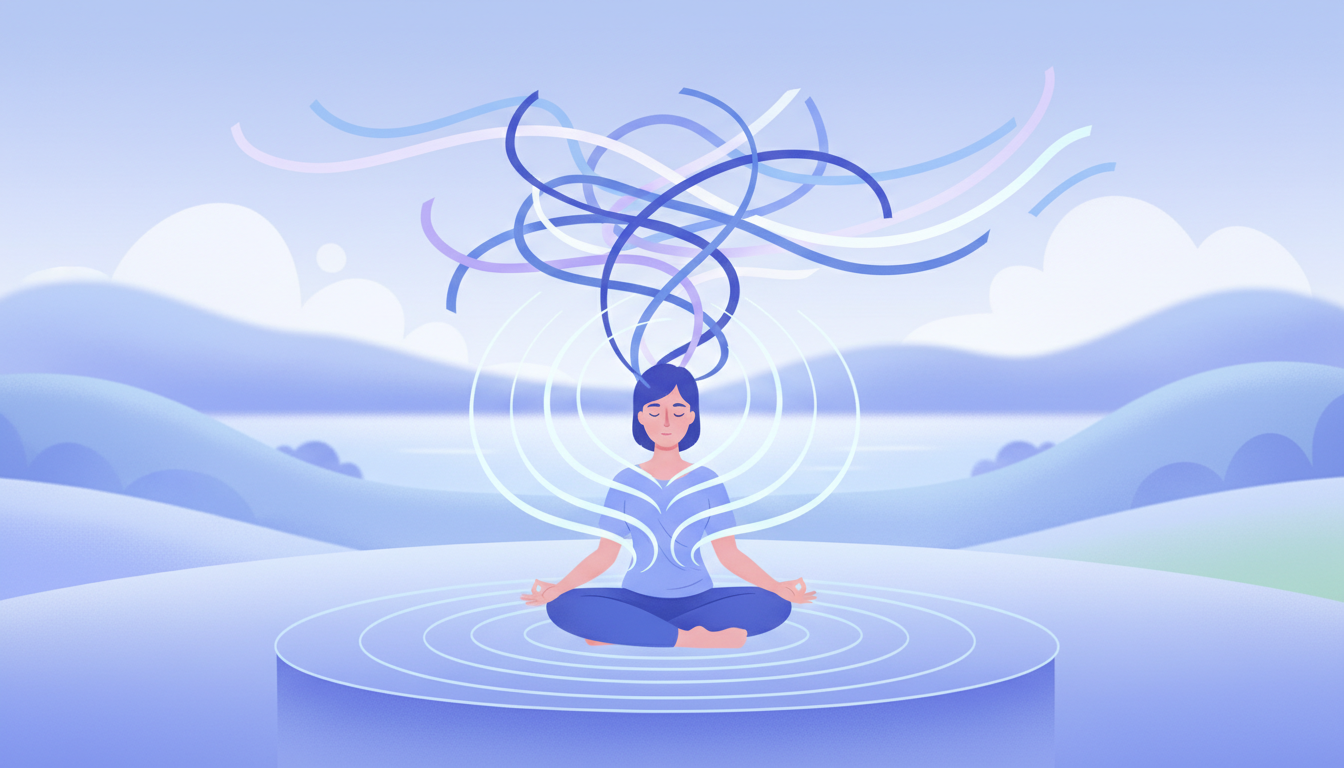
Mindfulness practices can help you step back from anxious thoughts rather than getting swept up in them. The NHS and NICE both recognise mindfulness-based approaches as potentially helpful for anxiety. The key principle is learning to observe your thoughts without judgement, rather than engaging with them or trying to control them.
Worry Time
A practical technique recommended by many therapists involves setting aside a specific 15 to 20-minute period each day for worry. When anxious thoughts arise outside this window, you note them down and postpone engaging with them until your designated worry time. This can help contain worry and reduce its intrusion into daily life.
Grounding Techniques
When anxiety causes racing thoughts, depersonalisation, or derealisation, grounding techniques can help bring you back to the present moment. The “5-4-3-2-1” technique involves identifying five things you can see, four you can touch, three you can hear, two you can smell, and one you can taste.
When to Seek Help
Mental symptoms of anxiety are just as valid and deserving of treatment as physical symptoms. Consider seeking professional help if:
- Persistent worry is dominating your daily life and you cannot control it.
- Concentration problems are affecting your ability to work or study.
- You are experiencing depersonalisation, derealisation, or intrusive thoughts that are causing significant distress.
- Anxiety is significantly affecting your mood, relationships, or enjoyment of life.
- You feel unable to cope or overwhelmed most of the time.
- You are experiencing thoughts of self-harm or suicide.
Your GP can assess your symptoms and discuss treatment options. Cognitive behavioural therapy, available through NHS Talking Therapies, is particularly effective for addressing the mental symptoms of anxiety. You can self-refer in most areas of England.
Support is also available from Mind (0300 123 3393), Anxiety UK (03444 775 774), and the Samaritans (116 123). In a crisis, text “SHOUT” to 85258 or call 999.
Your mind deserves the same care and attention as your body. You do not have to live with these symptoms indefinitely. Help is available, and recovery is achievable.
Related Articles

Anxiety Causes: What Triggers Anxiety and Why
What causes anxiety? Explore the triggers, risk factors and underlying reasons anxiety develops - and what you can do about it.
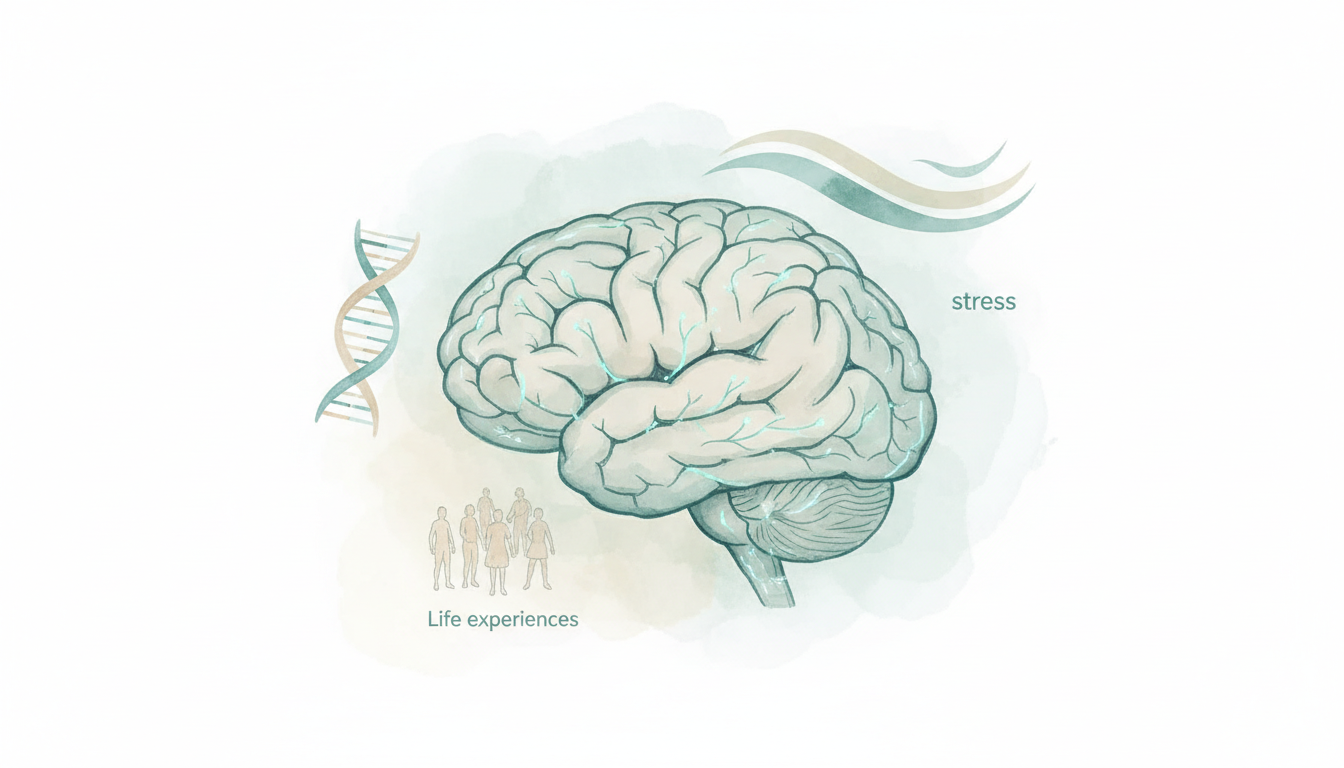
Anxiety Causes: Exploring the Roots of Worry and Fear
Anxiety Causes TL;DR Anxiety can stem from various factors, including genetics, brain chemistry, life experiences, and chronic stress. Understanding these causes is the first step towards...

Anxiety Symptoms: Signs, Causes and When to Seek Help
Recognise the signs of anxiety - physical, emotional and behavioural. Learn what causes anxiety and when to seek professional help.