Anxiety in Daily Life
Morning Anxiety: Why You Wake Up Anxious and How to Stop It
Waking up anxious? Learn why morning anxiety happens, the role of cortisol, and gentle, evidence-based ways to start your day feeling calmer and more in control.
Anxiety doesn't just show up in dramatic moments — it weaves itself into everyday life. It shows up at work when you're worried about deadlines or meetings, in relationships when intrusive thoughts about loved ones surface, in social situations where simple interactions feel overwhelming, and at night when you can't fall asleep because your mind won't slow down. Each of these contexts has its own dynamics and its own strategies. The articles here explore how anxiety manifests in specific everyday situations and offer practical, evidence-based tools to navigate them with more ease.
Waking up anxious? Learn why morning anxiety happens, the role of cortisol, and gentle, evidence-based ways to start your day feeling calmer and more in control.
High-functioning anxiety hides behind success and a calm exterior. Learn the signs, why it happens, and gentle, evidence-based ways to cope and recover.

Relationship anxiety can affect even the healthiest partnerships. Learn the signs, causes, and evidence-based strategies to cope with anxiety in relationships.

Sleep anxiety keeps millions awake at night. Learn what causes it, how to recognise the symptoms, and evidence-based techniques to finally get restful sleep.

Social situations can trigger anxiety for many people. Find practical coping strategies to face social anxiety with more confidence.

Workplace anxiety affects millions in the UK. Discover practical strategies to manage anxiety at work and protect your performance.

Stress and anxiety feed each other in a vicious cycle. Learn how to break the pattern and prevent stress from fuelling your anxiety.

School mornings can feel like a knot in the stomach. He might wake early with a tummy ache or snap over socks that do not feel right, then refuse breakfast…
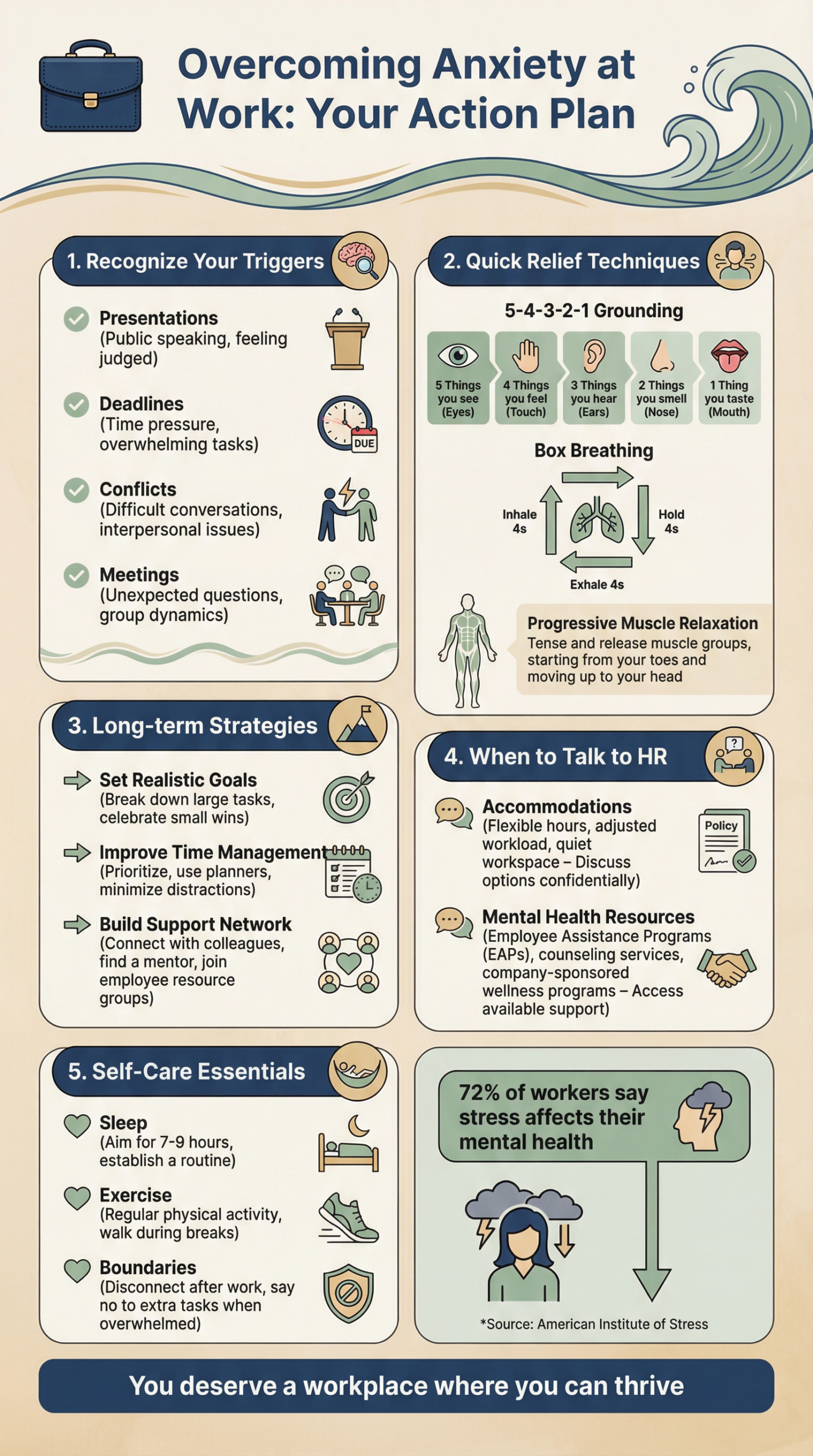
Practical tips to overcome anxiety at work and build a calmer, more stress-free workplace — manage worry, set boundaries and protect your wellbeing.