
Fear of Failure: Why It Happens and How to Overcome It
Last updated:
What Is the Fear of Failure?
Fear of failure is the persistent, disproportionate dread of not succeeding at a task, goal, or life event. While everyone experiences some nervousness about important outcomes, fear of failure goes beyond healthy caution. It becomes a pattern that actively prevents you from trying, taking risks, or pursuing things that matter to you.
The clinical term for an extreme fear of failure is atychiphobia (from the Greek “atychia” meaning misfortune). While not formally classified as a standalone diagnosis in the DSM-5 or ICD-11, it is recognised as a specific phobia when it causes significant distress or impairment. More commonly, fear of failure exists on a spectrum — from mild reluctance to paralysing avoidance.
It is important to normalise this experience. Research suggests that fear of failure affects the vast majority of people at some point in their lives. A 2015 survey by the charity Linkagoal found that fear of failure was the single greatest fear reported by respondents, surpassing fears of spiders, the paranormal, and even death. You are not alone in feeling this way, and understanding it is the first step towards overcoming it.
Fear of Failure vs Perfectionism
Fear of failure and perfectionism are closely related but distinct experiences. Understanding the difference can help you identify what is driving your behaviour.
Fear of failure centres on avoidance. The core belief is: “If I try and fail, something terrible will happen — I will be humiliated, rejected, or exposed as inadequate.” The primary response is to avoid situations where failure is possible.
Perfectionism centres on unrealistic standards. The core belief is: “I must do everything flawlessly, or it does not count.” The primary response is to overwork, over-prepare, and agonise over every detail.
In practice, the two frequently feed each other in a destructive cycle:
- Perfectionism sets impossibly high standards.
- Those standards make failure feel inevitable.
- Fear of failure leads to procrastination or avoidance.
- Avoidance leads to missed deadlines or poor outcomes.
- The poor outcome reinforces the belief that you cannot succeed.
- Perfectionist standards rise even higher to compensate.
Breaking this cycle requires addressing both the unrealistic standards and the catastrophic beliefs about what failure means. CBT is particularly effective for this, as it targets the thought patterns underlying both perfectionism and fear of failure.
Signs You Have a Fear of Failure
Fear of failure does not always announce itself loudly. It often disguises itself as other behaviours. You may have a significant fear of failure if you recognise several of the following patterns:

- Chronic procrastination — you repeatedly delay starting tasks, not because you are lazy, but because not starting feels safer than risking a poor outcome. The logic, often unconscious, is: “If I never really tried, I did not really fail.”
- Setting only safe goals — you consistently aim below your ability level, choosing targets you know you can achieve rather than stretching yourself. You might turn down promotions, avoid challenging courses, or stay in situations that feel comfortable but unfulfilling.
- Giving up too quickly — at the first sign of difficulty or setback, you abandon the effort entirely rather than persisting through the discomfort. This feels like self-protection but actually confirms the fear.
- Physical anxiety symptoms before challenges — you experience a racing heart, sweating, nausea, difficulty sleeping, or muscle tension before exams, presentations, interviews, or other evaluative situations.
- Catastrophising outcomes — you automatically imagine the worst possible result and believe it is the most likely. A single mistake at work becomes “I will be sacked.” A poor exam becomes “My career is over.”
- Self-sabotage — you unconsciously undermine your own efforts, perhaps by leaving preparation until the last minute, picking arguments before important events, or finding reasons why you “cannot” do something. This creates a built-in excuse: “I failed because of X, not because I was not good enough.”
- Avoiding new experiences — you stick rigidly to what you know, declining invitations, opportunities, or experiences that carry any risk of looking foolish or incompetent.
If you recognised yourself in three or more of these patterns, fear of failure may be playing a larger role in your life than you realised.
What Causes Fear of Failure?
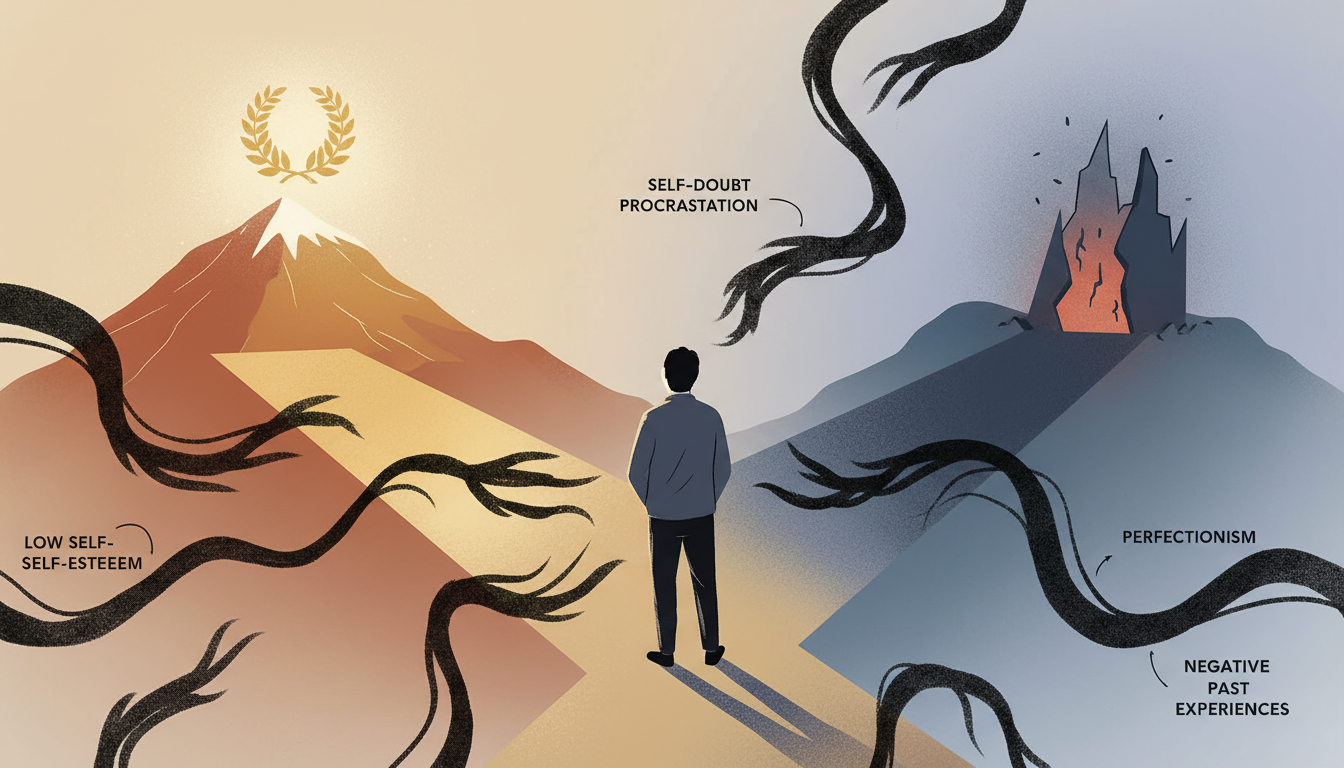
Fear of failure is not innate — it is learned. Several factors can contribute to its development, and for most people, it is a combination of these influences.
Critical Upbringing
Growing up with parents or caregivers who responded to mistakes with criticism, disappointment, or withdrawal of affection teaches a child that failure is dangerous. If love and approval were conditional on achievement, the child learns to equate failure with rejection. This does not require overtly harsh parenting — even well-meaning parents who emphasise results over effort can inadvertently instil a fear of failure.
Past Trauma or Humiliation
A specific humiliating experience — being publicly embarrassed for a mistake, failing an important exam, being ridiculed by peers — can create a lasting association between failure and emotional pain. The brain stores this as a threat memory, and future situations that resemble the original event trigger a protective fear response.
Perfectionist Environment
Schools, workplaces, or social groups that reward only top performance and stigmatise mistakes create environments where failure feels unacceptable. The UK’s exam-focused education system, with its emphasis on grades and league tables, can contribute significantly to fear of failure in young people.
Social Media Comparison
Constant exposure to curated highlight reels on social media creates a distorted picture of other people’s lives, where everyone appears to succeed effortlessly. This makes your own struggles and setbacks feel abnormal and shameful. Research from the Royal Society for Public Health found that social media use is associated with increased anxiety, depression, and feelings of inadequacy, particularly among young people.
Genetics and Temperament
Some people are naturally more sensitive to threat and negative outcomes due to their genetic makeup and temperament. Individuals with higher trait anxiety or a more reactive amygdala (the brain’s threat-detection centre) may be predisposed to developing fear of failure, particularly when combined with environmental factors.
How Fear of Failure Affects Your Life
Left unaddressed, fear of failure can quietly narrow your life in significant ways.

Work and Career
You may stay in a job you have outgrown because applying for a new role feels too risky. You might avoid speaking up in meetings, decline leadership opportunities, or under-sell your achievements. Over time, this leads to career stagnation and the frustrating feeling that you are not living up to your potential.
Relationships
Fear of failure can manifest as fear of rejection in relationships. You might avoid vulnerability, hold back from committing, or end relationships preemptively to avoid being the one who gets hurt. This can create a pattern of superficial connections that never deepen into genuine intimacy.
Self-Esteem
When you consistently avoid challenges, you deny yourself the experience of overcoming difficulty — which is the primary way self-confidence is built. The avoidance that feels protective in the short term gradually erodes your belief in your own capabilities.
Missed Opportunities
Every opportunity declined because of fear represents a path not taken. Over the years, these accumulate into a profound sense of regret and “what if” that can be more painful than any individual failure would have been.
The Paradox of Avoidance
Perhaps the cruellest aspect of fear of failure is its central paradox: by avoiding failure, you guarantee it. The person who never applies for the promotion has a 0% chance of getting it. The person who never submits the manuscript will never be published. The person who never asks will never hear “yes.” Avoidance does not prevent failure — it ensures it, just in a slower, less visible way.
Fear of Failure at Work
The workplace is where fear of failure most commonly shows its effects in adult life. In the UK, where workplace performance is closely tied to identity and financial security, this fear can be particularly acute.
Presentations and public speaking: Many people with fear of failure experience intense anxiety about presenting to colleagues or clients. The fear is not really about the presentation itself — it is about being judged, found lacking, or exposed as incompetent.
Applying for promotions: Research by the Institute of Leadership and Management found that 50% of female managers and 31% of male managers reported that self-doubt held them back from applying for promotions or new roles. Fear of failure was the primary driver of this self-doubt.
Imposter syndrome: Fear of failure and imposter syndrome are closely linked. If you live in constant fear of being “found out” as not good enough, every task becomes a potential exposure event. A 2019 review in the Journal of General Internal Medicine found that imposter syndrome affects up to 82% of people at some point and is associated with increased anxiety, depression, and burnout.
If fear of failure is affecting your work, speaking to your employer about support options can help. Many UK employers now offer Employee Assistance Programmes (EAPs) that provide free, confidential counselling sessions.
Fear of Failure in Students
Students in the UK face enormous pressure to perform academically, and fear of failure is increasingly recognised as a significant mental health concern in education.
Exam anxiety: The pressure of GCSEs, A-levels, and university exams can trigger intense fear of failure. A 2023 survey by the charity YoungMinds found that 83% of young people said exam pressure had affected their mental health.
UCAS and university applications: The university application process, with its personal statements, predicted grades, and competitive entry, can amplify fear of failure. The all-or-nothing framing — “If I do not get into my first choice, everything is ruined” — is a classic catastrophising pattern.
Academic perfectionism: Universities can inadvertently foster perfectionism through emphasis on first-class degrees and academic rankings. Students who tied their self-worth to academic performance throughout school may find that fear of failure intensifies at university, where the competition is greater.
If you are a student struggling with fear of failure, your university’s counselling service is a free and confidential starting point. Many universities also offer workshops on exam anxiety, perfectionism, and building resilience.
How to Overcome the Fear of Failure
Overcoming fear of failure is not about eliminating the fear entirely — that would be neither realistic nor desirable. Some concern about outcomes is healthy and motivating. The goal is to reduce the fear to a level where it no longer controls your decisions.

Reframe Failure as Learning
This is not empty motivational advice — it is a genuine cognitive shift that changes how your brain processes setbacks. When you view failure as information rather than a verdict on your worth, you activate different neural pathways. Ask yourself: “What specifically can I learn from this?” and “How does this bring me closer to understanding what works?”
Research by psychologist Carol Dweck on growth mindset demonstrates that people who view abilities as developable (rather than fixed) are significantly more resilient in the face of failure and ultimately achieve more.
Set Process Goals, Not Just Outcome Goals
Instead of “I must get the job,” try “I will prepare thoroughly and give the best interview I can.” Process goals put the focus on what you can control (your effort and preparation) rather than what you cannot (the interviewer’s decision). This reduces the all-or-nothing thinking that fuels fear of failure.
Graduated Exposure
Like any fear, fear of failure responds to gradual, repeated exposure. Start with small, low-stakes challenges where failure is possible but not catastrophic. As you survive these small “failures” and discover that the consequences are manageable, your brain gradually updates its threat assessment.
- Start a conversation with a stranger.
- Submit work that is “good enough” rather than perfect.
- Try a new hobby where you are a complete beginner.
- Volunteer for a task slightly outside your comfort zone at work.
- Share an opinion you are not 100% certain about.
Practise Self-Compassion
Self-compassion, as defined by researcher Kristin Neff, involves treating yourself with the same kindness you would offer a friend in the same situation. When you fail or make a mistake, notice your internal dialogue. Would you speak to a friend the way you speak to yourself? Research consistently shows that self-compassion (not self-criticism) leads to greater motivation, resilience, and willingness to try again after setbacks.
CBT Thought Challenging
Cognitive Behavioural Therapy offers practical tools for challenging the catastrophic thoughts that drive fear of failure. When you notice a fear-based thought, work through these questions:
- What is the evidence for and against this thought?
- What is the most realistic outcome (not the worst case)?
- If the worst did happen, could I cope? What would I do?
- What would I say to a friend who had this thought?
- Will this matter in five years?
Celebrate Small Wins
Fear of failure often coexists with a tendency to dismiss achievements (“That does not count” or “Anyone could have done that”). Actively acknowledging your progress, however small, rewires your brain’s reward system and builds evidence against the belief that you always fail. Keep a daily note of three things you did well, no matter how minor they seem.
When to Seek Professional Help
Consider seeking professional support if fear of failure is:
- Significantly limiting your career, education, or relationships
- Causing you persistent distress or physical symptoms
- Leading to depression, social withdrawal, or substance use
- Getting worse over time despite self-help efforts
- Connected to deeper issues such as past trauma or chronic low self-esteem
Effective Professional Treatments
Cognitive Behavioural Therapy (CBT) is the most evidence-based treatment for fear of failure. It directly targets the catastrophic beliefs, avoidance behaviours, and thinking patterns that maintain the fear. A typical course of CBT is 6-20 sessions.
Exposure therapy, a component of CBT, involves gradually and systematically facing feared situations in a structured, supported way. This is particularly effective when fear of failure has led to specific avoidance patterns.
NHS Talking Therapies provides free access to CBT and other evidence-based therapies. You can self-refer at nhs.uk/talk without a GP referral.
UK Resources
- NHS Talking Therapies — free therapy for anxiety, including fear of failure. Self-refer at nhs.uk/talk.
- Mind — information and support for all mental health conditions. Infoline: 0300 123 3393. Visit mind.org.uk.
- Anxiety UK — specialist support for anxiety conditions, including access to discounted therapy. Helpline: 03444 775 774. Visit anxietyuk.org.uk.
- Samaritans — 24/7 emotional support. Call 116 123 (free) or email jo@samaritans.org.
- YoungMinds — support for young people’s mental health. Crisis text line: text YM to 85258. Parents helpline: 0808 802 5544.
- BACP therapist directory — find a private therapist at bacp.co.uk/search/therapists.
Frequently Asked Questions
Is fear of failure a mental illness?
Fear of failure is not classified as a standalone mental illness. However, when it reaches an extreme level that causes significant distress or impairment in daily functioning, it may be classified as a specific phobia (atychiphobia) under broader anxiety disorder categories. More commonly, fear of failure exists as a feature of other conditions such as generalised anxiety disorder, social anxiety disorder, or perfectionism. Regardless of whether it meets a diagnostic threshold, if it is affecting your quality of life, it deserves attention and can be treated.
What is atychiphobia?
Atychiphobia is the clinical term for an extreme, persistent fear of failure. The word comes from the Greek “atychia” (misfortune) and “phobos” (fear). It falls under the category of specific phobias and is characterised by intense anxiety, avoidance of situations where failure is possible, and physical symptoms such as a racing heart, sweating, and nausea when confronted with evaluative situations. It is treated with the same approaches used for other anxiety conditions, primarily CBT and graduated exposure.
Why am I so scared of failing?
Fear of failure typically develops from a combination of factors: childhood experiences where mistakes were met with criticism or disappointment, past humiliating experiences of failure, perfectionist environments (at school, work, or home), social comparison (especially on social media), and natural temperament. It is a learned response, which means it can be unlearned. Understanding where your fear originated can be a helpful starting point, but it is not strictly necessary — practical strategies like graduated exposure and thought challenging can help regardless of the cause.
How do I stop being afraid of failure?
The most effective approaches include: reframing failure as a learning opportunity rather than a catastrophe, setting process goals (focusing on effort rather than outcomes), gradually exposing yourself to situations where failure is possible, practising self-compassion when things do not go as planned, and using CBT thought-challenging techniques to question catastrophic predictions. Start small — try one new thing this week where the stakes are low. Over time, these small acts of courage accumulate into genuine confidence.
Can therapy help with fear of failure?
Yes, therapy is highly effective for fear of failure. Cognitive Behavioural Therapy (CBT) has the strongest evidence base, as it directly addresses the catastrophic beliefs and avoidance behaviours that maintain the fear. A therapist can help you identify your specific thought patterns, develop personalised coping strategies, and guide you through graduated exposure to feared situations. Free therapy is available through NHS Talking Therapies (self-refer at nhs.uk/talk), and private therapists can be found through the BACP directory.
Is fear of failure linked to anxiety?
Yes, fear of failure is closely linked to anxiety. It shares the same underlying mechanisms: threat overestimation (believing the worst will happen), intolerance of uncertainty (needing to know the outcome before acting), and avoidance (staying away from situations that trigger fear). Fear of failure frequently co-occurs with generalised anxiety disorder, social anxiety disorder, and performance anxiety. The good news is that treatments effective for anxiety — particularly CBT — are equally effective for fear of failure.
Related Articles

Anxiety Causes: What Triggers Anxiety and Why
What causes anxiety? Explore the triggers, risk factors and underlying reasons anxiety develops - and what you can do about it.
Anxiety Causes: Exploring the Roots of Worry and Fear
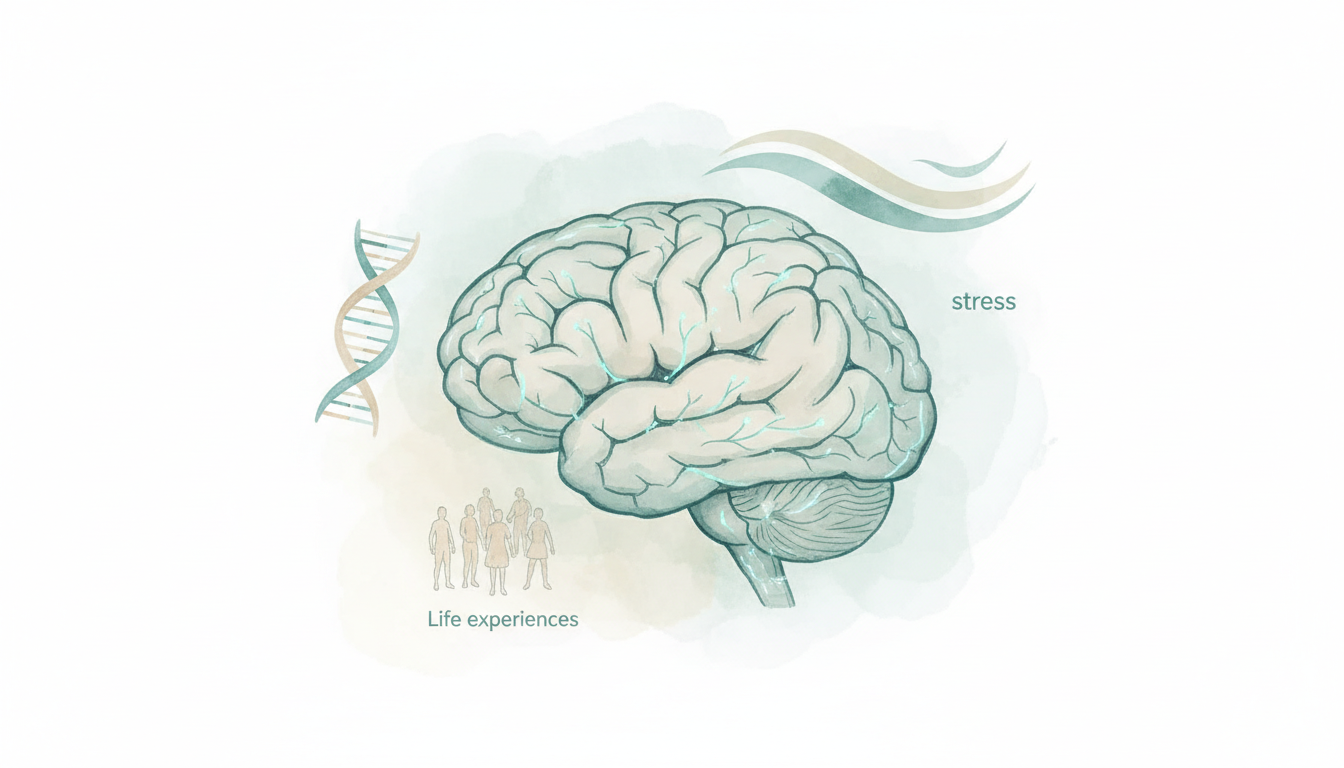
Anxiety Causes TL;DR Anxiety can stem from various factors, including genetics, brain chemistry, life experiences, and chronic stress. Understanding these causes is the first step towards...

Anxiety Symptoms: Signs, Causes and When to Seek Help
Recognise the signs of anxiety - physical, emotional and behavioural. Learn what causes anxiety and when to seek professional help.