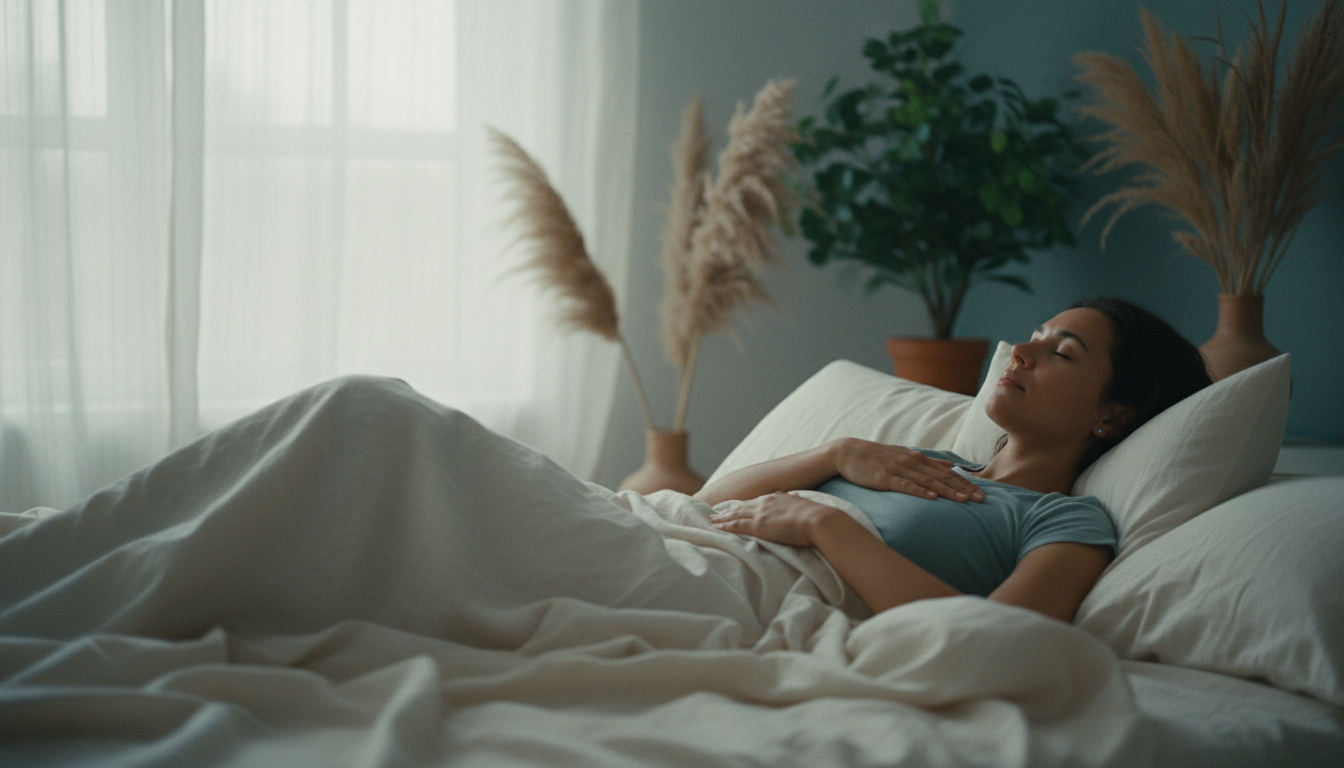
Can Anxiety Make You Breathless? Why It Happens and How Long It Lasts
Last updated:
You are sitting still, doing nothing strenuous, and yet you cannot seem to get a full breath. Each inhale stops short of satisfying, your chest feels strapped, and the harder you try to breathe deeply, the worse it gets. So, can anxiety make you breathless? Yes, decisively so. Shortness of breath is one of the most common physical effects of anxiety, it has a well-understood mechanism, and it responds to specific techniques once you know what is actually happening.
This guide explains the mechanism, how long anxiety breathlessness typically lasts, why night-time makes it worse, what helps in the moment, and the situations where breathlessness should be checked by a doctor rather than breathed through.
Can anxiety make you breathless? The mechanism
The NHS lists shortness of breath and faster breathing among the recognised symptoms of anxiety and panic, and the chain of events runs like this.
When the fight or flight response fires, breathing automatically becomes faster and shallower, moving up into the chest to load oxygen for action. But if no action follows, you end up over-breathing: exhaling more carbon dioxide than your body is producing. Falling carbon dioxide shifts the blood’s chemistry, and that shift produces the classic package of sensations: a feeling of air hunger despite normal oxygen levels, light-headedness, tingling around the lips and fingertips, and chest tightness as the breathing muscles between the ribs work overtime and fatigue.
Here is the cruel twist: the air hunger convinces you that you need bigger, deeper breaths, so you gulp more air, which drops carbon dioxide further and makes the breathlessness worse. Hyperventilation is a loop that feeds on the very correction your instincts suggest. That is why the way out is slower, smaller breathing, not deeper breathing, as counterintuitive as it feels in the moment.
Two neighbouring symptoms often join in: a tight throat that feels like breathing through a narrowed straw, and a racing heart, both standard parts of the same stress response.
What anxiety breathlessness feels like
People describe it as being unable to catch a satisfying breath, needing to sigh or yawn repeatedly, feeling that breathing has become manual instead of automatic, or a band of tightness around the chest. Two features distinguish it from most medical breathlessness. First, it is usually disconnected from exertion: it strikes while sitting at a desk or lying in bed, yet you may climb stairs without trouble. Second, it tracks your emotional state, rising with stress and easing with genuine distraction or calm.
Breathlessness caused by lung or heart conditions tends to behave the other way round: it worsens predictably with effort, persists or progresses over time, and often brings companions such as cough, wheeze, sputum, fever or swollen ankles.
How long does anxiety breathlessness last?
For most people, episodes are shorter than they feel while inside one.
- During a panic attack: the most intense breathing symptoms typically peak and settle within about 10 to 30 minutes. For some people the peak stretches towards an hour.
- After the wave: a residual sense of not breathing quite right can linger for a few hours, particularly if you keep testing your breathing to check it has recovered.
- Across days: while anxiety remains high, milder breathlessness can drift in and out over several days, often worst at quiet moments when attention returns to the body.
How quickly an episode resolves depends heavily on what you do with it: exhale-focused slow breathing shortens episodes; gasping, breath-testing and alarm lengthen them.
Anxiety shortness of breath for weeks
Some people find the breathlessness never fully switches off, stretching across weeks. This is usually the signature of a breathing pattern that has become habitual: sustained anxiety keeps you subtly over-breathing all day, upper-chest and sigh-punctuated, and the respiratory system stays out of rhythm. Clinicians recognise this as a breathing pattern disorder, and it responds well to breathing retraining, sometimes guided by a respiratory physiotherapist, alongside treatment of the anxiety itself.
Two honest caveats. Weeks of breathlessness should always earn a GP visit before being attributed to anxiety, so that asthma, anaemia, thyroid, heart and lung causes are checked rather than assumed absent. And if you already have a diagnosed heart or lung condition and notice a change in your breathing, contact your usual care team promptly rather than filing it under anxiety.
Shortness of breath at night
Night-time breathlessness deserves its own word, because beds are where anxiety breathing thrives. The quiet removes every distraction, so attention lands squarely on the breath just as the day’s worries finally get their hearing. And attention is the problem: breathing is an automatic rhythm that feels laboured the moment you supervise it, in the same way walking feels awkward when you think about each step. Add the mechanical change of lying down and a nervous system primed by evening caffeine or doomscrolling, and the stage is set.
A useful practice is to give your attention somewhere else to live: body-scan from the feet upwards, count long exhales, or rest a hand on your belly and follow its rise and fall without correcting it.
When night breathlessness is not an anxiety pattern: waking abruptly gasping or choking, heavy snoring with witnessed pauses in breathing, or breathlessness whenever you lie flat that eases on sitting up. Those patterns can point towards sleep apnoea or heart-related causes, and they are worth describing specifically to your GP.
How to ease breathlessness from anxiety
- Sit upright and loosen everything. Tight waistbands and hunched shoulders restrict the breathing you are worried about. Lengthen your spine, drop your shoulders.
- Slow down instead of deepening. Breathe in gently through your nose for about four counts, then out slowly through pursed lips for six to eight. The long, unhurried exhale is what restores carbon dioxide and dissolves the air hunger. Resist the urge to gulp.
- Breathe low. Rest one hand on your belly and aim for it, not your upper chest, to rise. Diaphragmatic breathing is the natural resting pattern you are returning to.
- Ground your attention. Name five things you can see, four you can touch, three you can hear. Attention directed outwards releases the breath to run itself.
- Move gently if it helps. A slow walk around the room paces the breath naturally and burns off adrenaline; some people settle faster moving than sitting.
Rehearse the pattern daily while calm, because a technique practised only in emergencies is hard to reach when adrenaline is high. Our full guide to breathing exercises for anxiety walks through the best patterns step by step.
When breathlessness might not be anxiety
Breathlessness has many causes beyond anxiety: asthma and other lung conditions, chest infections, anaemia, thyroid problems and heart disease among them. Get a GP assessment for any breathlessness that is new and unexplained, brings wheeze, cough, fever or sputum, worsens steadily over days or weeks, occurs predictably on exertion, or comes with swollen ankles. Testing is straightforward: your GP may check oxygen saturation with a finger probe, listen to your chest, arrange an ECG, blood tests or spirometry, and refer onwards if needed. Normal results are not wasted time; they are the foundation that lets you treat the anxiety without a nagging what-if.
Call 999 or go to A&E immediately for sudden severe breathlessness, breathlessness with chest pain or pressure, blue or grey lips or face, fainting, confusion, or coughing up blood. Those are emergency features whatever the cause turns out to be.
Retraining your breathing for the long term
Daily practice of slow, low, nasal breathing gradually resets your default pattern, and regular aerobic exercise rebuilds confidence that a working, huffing body is safe rather than dangerous. Cutting back caffeine and alcohol removes two reliable breath-disturbers. Beyond the breath itself, treating the anxiety is what stops the loop restarting: cognitive behavioural therapy has strong evidence, and in England you can refer yourself directly to NHS Talking Therapies; in Scotland, Wales and Northern Ireland your GP can signpost the local route. Breathlessness rarely travels alone, and as overall anxiety drops, the wider set of physical symptoms of anxiety tends to quieten with it.
When to seek help
See your GP if breathlessness is new, unexplained, worsening, happening at rest, or simply worrying you, and contact your usual care team promptly if you have an existing heart or lung condition that changes. Use NHS 111 for urgent advice that is not an emergency. Call 999 or go to A&E for sudden severe breathlessness, chest pain, blue lips, fainting or confusion.
Anxiety breathlessness is a false alarm delivered with total conviction: the air is there, the lungs are working, and the feeling lies. Slow the exhale, lower the breath, let the rhythm run itself, and the body remembers what it never actually forgot.
Frequently Asked Questions
Can anxiety really make you breathless?
Yes. Anxiety triggers the fight or flight response, which speeds up breathing to prepare the body for action. This faster, shallower breathing blows off more carbon dioxide than the body is producing, and the changed blood chemistry paradoxically creates the sensation of not getting enough air, along with chest tightness and tingling. The NHS lists shortness of breath among recognised symptoms of anxiety and panic, and oxygen levels during these episodes are typically normal.
How long does anxiety breathlessness last?
During a panic attack the most intense breathing symptoms usually peak and settle within about 10 to 30 minutes, though for some people the peak stretches towards an hour. A milder sense of not breathing quite right can linger for hours afterwards or drift in and out over several days while anxiety stays elevated. Episodes shorten considerably with practice at slow, exhale-focused breathing.
Can anxiety cause shortness of breath for weeks?
It can. When anxiety remains high, subtle over-breathing can become a habit, and clinicians recognise breathing pattern disorders in which a disrupted rhythm of breathing sustains breathlessness for weeks even though the lungs and heart are healthy. This pattern responds well to breathing retraining and to treating the underlying anxiety. Breathlessness lasting weeks should always be checked by a GP first, so that asthma, anaemia, heart and lung causes are properly ruled out rather than assumed absent.
Why is my anxiety breathlessness worse at night?
Night removes distraction, so attention lands on your breathing just as the day's worries surface, and monitored breathing always feels laboured because you interfere with an automatic rhythm. Lying down also changes how breathing feels mechanically. If you wake gasping or choking, snore heavily, or become breathless whenever you lie flat, tell your GP, because those specific patterns can point to sleep apnoea or heart-related causes rather than anxiety.
How do I know if breathlessness is anxiety and not my lungs or heart?
Anxiety-related breathlessness typically arrives with stress or worry rather than exertion, varies with your emotional state, comes with other anxiety symptoms and eases as you calm down. Breathlessness from lung or heart problems is more often tied to physical effort, worsens steadily, or travels with cough, wheeze, fever, swollen ankles or chest pain. Only a clinician can rule out medical causes, so get new or unexplained breathlessness checked, and treat sudden severe breathlessness or breathlessness with chest pain as an emergency.
Related Articles
Anxiety Chest Pain: What It Feels Like, How Long It Lasts and How to Relieve It
Chest pain in an anxiety attack can feel terrifying. Learn how long anxiety chest pain lasts, how to relieve it, how it differs from a heart attack, and when to call 999.
Best Breathing Exercises for Anxiety: 8 Step-by-Step Techniques
The best breathing exercises for anxiety, with step-by-step instructions for diaphragmatic breathing, 4-7-8, box breathing and more, plus how to choose the right one.
Physical Symptoms of Anxiety and How to Relieve Them
Anxiety does not just affect your mind. Learn the physical symptoms of anxiety system by system, why they happen and how to relieve them.