Morning Anxiety: Why You Wake Up Anxious and How to Stop It
Introduction: When the Day Starts With Dread
For many people, the most anxious part of the day arrives before they have even got out of bed. You wake up and, almost instantly, there it is — a tight chest, a racing mind, a heavy sense of dread that has no obvious cause. This is morning anxiety, and although it can feel deeply unsettling, it is extremely common and very treatable.
Understanding why your body does this is the first step to changing it. Morning anxiety is not a personal failing or a sign that the day is destined to go badly. It is largely a predictable response of your nervous system — and once you know the pattern, you can start to work with it rather than against it.
Why Morning Anxiety Happens
The Cortisol Awakening Response
Your body has a natural daily rhythm of the stress hormone cortisol. Levels are designed to rise sharply in the first 30 to 45 minutes after you wake — the so-called cortisol awakening response — to help you feel alert and ready for the day. In someone who is already prone to anxiety, this normal hormonal surge can be experienced as worry, tension or fear rather than energy.
In other words, the same chemistry that is supposed to get you going can, in an anxious nervous system, feel like an alarm going off for no reason.
Other Common Triggers
Several everyday factors can amplify morning anxiety:
- Poor or disrupted sleep, which leaves the nervous system more reactive. Our guide to anxiety and sleep explores this two-way relationship.
- Low blood sugar after a long night without food.
- Caffeine, which raises heart rate and can mimic and worsen anxious feelings, especially on an empty stomach.
- Alcohol the night before, which disturbs sleep and rebounds into anxiety the next morning.
- Anticipation of a stressful day, so your mind starts problem-solving before you are even awake.
- Checking your phone immediately, flooding your brain with news, emails and demands within seconds of waking.
What Morning Anxiety Feels Like
The symptoms are the familiar signs of the body’s fight-or-flight response, simply arriving at the start of the day:
- A racing or pounding heart
- Tight chest or shallow breathing
- Knotted stomach or nausea
- Restlessness and a sense of urgency
- A flood of worried thoughts about the day ahead
If you would like to understand these bodily sensations in more depth, our overview of what anxiety feels like may help reassure you that what you are experiencing is recognised and understood.
How to Stop Morning Anxiety
The aim is to give your nervous system signals of safety early, before anxiety builds momentum. Small, consistent changes work better than dramatic ones.
1. Breathe Before You Move
Before you reach for your phone or get up, spend two minutes breathing slowly — in for four counts, out for six. A longer out-breath activates the body’s calming response. Our guide to breathing exercises for anxiety gives several simple techniques.
2. Ground Yourself in the Present
Anxiety pulls you into “what ifs” about the day. Grounding brings you back to now. Try naming five things you can see and four you can hear. Our guide to grounding techniques for anxiety has more options.
3. Delay the Phone
Give yourself the first 20 to 30 minutes screen-free. Letting the world in slowly protects an already sensitive nervous system.
4. Get Daylight and Movement
Natural light early in the day helps regulate your body clock and mood. A short walk, some stretching or gentle exercise burns off excess stress chemistry.
5. Eat and Hydrate
A glass of water and a balanced breakfast steady blood sugar and reduce the physical jitteriness that feeds anxiety. Be cautious with strong coffee first thing.
6. Build a Calm Morning Routine
Predictable, gentle mornings teach your nervous system that the start of the day is safe. This works hand in hand with a wind-down at night — see our guide to the perfect evening routine to calm anxiety, because how you end the day shapes how you begin the next.
If you need relief in the moment, our practical guide to how to calm anxiety fast offers quick, in-the-moment techniques.
When to Seek Help
Occasional morning anxiety is a normal part of being human. But if you wake up anxious most days, if it is interfering with your work, relationships or quality of life, or if it comes alongside persistent low mood, it is worth speaking to a professional.
In the UK, you can self-refer to NHS Talking Therapies for cognitive behavioural therapy and other evidence-based treatments, or start with your GP. If you ever feel unable to cope, contact NHS 111, or call the Samaritans free on 116 123 at any time.
Mornings can feel different. With a few gentle changes, the first thing you feel each day does not have to be fear.
Frequently Asked Questions
Why do I wake up with anxiety every morning?
Morning anxiety is often linked to the natural surge of the stress hormone cortisol that occurs shortly after waking, known as the cortisol awakening response. In people who are already anxious, this surge can tip into worry. Poor sleep, low blood sugar overnight, caffeine, alcohol and the anticipation of a stressful day can all make it worse. It is very common and usually responds well to small changes.
How do I get rid of morning anxiety?
Start with the basics: a consistent sleep schedule, slow breathing before you get out of bed, daylight and movement early in the day, a proper breakfast, and limiting caffeine and phone use first thing. Grounding techniques and a calm morning routine help retrain your nervous system. If morning anxiety is persistent or severe, speak to your GP or self-refer to NHS Talking Therapies.
Is morning anxiety a sign of something serious?
Occasional morning anxiety is normal and not dangerous. However, if you wake up anxious most days, if it interferes with your daily life, or if it comes with low mood, it can be a sign of an anxiety disorder or depression that would benefit from support. Contact your GP, and seek urgent help via NHS 111 or the Samaritans on 116 123 if you ever feel unable to cope.
Related Articles
Sleep Anxiety: Causes, Symptoms and How to Break the Cycle
Sleep anxiety keeps millions awake at night. Learn what causes it, how to recognise the symptoms, and evidence-based techniques to finally get restful sleep.

Breathing Exercises for Anxiety: 7 Techniques to Calm Your Mind
Breathing exercises are one of the fastest ways to calm anxiety. Try these 7 techniques and feel the difference in minutes.
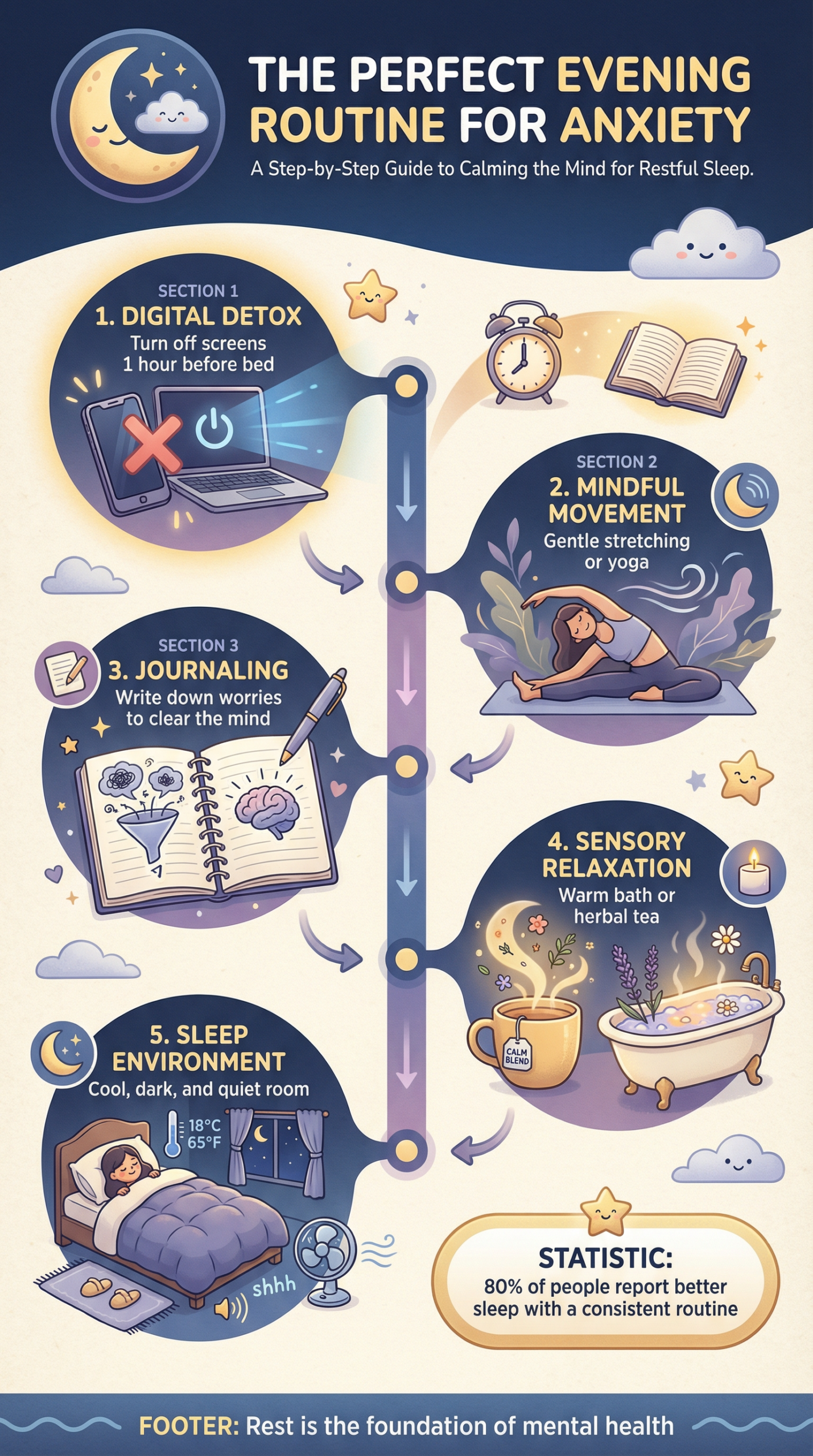
Calm Anxiety: The Perfect Evening Routine
A calming evening routine to ease anxiety before bed: wind-down steps, breathing and gentle habits that quiet a racing mind for better, deeper sleep.