Last updated:
Introduction
In today’s fast-paced world, anxiety has become a common experience for many individuals, affecting their daily lives and mental well-being. The feeling of anxiousness can manifest in various ways, such as racing thoughts, restlessness, and an overwhelming sense of dread. Maintaining a clear state of mind during these anxious moments is crucial, as it enables us to navigate challenges more effectively and make sound decisions. This article aims to provide practical strategies that can help manage anxiety and enhance mental clarity, empowering you to reclaim control over your thoughts and emotions.
Understanding Anxiety and Its Effects
What is Anxiety?
Anxiety is a normal emotional response that everyone experiences from time to time, particularly during stressful situations. It can be characterized by symptoms such as increased heart rate, sweating, and a sense of impending doom. While occasional anxiety is a natural part of life, anxiety disorders, such as generalized anxiety disorder (GAD) or panic disorder, involve excessive and persistent anxiety that interferes with one’s daily activities. Recognizing the difference between everyday anxiety and an anxiety disorder is essential for seeking appropriate help and support.
How Anxiety Impacts Your Mind
Anxiety triggers the body’s fight or flight response, affecting the brain’s ability to function optimally. When faced with anxiety, the amygdala, which processes emotions, becomes hyperactive, while the prefrontal cortex, responsible for rational thinking and decision-making, may become less effective. This physiological response can cloud judgment, impair decision-making, and lead to negative thinking patterns, making it challenging to see the bigger picture during moments of distress.
The Importance of Clarity in Anxious Situations
Maintaining a clear state of mind during anxious moments is crucial for effective coping. Clarity allows individuals to approach problems with an open mind, leading to improved problem-solving abilities and better emotional regulation. Enhanced mental clarity can also contribute to greater overall well-being, allowing individuals to engage with their surroundings more fully and positively.
Practical Strategies to Cultivate a Clear Mind
Mindfulness and Meditation
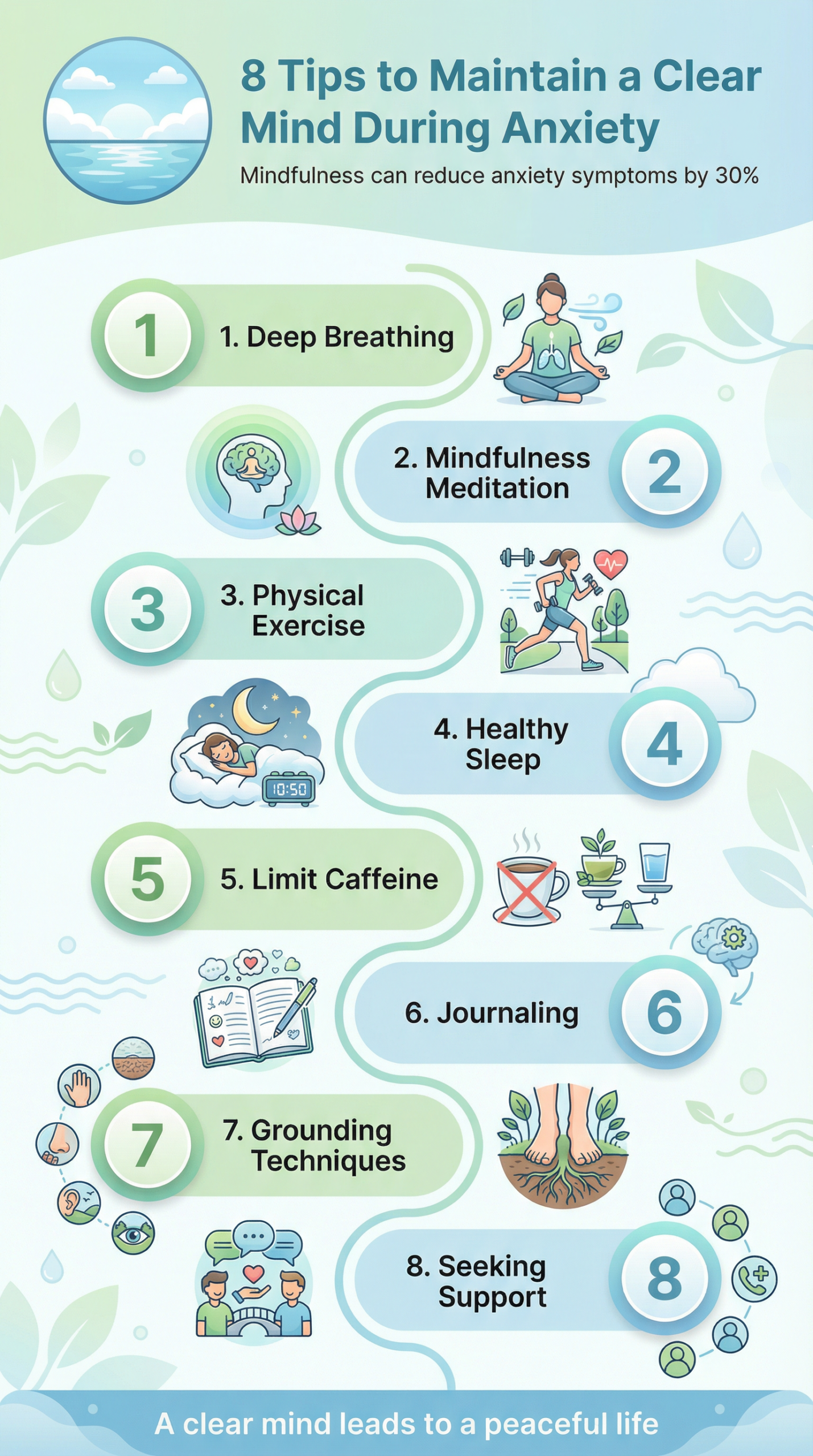
Mindfulness is the practice of being present in the moment, which can significantly aid in managing anxiety. It encourages individuals to observe their thoughts and feelings without judgment, helping to create distance from anxious feelings. A simple mindfulness exercise involves a body scan:
- Find a quiet space and sit or lie down comfortably.
- Close your eyes and take a few deep breaths, focusing on inhaling and exhaling.
- Bring your awareness to your feet, noticing any sensations present.
- Gradually move your attention up through your body, observing sensations in your legs, abdomen, chest, arms, neck, and head.
- Finally, take a few more deep breaths and slowly open your eyes.
Regular meditation practice can further enhance mental clarity, reducing anxiety over time. A few minutes each day dedicated to meditation can lead to profound changes in how you respond to stressful situations.
Physical Activity and Its Benefits
Engaging in physical activity is one of the most effective ways to combat anxiety. Exercise releases endorphins, the body’s natural stress relievers, which can improve mood and promote a sense of well-being. Activities such as yoga, walking, and running not only help reduce anxiety symptoms but also enhance cognitive function. To incorporate exercise into your daily routine, consider the following tips:
- Schedule workouts like you would any other important appointment.
- Choose activities you enjoy to make exercise a fun part of your day.
- Start with short, manageable workouts and gradually increase their duration and intensity.
Journaling and Cognitive Techniques
Journaling is a powerful tool for processing thoughts and feelings, allowing individuals to articulate their anxieties and reflect on their experiences. Techniques such as gratitude journaling, where you write down things you are thankful for, can shift focus away from anxiety and foster a positive mindset. Additionally, stream-of-consciousness writing can help unload overwhelming thoughts. Cognitive-behavioral techniques can also be employed to challenge negative thought patterns. For instance, when an anxious thought arises, ask yourself:
- Is this thought based on facts or assumptions?
- What evidence do I have that supports or contradicts this thought?
- How would I advise a friend who was thinking this way?
These reflections can help reframe anxious thoughts and promote a more balanced perspective.
Lifestyle Changes for Long-Term Clarity
Healthy Sleep Habits
Quality sleep is essential for maintaining mental clarity and overall well-being. Sleep deprivation can exacerbate anxiety, leading to a vicious cycle. Establishing a calming bedtime routine can improve sleep quality. Consider implementing the following tips:
- Set a consistent sleep schedule by going to bed and waking up at the same time every day.
- Create a relaxing environment by dimming lights and minimizing noise.
- Avoid screens at least an hour before bed to promote better sleep hygiene.
Nutrition and Hydration
Your diet plays a critical role in mental health and anxiety levels. Consuming a balanced diet rich in fruits, vegetables, whole grains, lean proteins, and healthy fats can support brain health. Foods high in omega-3 fatty acids, such as salmon and walnuts, as well as those rich in antioxidants like berries, can enhance cognitive function and reduce anxiety. Staying hydrated is equally important, as dehydration can increase feelings of fatigue and anxiety.
Setting Boundaries and Reducing Stressors
Establishing boundaries in both personal and professional settings is vital for reducing anxiety. Identifying stressors and learning to say no to commitments that overwhelm you can create space for self-care. Consider the following strategies:
- Assess your current commitments and prioritize them based on importance.
- Communicate your boundaries clearly to others.
- Regularly evaluate your mental load and adjust commitments as needed.
Final Thoughts
Implementing these strategies can lead to a clearer state of mind when facing anxiety. Consistency is key, and over time, these practices can foster resilience and improve your overall well-being. Remember that managing anxiety is an ongoing journey, and by prioritizing mental clarity, you can cultivate a more peaceful and fulfilling life.

Frequently Asked Questions
What is Anxiety?
Anxiety is a normal emotional response that everyone experiences from time to time, particularly during stressful situations. It can be characterized by symptoms such as increased heart rate, sweating, and a sense of impending doom. While occasional anxiety is a natural part of life, anxiety disorders, such as generalized anxiety disorder (GAD) or panic disorder, involve excessive and persistent anxiety that interferes with one’s daily activities. Recognizing the difference between everyday anxiety and an anxiety disorder is essential for seeking appropriate help and support.
How Anxiety Impacts Your Mind?
Anxiety triggers the body’s fight or flight response, affecting the brain’s ability to function optimally. When faced with anxiety, the amygdala, which processes emotions, becomes hyperactive, while the prefrontal cortex, responsible for rational thinking and decision-making, may become less effective. This physiological response can cloud judgment, impair decision-making, and lead to negative thinking patterns, making it challenging to see the bigger picture during moments of distress.
What does “8 tips to maintain a clear mind during anxiety” mean for someone with anxiety?
For “8 Tips to Maintain a Clear Mind During Anxiety”, this question is best answered with personalised guidance. If you are concerned, speak to your GP or contact NHS 111. The article above outlines the most relevant evidence-based approaches.
Related Articles

Bible Verses for Anxiety and Worry
Comforting Bible verses for anxiety and worry, with reflections to bring peace when fear feels overwhelming. Scripture-based reassurance for anxious hearts.
Essential Tips on How to Cope with a Partner with Depression
How to support a partner with depression while protecting your own wellbeing — practical ways to listen, encourage help and cope as a couple together.

Mental Health Resources UK: Your Complete Guide to Free Support
A comprehensive guide to UK mental health resources including free helplines, NHS services, charities, apps and online support for anxiety, depression and more.