Anxiety Attack Symptoms: How to Recognise and Respond
Last updated:
What Is an Anxiety Attack?
An anxiety attack is a term people commonly use to describe an episode of intense, overwhelming anxiety that produces significant physical and psychological symptoms. It is important to note that “anxiety attack” is not a formally recognised clinical term in the diagnostic manuals used by UK healthcare professionals (the ICD-11 and DSM-5). The closest clinical equivalent would be a heightened anxiety episode or, if it meets specific criteria, a panic attack.
However, the widespread use of the term reflects a genuine and common experience. Millions of people across the UK describe episodes where their anxiety suddenly intensifies to a point where it feels unmanageable — where the physical symptoms become so prominent that it feels like something is physically wrong, and where the psychological distress becomes acute.
Whether or not the term appears in clinical manuals, what you are experiencing is real, it is common and it is treatable. Understanding the symptoms is the first step towards regaining a sense of control.
The Physical Symptoms of an Anxiety Attack
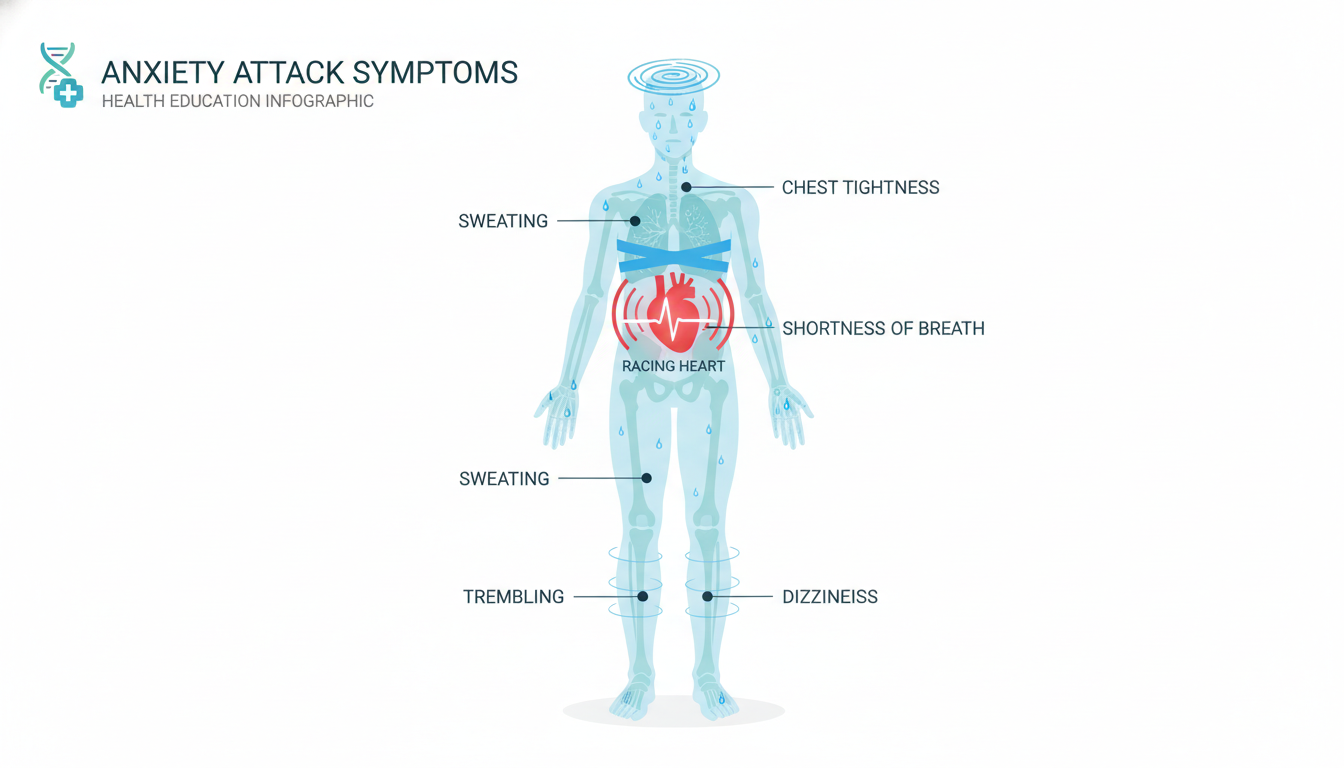
The physical symptoms of an anxiety attack are caused by the activation of your body’s autonomic nervous system — specifically, the sympathetic nervous system, which controls the fight-or-flight response. When your brain perceives a threat (whether real or imagined), it triggers a cascade of physiological changes designed to prepare you for danger.
Cardiovascular Symptoms
- Racing or pounding heart (palpitations): Your heart rate increases to pump more blood to your muscles. This is one of the most commonly reported and most frightening symptoms, as many people fear it indicates a heart problem.
- Chest tightness or pain: Tension in the chest wall muscles, combined with rapid breathing, can create sensations of tightness, pressure or pain in the chest. This can feel very similar to cardiac symptoms, which is why many people experiencing their first anxiety attack seek emergency medical help.
- High blood pressure: Blood pressure rises temporarily during an anxiety episode.
Respiratory Symptoms
- Shortness of breath: You may feel as though you cannot get enough air, or that your breathing is shallow and unsatisfying.
- Hyperventilation: Rapid, shallow breathing is common during anxiety attacks. This can reduce carbon dioxide levels in the blood, causing additional symptoms such as tingling, dizziness and light-headedness.
- A choking or smothering sensation: Some people feel as though their throat is closing or that they are being suffocated.
Neurological Symptoms
- Dizziness or light-headedness: Often caused by hyperventilation or changes in blood pressure.
- Tingling or numbness: Particularly in the hands, feet, face or lips. This is usually caused by hyperventilation reducing carbon dioxide levels.
- Trembling or shaking: Your muscles may tremble as a result of adrenaline flooding your system.
- Headaches: Tension in the scalp and neck muscles can produce headaches during or after an anxiety episode.
Gastrointestinal Symptoms
- Nausea: The stress response diverts blood away from the digestive system, which can cause nausea.
- Stomach cramps or pain: Anxiety can cause the muscles of the digestive tract to contract.
- Diarrhoea or urgency: Some people experience an urgent need to use the toilet during anxiety episodes.
- Loss of appetite: The fight-or-flight response suppresses hunger.
Other Physical Symptoms
- Sweating: The body sweats to cool itself down during the anticipated physical exertion of fighting or fleeing.
- Hot flushes or chills: Temperature regulation can be disrupted during anxiety episodes.
- Dry mouth: Saliva production decreases as part of the stress response.
- Muscle tension: Particularly in the shoulders, neck, jaw and back.
- Fatigue: After an anxiety attack, you may feel utterly drained, as though you have run a marathon.
The Psychological Symptoms of an Anxiety Attack
Alongside the physical symptoms, anxiety attacks produce significant psychological and emotional effects:
- Overwhelming fear or dread: A powerful sense that something terrible is about to happen, even if you cannot identify what.
- Feeling out of control: A sense that you are losing your grip on reality or on your own behaviour.
- Difficulty thinking clearly: Racing thoughts, an inability to focus or a sense that your mind has gone blank.
- Derealisation: A feeling that your surroundings are not real, or that you are watching yourself from outside your body.
- Depersonalisation: Feeling detached from yourself, as though you are observing your own experience from a distance.
- An urge to escape: A powerful desire to leave the situation or get to a “safe” place.
- Fear of specific outcomes: Depending on the context, you may fear embarrassment, judgement, physical collapse, losing control or dying.
- Irritability or emotional volatility: You may feel uncharacteristically snappy, tearful or emotionally fragile.
Why These Symptoms Happen: The Science
Understanding why your body reacts this way can be remarkably reassuring. The symptoms of an anxiety attack are not signs that something is wrong with you — they are signs that your body’s protective systems are working as designed, just in the wrong context.
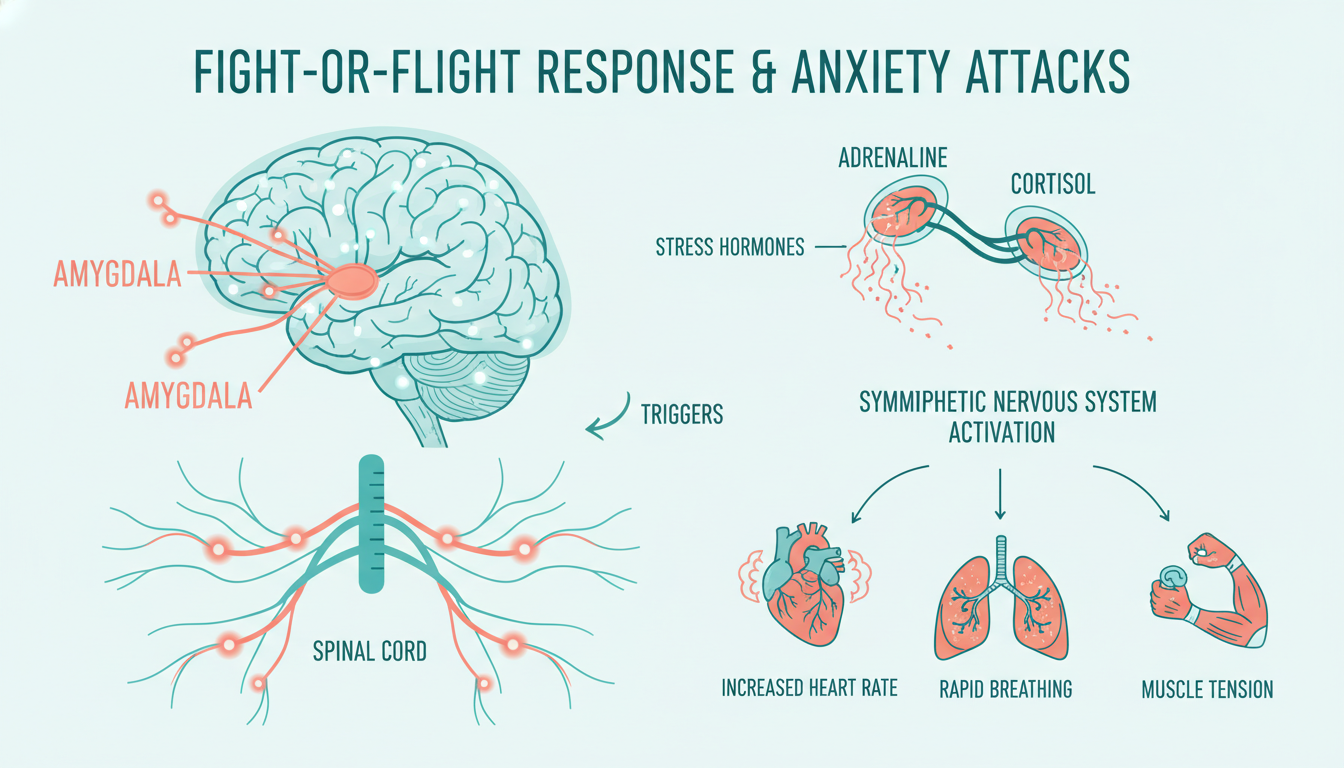
When your brain’s threat-detection system (centred on a small almond-shaped structure called the amygdala) identifies a potential danger, it activates the sympathetic nervous system within milliseconds — faster than the conscious, rational part of your brain can assess whether the threat is real. This triggers the release of adrenaline and cortisol, which produce all the physical changes described above.
In the context of genuine physical danger, these changes would help you survive. Your racing heart pumps blood to your muscles; your rapid breathing increases oxygen intake; your sweating cools you down; your digestive system shuts down to redirect energy; your muscles tense in preparation for action. The problem is that in an anxiety attack, there is no physical threat to fight or flee from, so these sensations feel bizarre, alarming and inexplicable.
Crucially, the fight-or-flight response has a built-in time limit. Your body cannot sustain this level of activation indefinitely. The parasympathetic nervous system — your body’s “rest and digest” system — will eventually restore calm. This is why anxiety attacks always pass, even if it does not feel that way in the moment.
How to Respond During an Anxiety Attack
When you are in the grip of an anxiety attack, the following strategies can help you ride it out more effectively:
1. Acknowledge What Is Happening
Rather than fighting the symptoms or desperately trying to work out what is wrong, try to name what you are experiencing: “This is an anxiety attack. It is my body’s stress response. It is not dangerous, and it will pass.” This simple act of recognition can reduce the secondary fear that often makes anxiety attacks worse.
2. Slow Your Breathing
Controlled breathing is one of the most effective tools for calming the nervous system during an anxiety attack. Try this technique:
- Breathe in slowly through your nose for a count of four
- Hold gently for a count of two
- Breathe out slowly through your mouth for a count of six
- Repeat for several minutes
The longer exhale activates the parasympathetic nervous system, which counteracts the fight-or-flight response. Focus on making each breath slow and steady rather than deep.
3. Use Grounding Techniques
Grounding techniques help bring your attention back to the present moment and away from anxious thoughts. The 5-4-3-2-1 technique is particularly effective:
- Name 5 things you can see
- Name 4 things you can touch or feel
- Name 3 things you can hear
- Name 2 things you can smell
- Name 1 thing you can taste
4. Release Muscle Tension
Progressive muscle relaxation involves deliberately tensing and then releasing different muscle groups. Start with your hands — clench your fists tightly for five seconds, then release. Work through your arms, shoulders, face and legs. The contrast between tension and release helps your body recognise and move towards a more relaxed state.
5. Stay in the Situation
If it is safe to do so, try to stay where you are rather than fleeing. Leaving the situation reinforces the belief that the situation was dangerous and that you could not cope. Staying and allowing the anxiety to peak and then subside teaches your brain that you can manage the experience.
6. Avoid Self-Criticism
It is common to feel frustrated, embarrassed or ashamed about having an anxiety attack. Try to treat yourself with the same compassion you would offer a friend in the same situation. Anxiety attacks are a common human experience and they say nothing negative about your character or strength.
How to Reduce the Frequency of Anxiety Attacks
While coping strategies are valuable during an episode, the ultimate goal is to reduce how often anxiety attacks occur. The following approaches can help:
- Identify your triggers: Keep a record of when anxiety attacks occur, what you were doing, what you were thinking about and what was happening in your life. Patterns often emerge that can guide treatment.
- Address underlying anxiety: Anxiety attacks are usually a symptom of an underlying anxiety condition. Treating the root cause — whether that is generalised anxiety, social anxiety, health anxiety or another condition — will reduce the attacks.
- Build regular relaxation into your routine: Daily relaxation practice (even 10-15 minutes) can lower your baseline anxiety level, making attacks less likely.
- Exercise regularly: Physical activity is one of the most effective natural anxiety reducers. The NHS recommends at least 150 minutes of moderate-intensity exercise per week.
- Reduce caffeine: Caffeine stimulates the sympathetic nervous system and can trigger or worsen anxiety symptoms. Consider reducing or eliminating caffeinated drinks.
- Prioritise sleep: Poor sleep significantly increases vulnerability to anxiety. Aim for seven to nine hours per night and maintain a consistent sleep schedule.
- Seek professional treatment: CBT is highly effective for reducing the frequency and severity of anxiety episodes. NICE recommends it as a first-line treatment for anxiety disorders.
When Anxiety Attack Symptoms Overlap with Physical Conditions
It is worth noting that some symptoms of anxiety attacks can overlap with those of physical health conditions. Chest pain, shortness of breath and palpitations can be symptoms of cardiac conditions; dizziness can relate to vestibular problems; and gastrointestinal symptoms can have physical causes. If you are experiencing these symptoms for the first time, or if there is any change in the pattern of your symptoms, it is sensible to see your GP to rule out physical causes.
Once a physical cause has been excluded, you can be more confident that the symptoms are anxiety-related, which in itself can reduce the fear they provoke.
When to Seek Help
Seek professional support if:
- Anxiety attacks are happening frequently (weekly or more)
- You are living in fear of the next episode
- You are avoiding activities, places or situations because of anxiety attacks
- Your quality of life, work performance or relationships are being affected
- You have tried self-help strategies and they are not sufficient on their own
- You are experiencing persistent low mood, hopelessness or thoughts of self-harm alongside your anxiety
Where to get help in the UK:
- NHS Talking Therapies: Self-refer for free evidence-based talking therapy at nhs.uk.
- Your GP: Can assess your symptoms, exclude physical causes, discuss medication and refer you to specialist services.
- Mind: Mental health information and support. Infoline: 0300 123 3393.
- Anxiety UK: Dedicated support for anxiety conditions. Helpline: 03444 775 774.
- No Panic: Specialist support for panic and anxiety. Helpline: 0300 772 9844.
- Samaritans: 24/7 emotional support. Call 116 123 (free) or email jo@samaritans.org.
- NHS 111: If you are unsure whether symptoms are anxiety or a physical health issue, call 111 for advice.
Frequently Asked Questions
What Is an Anxiety Attack?
An anxiety attack is a term people commonly use to describe an episode of intense, overwhelming anxiety that produces significant physical and psychological symptoms. It is important to note that “anxiety attack” is not a formally recognised clinical term in the diagnostic manuals used by UK healthcare professionals (the ICD-11 and DSM-5). The closest clinical equivalent would be a heightened anxiety episode or, if it meets specific criteria, a panic attack.
Why These Symptoms Happen: The Science?
Understanding why your body reacts this way can be remarkably reassuring. The symptoms of an anxiety attack are not signs that something is wrong with you — they are signs that your body’s protective systems are working as designed, just in the wrong context.
How to Respond During an Anxiety Attack?
When you are in the grip of an anxiety attack, the following strategies can help you ride it out more effectively:
How to Reduce the Frequency of Anxiety Attacks?
While coping strategies are valuable during an episode, the ultimate goal is to reduce how often anxiety attacks occur. The following approaches can help:
When Anxiety Attack Symptoms Overlap with Physical Conditions?
It is worth noting that some symptoms of anxiety attacks can overlap with those of physical health conditions. Chest pain, shortness of breath and palpitations can be symptoms of cardiac conditions; dizziness can relate to vestibular problems; and gastrointestinal symptoms can have physical causes. If you are experiencing these symptoms for the first time, or if there is any change in the pattern of your symptoms, it is sensible to see your GP to rule out physical causes.
Related Articles
Anxiety Attack vs Panic Attack: What’s the Difference?
Anxiety attack vs panic attack - what's the difference? Understand the key distinctions so you can respond effectively in the moment.

Chronic Anxiety: When Anxiety Won’t Go Away
When anxiety won't go away, it can feel overwhelming. Understand chronic anxiety and discover strategies to break the long-term cycle.
CBT Techniques Social Anxiety UK: Effective NHS-Approved Methods for Self-Help and Recovery
How CBT treats social anxiety disorder: proven techniques, NHS talking therapies access, and self-help strategies UK readers can use for lasting relief.