Generalized Anxiety Disorder (GAD): The Comprehensive Guide to Understanding and Recovery
Last updated:
TL;DR: GAD at a Glance

- Definition: Generalized Anxiety Disorder (GAD) is characterized by chronic, excessive worry about various topics for at least 6 months.
- Key Metric: A GAD-7 score of 8 or higher typically indicates a clinical need for intervention.
- Primary Treatment: Evidence-based recovery usually involves Cognitive Behavioural Therapy (CBT) and/or SSRI medication (e.g., Sertraline).
- UK Pathway: Access support via your GP or by self-referring to NHS Talking Therapies.
- Urgent Help: If you cannot keep yourself safe, call 111 or text SHOUT to 85258 immediately.
1. Introduction: Beyond ‘Just Worrying’

Anxiety is a natural human response to stress, but for those living with Generalized Anxiety Disorder (GAD), the ‘alarm system’ of the brain becomes stuck in the ‘on’ position. Unlike specific phobias or panic disorder, GAD is characterized by a pervasive, ‘free-floating’ sense of dread regarding everyday matters—finances, health, family, or work—even when there is no immediate threat.
The 6-Month Rule: According to the NICE Clinical Guideline [CG113], a formal diagnosis of GAD requires excessive anxiety and worry occurring more days than not for at least six months. This distinguishes clinical GAD from transient ‘functional’ stress, which typically resolves once the external pressure subsides (Source: NICE CG113).
In the UK, GAD is one of the most common mental health conditions, affecting approximately 5.9% of the population. Despite its prevalence, it remains underdiagnosed, often masked by physical symptoms that lead patients to seek help for somatic issues rather than psychological distress. The impact on the UK economy and NHS resources is significant, with anxiety-related disorders accounting for a substantial portion of primary care consultations (Source: NHS Digital).
2. The Biology of Worry: What’s Happening in the Brain?
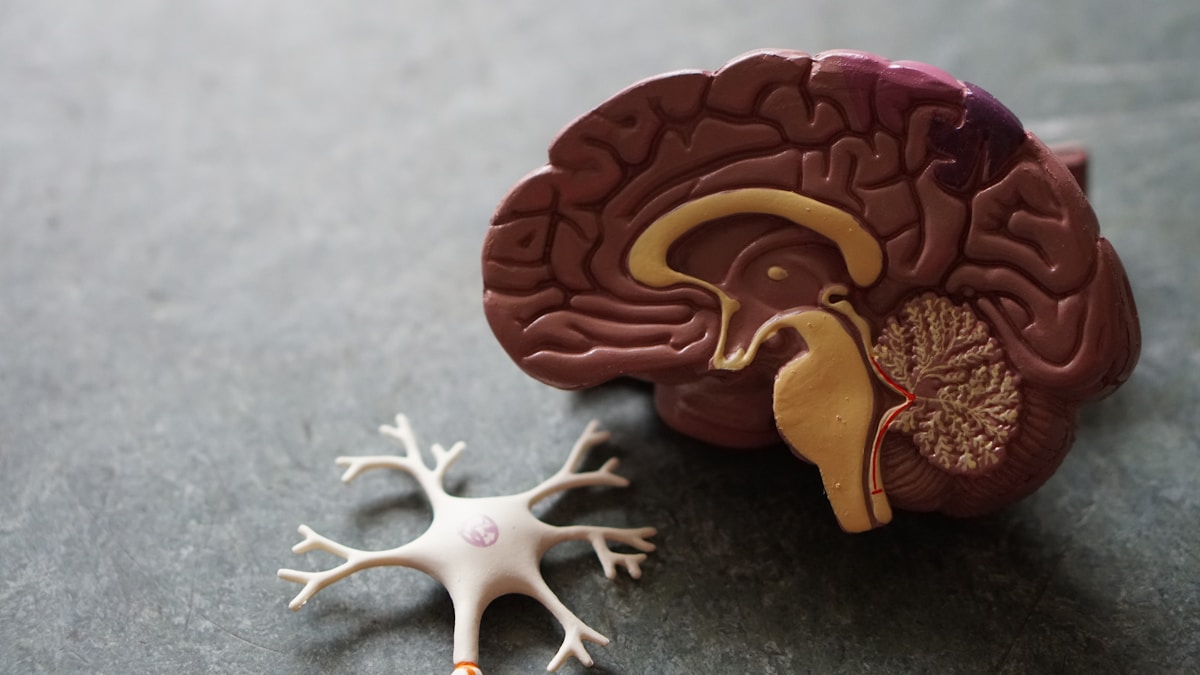
Understanding GAD requires looking beneath the surface at the neurobiological mechanisms driving the disorder. The primary actor in this process is the Amygdala, the brain’s emotional processing centre, but the complexity extends to the entire endocrine and nervous systems.
The Amygdala Hijack and Prefrontal Dysregulation
In a healthy brain, the prefrontal cortex (the rational centre) regulates the amygdala. In GAD, this connection is weakened. The amygdala becomes hypersensitive, triggering a ‘threat’ response to neutral stimuli. This is often referred to as an ‘Amygdala Hijack’, where the emotional brain overrides rational thought, making it nearly impossible to ‘reason’ oneself out of a worry loop (Source: PubMed PMC4300662).
The HPA Axis: The Chemical Cascade
When the amygdala perceives a threat, it activates the Hypothalamic-Pituitary-Adrenal (HPA) Axis. The hypothalamus releases CRH, which signals the pituitary gland to release ACTH, eventually prompting the adrenal glands to flood the bloodstream with Cortisol and Adrenaline. In GAD, this axis is chronically overactive. Instead of returning to a baseline state, the body remains in a state of ‘high alert’, leading to the exhaustion and ‘burnout’ often reported by patients (Source: Endocrine Society).
The Vagus Nerve and Vagal Tone
The Vagus Nerve is the main component of the Parasympathetic Nervous System (PNS), responsible for the ‘rest and digest’ response. Vagal Tone refers to the activity of the vagus nerve; high vagal tone is associated with the ability to recover quickly from stress. In GAD, vagal tone is often low, meaning the body struggles to switch off the sympathetic ‘fight or flight’ response. Retraining the vagus nerve is a cornerstone of modern somatic anxiety management (Source: Frontiers in Psychology).
3. Somatic Mapping: Physical vs Psychological Symptoms
GAD is a whole-body experience. The Autonomic Nervous System (ANS) remains in a state of sympathetic dominance, leading to a wide array of physical manifestations that can be as debilitating as the mental worry.
Neurological: Brain Zaps and Dizziness
Many GAD sufferers report ‘brain zaps’—brief, electric-shock-like sensations in the head. While often associated with medication changes, they can also occur due to extreme muscle tension in the neck and scalp or hyper-excitability of the nervous system. Chronic dizziness or ‘PPPD’ (Persistent Postural-Perceptual Dizziness) is also common, as the brain’s balance centres become over-sensitised to movement (Source: Vestibular Disorders Association).
Gastrointestinal: The Gut-Brain Axis
The Enteric Nervous System (ENS), often called the ‘second brain’, is in constant communication with the head. During chronic anxiety, the body diverts blood flow away from the digestive system. This disruption to the Gut-Brain Axis leads to nausea, bloating, and IBS. The ‘knot’ in the stomach is a literal manifestation of the ENS reacting to stress signals (Source: Harvard Health).
Cardiovascular and Musculoskeletal
Palpitations and chest tightness occur as the heart prepares for physical exertion that never comes. Meanwhile, Chronic Muscle Tension—particularly in the trapezius and masseter (jaw) muscles—leads to tension headaches and physical fatigue. The body is essentially running a marathon while sitting still (Source: NHS).
4. The GAD Maintenance Cycle: Why It Won’t Stop
Clinical psychologists identify the Maintenance Cycle as the reason why anxiety persists. It is not merely a reaction to stress, but a self-reinforcing system.
Type 1 vs Type 2 Worry
Metacognitive theory distinguishes between two types of worry. Type 1 Worry is the initial concern about external events (e.g., “What if I lose my job?”). Type 2 Worry, or ‘Meta-Worry’, is worrying about the worry itself (e.g., “I’m going crazy,” or “This worry will give me a heart attack”). Type 2 worry is what keeps the cycle locked, as the individual begins to fear their own internal states (Source: Wells, 1995).
The ‘Worry Hill’ and Intolerance of Uncertainty
The Worry Hill concept describes how anxiety rises to a peak and would naturally subside if left alone. However, GAD sufferers use Safety Behaviours (like checking or reassurance-seeking) to ‘jump off’ the hill before reaching the peak. This prevents habituation. At the heart of this is an Intolerance of Uncertainty (IU). For a GAD sufferer, uncertainty is viewed as inherently ‘bad’ or ‘dangerous’, leading to exhaustive efforts to achieve 100% certainty in an uncertain world (Source: NICE CG113).
5. The GAD-FND Connection
A critical area of modern neuropsychiatry is the overlap between GAD and Functional Neurological Disorder (FND). FND involves a ‘software’ problem in the brain, where signals are sent incorrectly, resulting in physical symptoms like tremors, limb weakness, or non-epileptic seizures.
Somatic Symptom Amplification: Chronic anxiety acts as a ‘volume knob’ for physical sensations. In patients with a vulnerability to FND, the high levels of cortisol and nervous system arousal associated with GAD can trigger or exacerbate functional symptoms. Evidence suggests that treating the underlying GAD is a vital component of FND recovery, as it lowers the overall ‘noise’ in the nervous system (Source: FND Hope UK / PubMed PMC7248250).
6. Diagnosis and Assessment in the UK
In the UK, the diagnostic journey typically begins with the GAD-7 Scale. A score of 8+ is the threshold for clinical intervention, while 15+ indicates severe GAD. Clinicians also use ICD-11 criteria to ensure symptoms aren’t caused by ‘Medical Mimics’ such as Hyperthyroidism, Vitamin B12 deficiency, or cardiac arrhythmias. A thorough GP assessment often includes blood tests to rule out these physical causes (Source: RCPsych).
7. The UK Treatment Pathway: The Stepped Care Model
The NHS follows a ‘Stepped Care’ model. Step 1 is assessment. Step 2 involves low-intensity CBT or guided self-help. Step 3 moves to high-intensity CBT or medication. Step 4 is for complex cases requiring multi-disciplinary teams. This ensures that resources are allocated based on clinical need (Source: NICE).
8. Evidence-Based Therapies: CBT Techniques
Cognitive Behavioural Therapy (CBT) for GAD is highly specialised. Key techniques include:
- Worry Time: Restricting worry to a specific 15-minute window each day, which helps break the habit of ‘all-day’ ruminating.
- Cognitive Restructuring: Identifying ‘thinking errors’ like Catastrophising (expecting the worst) or Fortune Telling.
- Behavioural Experiments: Testing the ‘Intolerance of Uncertainty’ by deliberately not checking something or leaving a task ‘imperfect’ to see if the feared outcome occurs (Source: NICE CG113).
9. Pharmacological Options: How SSRIs Work
When therapy alone is insufficient, SSRIs (Selective Serotonin Reuptake Inhibitors) like Sertraline are prescribed.
Mechanism of Action: In an anxious brain, serotonin (the ‘calming’ chemical) is reabsorbed too quickly by neurons. SSRIs block this reabsorption, allowing more serotonin to remain in the synaptic gap. This increases the ‘signal strength’ of calming messages, eventually helping the amygdala to become less reactive. It typically takes 4-6 weeks for these structural changes in brain signalling to translate into reduced anxiety (Source: Royal College of Psychiatrists).
10. Self-Help: Grounding and Breathing
Diaphragmatic Breathing (The Vagus Hack)
To stimulate the vagus nerve, one must breathe ‘into the belly’. Place one hand on your chest and one on your stomach. Inhale through the nose for 4 seconds, ensuring only the stomach hand moves. Exhale slowly through pursed lips for 6 seconds. The long exhale signals the brain to switch from Sympathetic to Parasympathetic mode.
The 5-4-3-2-1 Grounding Technique
When a ‘worry spiral’ begins, use your senses to return to the present:
- 5 things you can see.
- 4 things you can touch (the texture of your clothes, a cold desk).
- 3 things you can hear (distant traffic, a clock).
- 2 things you can smell.
- 1 thing you can taste.
Comprehensive FAQ
Q: What is the difference between GAD and OCD? A: GAD involves broad, ‘real-life’ worries (money, health). OCD involves specific obsessions (fear of germs, harming others) followed by repetitive compulsions to neutralise the fear.
Q: Can I take GAD medication during pregnancy? A: Many SSRIs are considered relatively safe, but the risks must be balanced against the risks of untreated anxiety. Always consult your GP or a specialist perinatal mental health team.
Q: What workplace adjustments can I request? A: Under the Equality Act 2010, GAD can be considered a disability if it has a long-term effect on daily activities. Adjustments might include flexible hours, a quiet workspace, or phased returns to work.
Q: Why does my anxiety feel worse in the morning? A: This is often due to the ‘Cortisol Awakening Response’, where the body naturally spikes cortisol levels to help you wake up. In GAD, this spike can trigger immediate morning dread.
11. Conclusion: The Road to Recovery
Generalized Anxiety Disorder is a profound challenge, but it is not a life sentence. By understanding the biological drivers—from the HPA axis to the vagus nerve—and breaking the maintenance cycle through evidence-based therapy, recovery is entirely possible. The first step is often the hardest: speaking to a professional. Whether through your GP or a self-referral to NHS Talking Therapies, support is available. You are not ‘just a worrier’; you are someone with a treatable medical condition.
Frequently Asked Questions
What are the main signs of generalized anxiety disorder (gad) disorder?
For Generalized Anxiety Disorder (GAD), this question is best answered with personalised guidance. If you are concerned, speak to your GP or contact NHS 111. The article above outlines the most relevant evidence-based approaches.
How is generalized anxiety disorder (gad) disorder diagnosed in the UK?
For Generalized Anxiety Disorder (GAD), this question is best answered with personalised guidance. If you are concerned, speak to your GP or contact NHS 111. The article above outlines the most relevant evidence-based approaches.
What treatments are recommended by NICE?
For Generalized Anxiety Disorder (GAD), this question is best answered with personalised guidance. If you are concerned, speak to your GP or contact NHS 111. The article above outlines the most relevant evidence-based approaches.
Related Articles

Emetophobia: Complete Guide to Understanding and Overcoming the Fear of Vomiting
A complete guide to emetophobia, the fear of vomiting: symptoms, causes and effective treatments including CBT and exposure therapy. Expert-informed help.

Generalised Anxiety Disorder (GAD): The Complete Guide
Everything you need to know about generalised anxiety disorder: symptoms, causes, diagnosis, and treatment options including NHS pathways and self-help strategies.
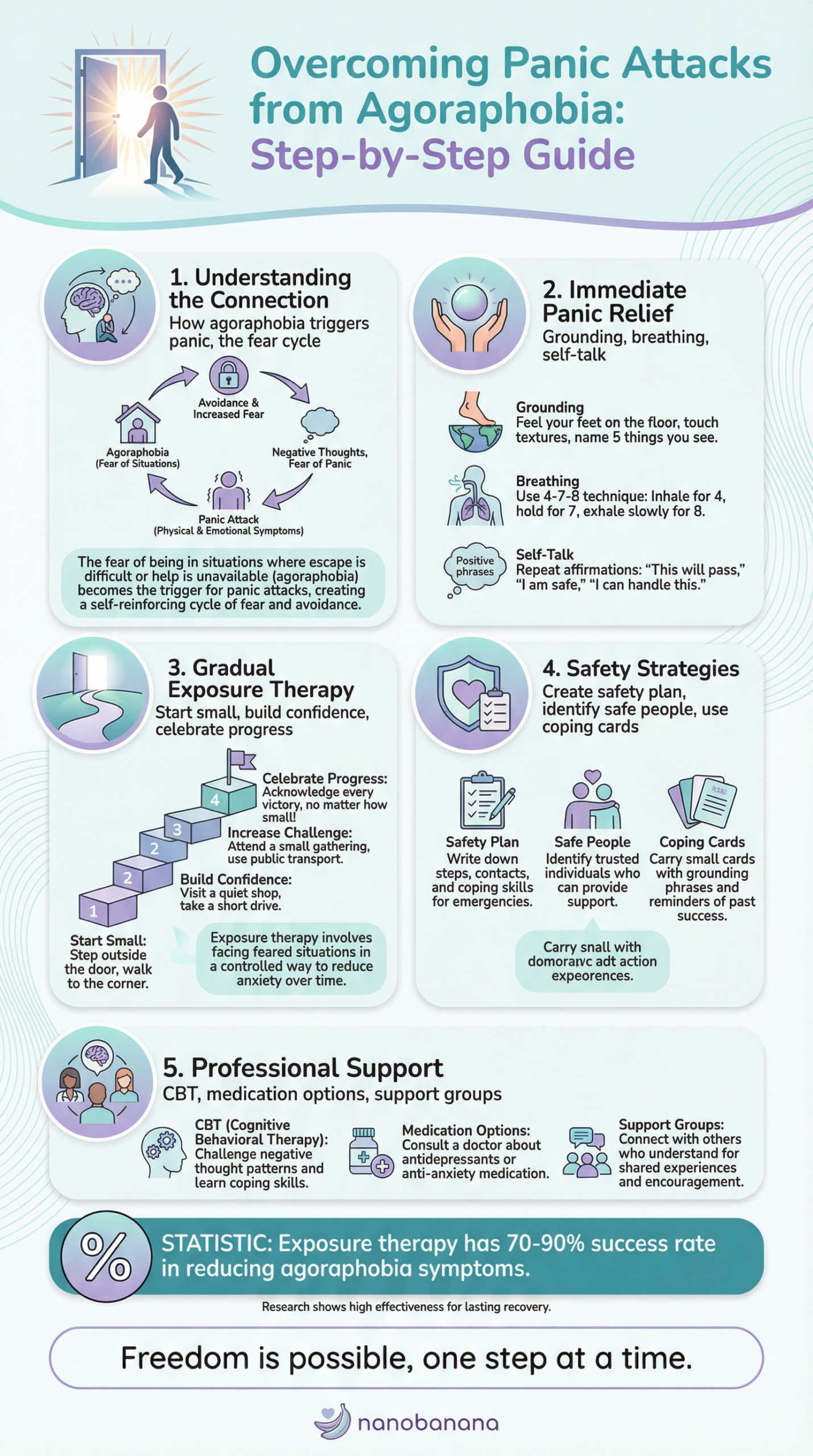
How to overcome panic attacks due to agoraphobia: understanding, coping and recovery
How to overcome panic attacks linked to agoraphobia: understand the connection, learn coping techniques, and follow practical steps towards recovery.