
Stress-Induced Anxiety: Breaking the Cycle
Last updated:
Introduction: When Stress Becomes Anxiety
Stress is an unavoidable part of life. In small doses, it can even be helpful, motivating us to meet deadlines, prepare for challenges, and respond to emergencies. But when stress is persistent, overwhelming, or unrelenting, it can cross a threshold and become something more troubling: anxiety.
Stress-induced anxiety is one of the most common pathways into an anxiety disorder. It describes the process by which chronic stress gradually shifts the body and mind into a state of sustained hypervigilance, worry, and fear that persists even when the original stressor has been resolved. In the UK, where the cost of living, work pressures, and post-pandemic uncertainty continue to affect millions, understanding and breaking the stress-anxiety cycle has never been more relevant.
According to the Health and Safety Executive, 17.1 million working days were lost to work-related stress, depression, and anxiety in 2022/23. The Mental Health Foundation reports that 74% of UK adults have felt so stressed at some point over the past year that they felt overwhelmed or unable to cope. These statistics paint a picture of a population under significant pressure.
Understanding the Difference: Stress vs Anxiety
While stress and anxiety share many symptoms and are often used interchangeably in everyday language, they are distinct experiences with different characteristics.
What Is Stress?
Stress is the body’s response to an external demand or threat. It is typically proportionate to the situation and resolves when the situation changes. For example, you might feel stressed about an upcoming exam, but the stress lifts after the exam is over. Stress has an identifiable cause, and the response is usually time-limited.
What Is Anxiety?
Anxiety is a state of persistent worry, apprehension, or fear that may or may not have an identifiable trigger. It can continue long after the original stressor has been removed. Anxiety often involves an exaggerated perception of threat and a reduced sense of ability to cope. When anxiety becomes chronic and begins to interfere with daily functioning, it may meet the criteria for an anxiety disorder as defined by NICE clinical guidelines.
The Transition Point
The transition from normal stress to stress-induced anxiety often happens gradually. At first, the stress response is appropriate and proportional. But as stress accumulates and persists, the body’s baseline level of arousal increases. The threshold for triggering the fight-or-flight response lowers. Things that would not have bothered you before now provoke a disproportionate reaction. You begin to worry not just about the stressor itself, but about the possibility of future stressors. You may start to feel anxious about feeling anxious. This is the hallmark of the transition from stress to anxiety.
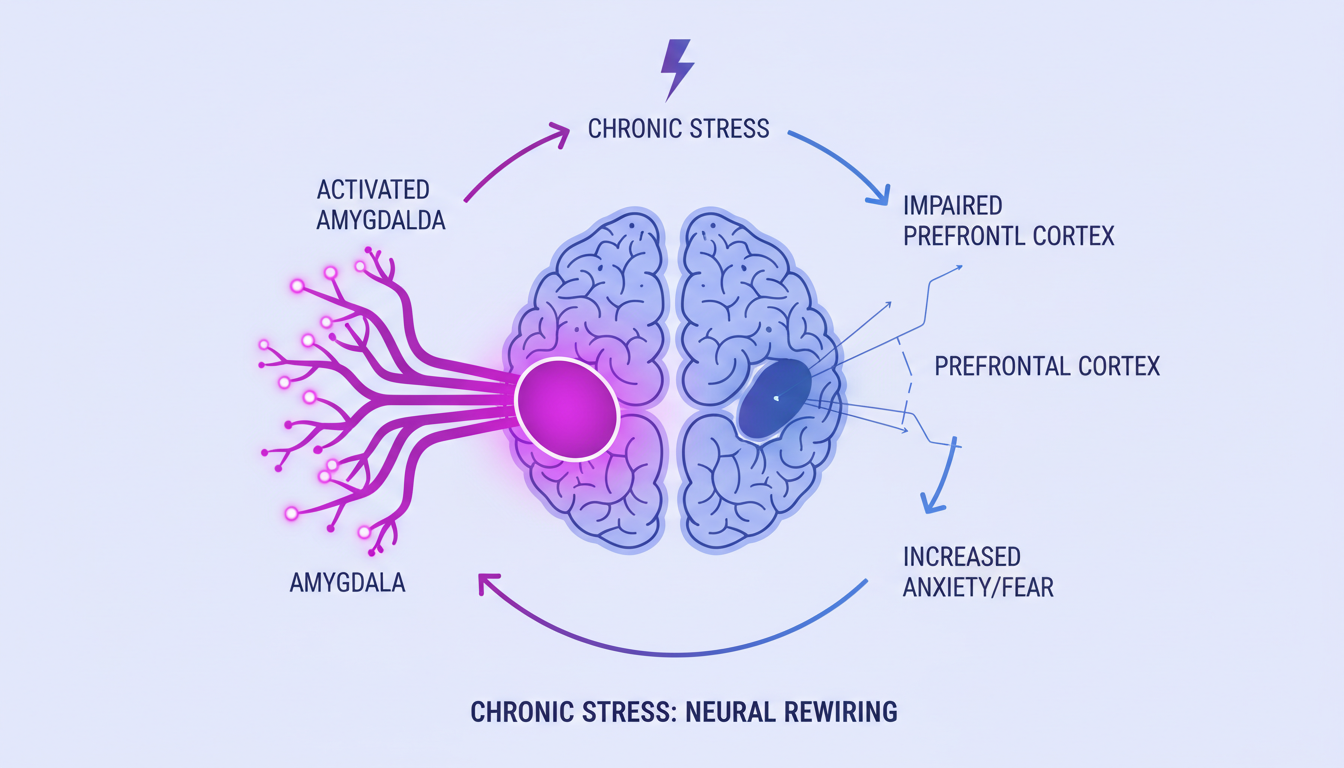
How Chronic Stress Rewires the Brain
The neuroscience behind stress-induced anxiety is increasingly well understood. Chronic stress produces measurable changes in the brain that can predispose a person to developing an anxiety disorder.
The Amygdala: Becoming Hyperreactive
The amygdala, the brain’s threat-detection centre, becomes enlarged and hyperreactive in response to chronic stress. Brain imaging studies have shown that people exposed to prolonged stress have amygdalae that respond more strongly and more quickly to perceived threats, even when those threats are minor or non-existent. This means the alarm system in your brain becomes oversensitive, triggering anxiety in situations that would not previously have caused concern.
The Prefrontal Cortex: Losing Control
The prefrontal cortex, the part of the brain responsible for rational thinking, planning, and impulse control, is adversely affected by chronic stress. Cortisol, when elevated for extended periods, can actually reduce the volume and connectivity of the prefrontal cortex. This means the brain region that would normally help you rationalise and calm your fears becomes less effective, leaving the amygdala’s alarm signals unchecked.
The Hippocampus: Memory and Context
The hippocampus, which is involved in memory and contextual processing, can also be damaged by chronic stress. This means the brain becomes less able to distinguish between genuine threats and safe situations, less able to learn from experience that certain feared scenarios did not materialise, and more likely to generalise fear responses to a wide range of situations.
Common Stress Triggers in the UK
While stress can come from any source, certain stressors are particularly prevalent in the UK:
- Work pressure: Long hours, job insecurity, demanding workloads, and poor management are consistently cited as top stressors in UK surveys.
- Financial difficulties: The cost of living crisis, housing costs, and debt are major sources of stress for millions of UK households.
- Health concerns: Waiting for NHS appointments, managing chronic conditions, and worrying about the health of loved ones.
- Relationship problems: Conflict, separation, divorce, and the stress of caring responsibilities.
- Major life changes: Moving house, changing jobs, bereavement, becoming a parent, or retirement.
- Information overload: The 24-hour news cycle and social media can create a constant background hum of stress and worry.
Recognising Stress-Induced Anxiety
The signs that stress has tipped into anxiety can include:
- Persistent worry that is difficult to control, even about everyday matters
- Physical symptoms such as muscle tension, headaches, digestive problems, heart palpitations, or fatigue
- Difficulty sleeping or staying asleep
- Irritability and a shortened temper
- Difficulty concentrating or a feeling of “brain fog”
- Avoidance of situations or activities that trigger worry
- A sense that something bad is about to happen, without being able to identify what
- Feeling overwhelmed by tasks that you would normally manage
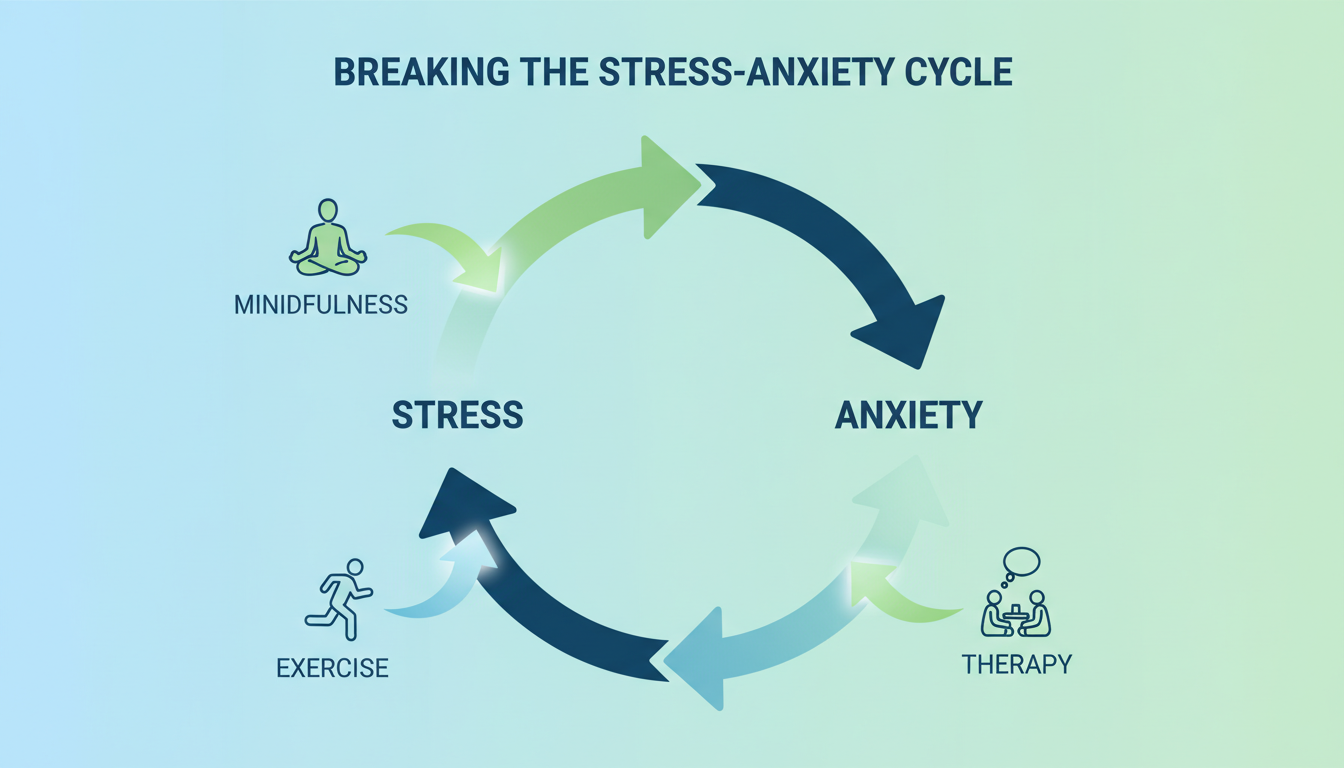
Breaking the Stress-Anxiety Cycle
Step 1: Identify and Address Stressors
The first step in breaking the cycle is to identify the sources of your stress and consider what, if anything, can be changed. This might involve having a conversation with your employer about workload, seeking financial advice from a free service like Citizens Advice, setting boundaries in relationships, or reorganising your daily routine to reduce unnecessary demands on your time.
Not all stressors can be removed, and that is important to acknowledge. Some stress is an unavoidable part of life. Where you cannot change the situation, the focus shifts to changing your response to it.
Step 2: Build Stress Resilience
Regular physical activity: Exercise is one of the most powerful tools for managing stress and anxiety. It reduces cortisol, releases endorphins, and helps restore the natural rhythms of the nervous system. The NHS recommends 150 minutes of moderate exercise per week.
Mindfulness and meditation: Mindfulness-based stress reduction (MBSR) has a strong evidence base for reducing both stress and anxiety. Even 10 minutes of daily mindfulness practice can produce measurable benefits. Free resources are available through the NHS Apps Library.
Social connection: Talking to trusted friends, family members, or colleagues about your stress can reduce its intensity. Social support is one of the strongest protective factors against both stress and anxiety.
Time management: Feeling overwhelmed often stems from having too many demands and too little time. Techniques such as prioritisation, delegation, and saying “no” to non-essential commitments can help create breathing space.
Step 3: Seek Professional Support
CBT: NICE recommends CBT as a first-line treatment for generalised anxiety disorder, panic disorder, and social anxiety disorder. CBT can help you develop healthier thought patterns, build coping strategies, and break the cycle of stress and anxiety. Access it through NHS Talking Therapies.
Medication: If your anxiety is moderate to severe, your GP may recommend an SSRI such as sertraline. Medication can help reduce anxiety to a level where you can engage more effectively with therapy and self-help strategies.
Occupational health: If work stress is a major factor, many employers offer occupational health services that can provide support and adjustments.
Step 4: Maintain Long-Term Wellbeing
Breaking the stress-anxiety cycle is not a one-time fix but an ongoing process. Building sustainable habits that protect your mental health is essential:
- Regular exercise, even just walking, should become part of your routine
- Prioritise sleep and maintain a consistent sleep schedule
- Limit alcohol and caffeine, both of which can worsen anxiety
- Make time for activities that bring you joy and relaxation
- Stay connected with your support network
- Recognise early warning signs that stress is building and take action before it escalates
UK Resources
- NHS Talking Therapies: Free therapy for anxiety and stress. Self-referral available in England.
- Mind: Information and support. Infoline: 0300 123 3393.
- Anxiety UK: Helpline: 03444 775 774.
- Citizens Advice: Free advice on financial, legal, and employment issues. Website: citizensadvice.org.uk.
- Samaritans: 24/7 support. Call 116 123.
- Every Mind Matters (NHS): Free online tools for managing stress and anxiety. Website: nhs.uk/every-mind-matters.
Conclusion
Stress-induced anxiety is a common and understandable response to the pressures of modern life. The good news is that it is highly treatable. By understanding how stress transitions into anxiety, identifying your personal stressors, building resilience through evidence-based strategies, and seeking professional support when needed, you can break the cycle and reclaim a sense of calm and control. Remember that seeking help is not a sign of failure; it is a sign of strength and self-awareness.
Related Articles

Relationship Anxiety: Signs, Causes and How to Cope
Relationship anxiety can affect even the healthiest partnerships. Learn the signs, causes, and evidence-based strategies to cope with anxiety in relationships.

Sleep Anxiety: Causes, Symptoms and How to Break the Cycle
Sleep anxiety keeps millions awake at night. Learn what causes it, how to recognise the symptoms, and evidence-based techniques to finally get restful sleep.

Anxiety at Work: Managing Workplace Anxiety Effectively
Workplace anxiety affects millions in the UK. Discover practical strategies to manage anxiety at work and protect your performance.