Last updated:
The Appeal of Natural Remedies
When anxiety is affecting your daily life, it is natural to look for solutions that feel gentle, accessible, and within your control. Many people are drawn to natural remedies because they want to manage their anxiety without medication, or because they want to complement existing treatment with additional approaches.
There is nothing wrong with this instinct. In fact, many natural approaches to anxiety have genuine scientific evidence behind them and are endorsed by respected health bodies including the NHS and NICE. However, the natural health market is also flooded with products making exaggerated claims, and it can be difficult to separate what genuinely works from what does not.
This guide takes an honest, evidence-based look at natural remedies for anxiety, drawing on published research and guidance from UK health authorities. We will be clear about what the evidence supports, where it is limited, and what you should discuss with your GP.
Natural Approaches With Strong Evidence
Exercise
If there is one natural remedy for anxiety with overwhelming evidence, it is physical exercise. The NHS recommends exercise as a frontline intervention for anxiety, and NICE guidelines include it in their recommended treatment pathways.
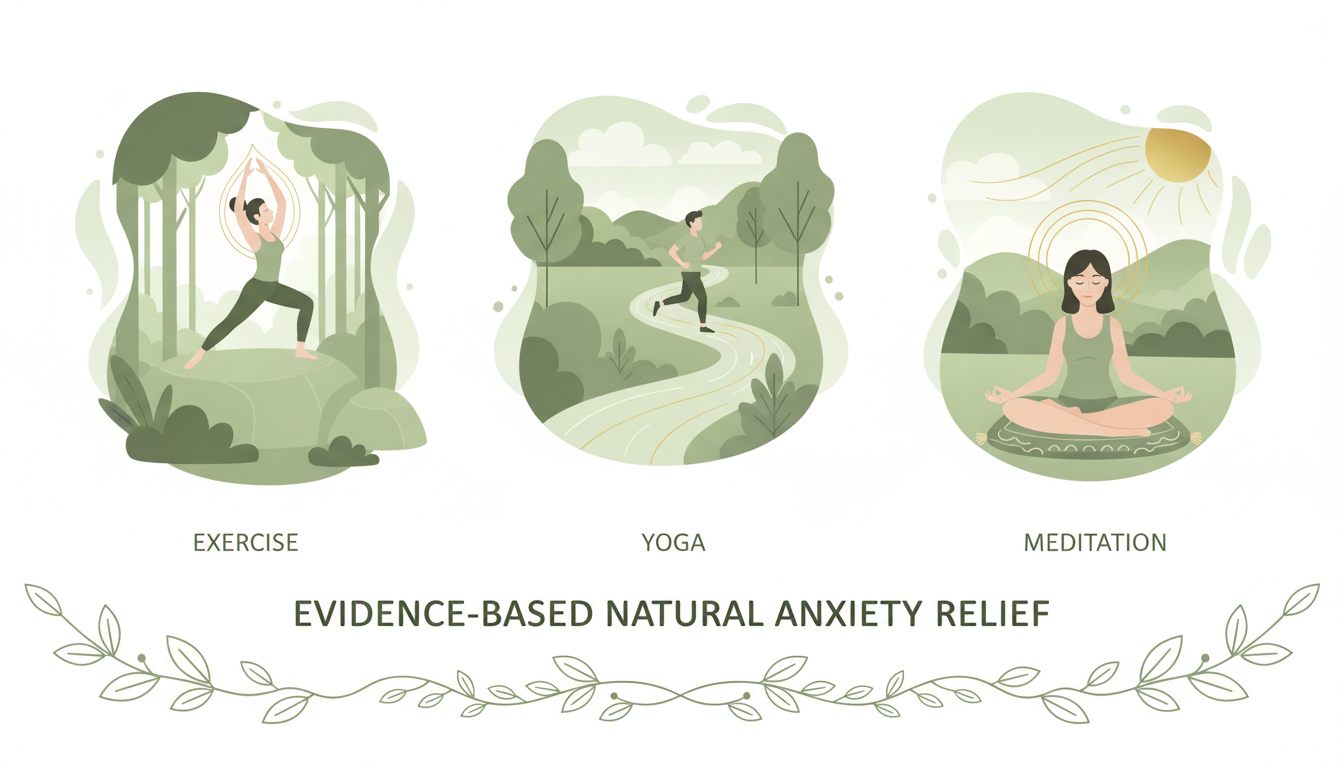
A comprehensive review published in the British Journal of Sports Medicine found that exercise was comparable to medication and psychotherapy for reducing anxiety symptoms. The mechanisms are well understood: exercise reduces stress hormones, releases endorphins, improves sleep, and provides a sense of accomplishment.
What the evidence says:
- Aerobic exercise (walking, running, swimming, cycling) has the strongest evidence.
- Yoga combines physical movement with breathing and mindfulness, making it particularly effective for anxiety.
- Benefits begin within a single session and accumulate with regular practice.
- 150 minutes of moderate-intensity exercise per week is the NHS recommendation.
How to start: If you are not currently active, begin with a daily 10-minute walk and gradually increase. The NHS Couch to 5K programme is an excellent, free resource for building fitness gradually.
Mindfulness Meditation
Mindfulness — paying deliberate attention to the present moment without judgement — has a substantial evidence base for anxiety reduction. NICE recognises mindfulness-based approaches as beneficial, and many NHS trusts now offer mindfulness-based stress reduction (MBSR) and mindfulness-based cognitive therapy (MBCT) programmes.
A meta-analysis of 47 trials involving over 3,500 participants found that mindfulness meditation programmes produced moderate improvements in anxiety. The effect sizes were comparable to those seen with antidepressant medication.
Practical options:
- Guided meditation apps — the NHS Apps Library reviews and recommends several.
- MBSR courses — available through some NHS trusts and private providers across the UK.
- Free online resources — the Mental Health Foundation offers free mindfulness guides.
- Start with just 5 minutes daily and build gradually.
Breathing Techniques
Controlled breathing is one of the most immediately effective natural tools for anxiety. Techniques such as diaphragmatic breathing, the 4-7-8 method, and box breathing directly activate the parasympathetic nervous system, counteracting the physical symptoms of anxiety.
The NHS recommends breathing exercises as a self-help strategy for anxiety, and they form a core component of many evidence-based therapies including CBT.
Time in Nature
Research consistently shows that spending time in natural environments reduces anxiety, lowers cortisol levels, and improves mood. A study published in the journal Scientific Reports found that spending at least 120 minutes per week in nature was associated with significantly better mental health and wellbeing.
The NHS and the Mental Health Foundation both advocate time outdoors as part of a mental health self-care routine. This does not require countryside hikes — urban parks, gardens, and even viewing nature through a window have measurable benefits.
Herbal Remedies: What the Evidence Shows
Herbal remedies for anxiety occupy a complicated space. Some have promising research behind them, but the quality of evidence is generally lower than for the approaches described above, and the regulation of herbal products in the UK is less stringent than for pharmaceutical medication.
Lavender
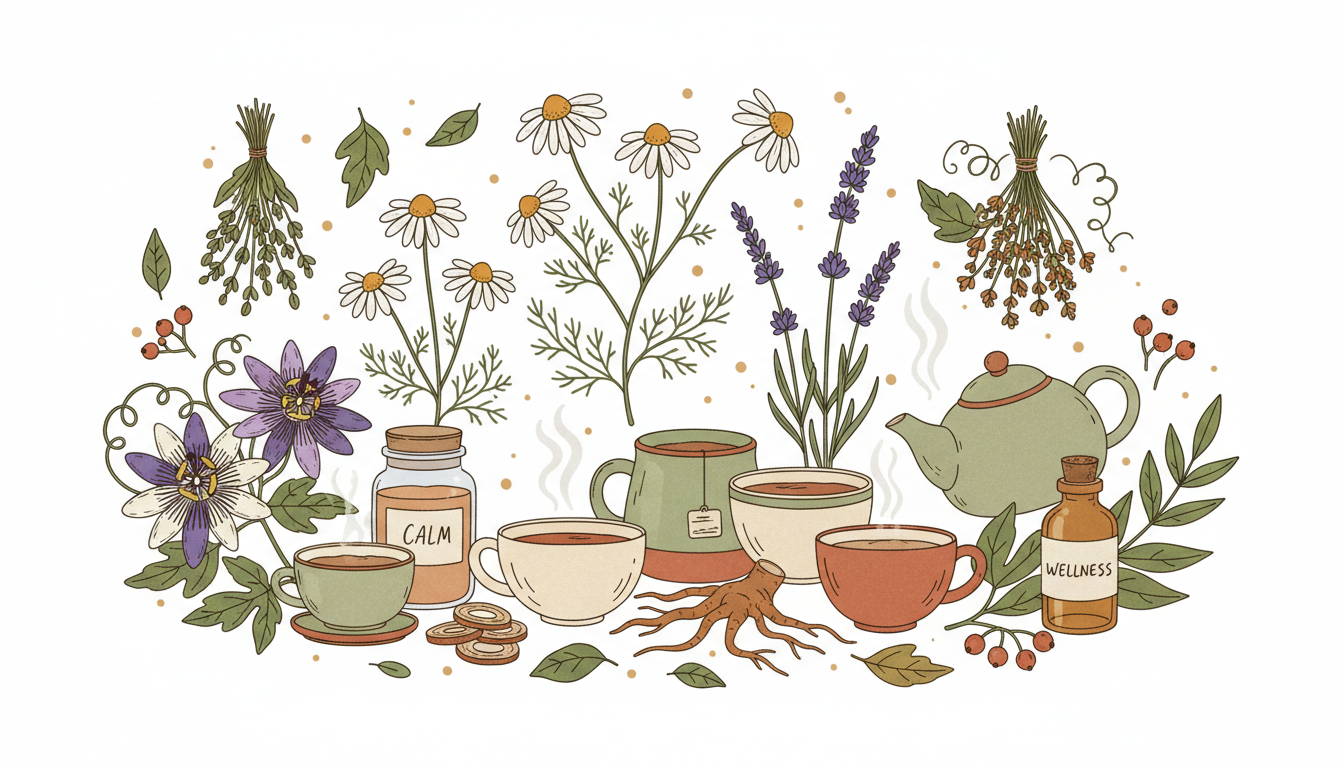
Lavender is one of the most studied herbal remedies for anxiety. Silexan, a standardised lavender oil preparation available in capsule form, has been tested in several randomised controlled trials and shown to reduce anxiety symptoms in people with generalised anxiety disorder.
A study published in Phytomedicine found that Silexan was comparable in effectiveness to the benzodiazepine lorazepam, without the risk of dependence. However, more research is needed, and not all lavender products are equivalent — the concentration and preparation method matter significantly.
How to use lavender:
- Lavender essential oil in a diffuser may promote relaxation, though evidence for aromatherapy is limited.
- Standardised lavender oil capsules have the strongest evidence.
- A few drops of lavender oil on your pillow may support better sleep.
Passionflower (Passiflora incarnata)
Passionflower has been used traditionally for centuries and has some clinical evidence supporting its use for anxiety. A study in the Journal of Clinical Pharmacy and Therapeutics found that passionflower extract was comparable to the benzodiazepine oxazepam for generalised anxiety, with fewer side effects.
However, the evidence base remains limited, and the quality of passionflower products varies widely. If you choose to try it, look for products with the Traditional Herbal Registration (THR) mark, which indicates they meet UK safety and quality standards.
Chamomile
Chamomile, often consumed as tea, has been the subject of several clinical trials for anxiety. A study published in the Journal of Clinical Psychopharmacology found that long-term chamomile supplementation significantly reduced moderate-to-severe generalised anxiety disorder symptoms.
While drinking chamomile tea is unlikely to cause harm and may provide mild benefits, the concentrations used in clinical trials were higher than what you would get from a standard cup of tea.
Valerian Root
Valerian is often marketed as a natural anxiety and sleep remedy. The evidence for its effectiveness for anxiety specifically is mixed. Some studies show modest benefits, while others find no significant effect compared to placebo. It may be more useful for improving sleep quality, which indirectly helps anxiety.
CBD Oil
Cannabidiol (CBD) oil has become enormously popular in the UK for anxiety. While early research is promising — a 2019 study in the Brazilian Journal of Psychiatry found that CBD reduced anxiety in a simulated public speaking test — the evidence base is still developing. The quality and CBD content of products available in the UK varies enormously, and regulation is evolving.
If you are considering CBD, be aware that:
- It can interact with certain medications.
- Product quality varies significantly — look for third-party tested products.
- It is legal in the UK provided THC content is below 0.2%.
- You should discuss it with your GP, especially if you take other medication.
Dietary Approaches
Omega-3 Fatty Acids
Research suggests that omega-3 fatty acids, found in oily fish (salmon, mackerel, sardines), flaxseeds, and walnuts, may help reduce anxiety symptoms. A meta-analysis published in JAMA Network Open found that omega-3 supplements had a small but significant anxiety-reducing effect.
Magnesium
Magnesium deficiency has been linked to increased anxiety, and some studies suggest that magnesium supplementation may help. Good dietary sources include dark leafy greens, nuts, seeds, and whole grains. If you are considering supplements, discuss dosage with your GP or pharmacist.
Reducing Caffeine and Alcohol
Perhaps the simplest dietary change you can make for anxiety is reducing caffeine and alcohol. Both substances directly affect the nervous system in ways that can trigger or worsen anxiety. This is not a glamorous remedy, but it is one of the most effective.
Important Safety Considerations
Natural does not automatically mean safe. Herbal supplements can:
- Interact with prescribed medications, including antidepressants, blood thinners, and the contraceptive pill.
- Cause side effects of their own.
- Vary enormously in quality and potency between brands.
- Delay you from seeking effective professional treatment.
Always:
- Consult your GP or pharmacist before taking any herbal supplement, especially if you are taking other medication.
- Look for products with the THR mark or those registered with the Medicines and Healthcare products Regulatory Agency (MHRA).
- Buy from reputable retailers.
- Do not stop prescribed medication in favour of natural remedies without medical advice.
When Natural Remedies Are Not Enough
Natural approaches are most suitable for mild anxiety. If your anxiety is moderate to severe, is significantly affecting your daily functioning, or has persisted for several weeks, professional treatment is recommended. NICE guidelines are clear that psychological therapy (particularly CBT) and medication are the most effective treatments for anxiety disorders.
Natural remedies can be a valuable complement to professional treatment, not a replacement for it. Many people find the best results come from combining approaches — for example, using CBT skills alongside regular exercise and mindfulness.
UK Resources
- NHS Talking Therapies: Free therapy — self-refer online.
- NHS Every Mind Matters: Free tools for managing anxiety.
- Mind: Infoline 0300 123 3393.
- Mental Health Foundation: Free mindfulness resources at mentalhealth.org.uk.
- Anxiety UK: Helpline 03444 775 774.
The best natural remedy for anxiety is not a single supplement or technique — it is a lifestyle built around the practices that consistently reduce stress and support mental wellbeing. Exercise, sleep, social connection, mindfulness, and time in nature form the foundation. Everything else is a potential addition, not a substitute.
Frequently Asked Questions
When Natural Remedies Are Not Enough?
Natural approaches are most suitable for mild anxiety. If your anxiety is moderate to severe, is significantly affecting your daily functioning, or has persisted for several weeks, professional treatment is recommended. NICE guidelines are clear that psychological therapy (particularly CBT) and medication are the most effective treatments for anxiety disorders.
Which technique works fastest in the moment?
For Natural Remedies for Anxiety, this question is best answered with personalised guidance. If you are concerned, speak to your GP or contact NHS 111. The article above outlines the most relevant evidence-based approaches.
How long does it take to see results?
For Natural Remedies for Anxiety, this question is best answered with personalised guidance. If you are concerned, speak to your GP or contact NHS 111. The article above outlines the most relevant evidence-based approaches.
Related Articles
Breathing Exercises for Anxiety: 7 Techniques to Calm Your Mind
Breathing exercises are one of the fastest ways to calm anxiety. Try these 7 techniques and feel the difference in minutes.
Caffeine and Anxiety: How Coffee Affects Your Nerves
Does caffeine make anxiety worse? Learn how coffee and energy drinks affect your nervous system, how much is too much, and how to cut back without the crash.
CBT for Anxiety: How It Works, Techniques and How to Access It
Learn how CBT helps with anxiety, including 5 proven techniques you can practise at home. Find out how to access CBT on the NHS or privately in the UK.