
How to Manage Anxiety: A Complete Guide to Daily Management
Last updated:
What Does It Mean to Manage Anxiety?
Managing anxiety is not about eliminating it entirely. Some degree of anxiety is a normal, healthy part of being human — it keeps us alert to genuine risks and motivates us to prepare for challenges. The goal of anxiety management is to prevent it from becoming excessive, persistent, or debilitating.
According to NHS England, approximately 1 in 6 adults in the UK experiences a common mental health problem such as anxiety or depression in any given week. If you are one of them, you are far from alone, and there are well-established, evidence-based strategies that can help you manage anxiety effectively on a daily basis.
This guide brings together recommendations from the NHS, NICE clinical guidelines, and leading UK mental health charities such as Mind and the Mental Health Foundation to give you a comprehensive framework for daily anxiety management.
Understanding Your Anxiety
Recognising Your Triggers
Effective anxiety management begins with understanding what triggers your anxiety. Triggers vary widely from person to person, but common ones include:
- Work stress and deadlines
- Financial worries
- Health concerns
- Relationship difficulties
- Social situations
- News and social media
- Major life changes
Spend a week noting when your anxiety increases and what was happening at the time. You may begin to see patterns that help you anticipate and prepare for challenging moments.
Understanding the Anxiety Cycle
Anxiety tends to follow a predictable cycle: a trigger leads to anxious thoughts, which produce physical symptoms, which then lead to avoidance behaviours, which ultimately reinforce the anxiety. Understanding this cycle is the first step towards breaking it.
For example, if the thought of attending a social event makes you anxious, you might avoid going. The temporary relief you feel reinforces the avoidance, but it also reinforces the belief that the situation is genuinely threatening. Over time, this pattern can narrow your life considerably.
Daily Habits for Anxiety Management
Morning Routine
How you start your day sets the tone for everything that follows. Research suggests that a consistent morning routine can reduce anxiety by providing structure and predictability.
Consider incorporating:
- 5 minutes of breathing exercises — Start with diaphragmatic breathing to activate your parasympathetic nervous system before the demands of the day begin.
- Mindful breakfast — Eat without your phone or other distractions. Pay attention to the taste, texture, and smell of your food.
- Intention setting — Rather than writing a to-do list that might feel overwhelming, set one clear intention for the day. “Today I will be patient with myself” is just as valid as any task.
- Limit early morning phone use — Checking emails and news first thing can trigger anxiety before you have had a chance to ground yourself.
Exercise and Physical Activity
The NHS recommends at least 150 minutes of moderate-intensity exercise per week for mental health benefits. Exercise is so effective for anxiety that NICE guidelines include it as a recommended intervention alongside psychological therapies.
The type of exercise matters less than consistency. Choose something you genuinely enjoy, whether that is walking, swimming, cycling, yoga, gardening, or dancing. Research published in the British Journal of Sports Medicine found that even regular walking can reduce anxiety symptoms by up to 26%.
Practical tips:
- Start small — even 10 minutes a day is beneficial.
- Walk to the shops instead of driving.
- Take the stairs instead of the lift.
- Try a free NHS Couch to 5K programme if you want structure.
- Exercise outdoors when possible — nature has additional anxiety-reducing benefits.
Sleep Hygiene
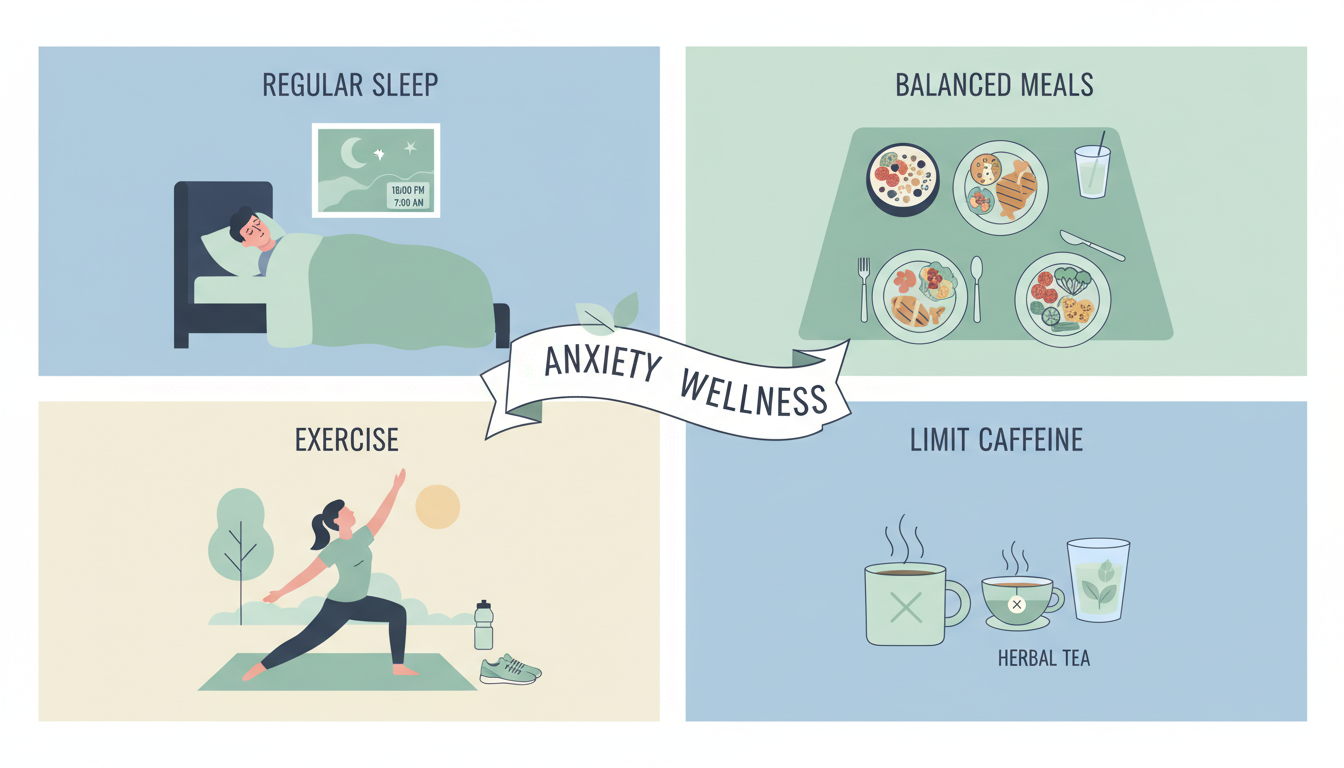
Poor sleep and anxiety have a bidirectional relationship — anxiety disrupts sleep, and poor sleep worsens anxiety. The NHS recommends the following sleep hygiene practices:
- Go to bed and wake up at the same time each day, even on weekends.
- Create a calming bedtime routine (warm bath, gentle reading, relaxation exercises).
- Avoid screens for at least 30 minutes before bed.
- Keep your bedroom cool, dark, and quiet.
- Avoid caffeine after midday and limit alcohol, which disrupts sleep quality.
- If you cannot sleep, get up and do something calming until you feel drowsy, rather than lying in bed worrying.
Nutrition and Diet
While diet alone will not cure anxiety, what you eat and drink can significantly affect your symptoms. The Mental Health Foundation highlights the following dietary considerations:
- Reduce caffeine — Caffeine is a stimulant that mimics and worsens anxiety symptoms. If you drink a lot of tea or coffee, try reducing gradually rather than stopping suddenly.
- Eat regular meals — Blood sugar drops can trigger anxiety-like symptoms. Aim for three balanced meals and healthy snacks.
- Stay hydrated — Dehydration can cause symptoms that mimic anxiety, including a racing heart and dizziness.
- Eat omega-3 rich foods — Oily fish, flaxseeds, and walnuts contain omega-3 fatty acids, which research suggests may help reduce anxiety.
- Limit alcohol — While alcohol may seem to calm anxiety temporarily, it disrupts neurotransmitter balance and typically worsens anxiety the following day.
Cognitive Techniques for Daily Use
Thought Challenging
Cognitive behavioural therapy (CBT) is recommended by NICE as the gold-standard psychological treatment for anxiety disorders. One of its core techniques — thought challenging — can be practised independently.
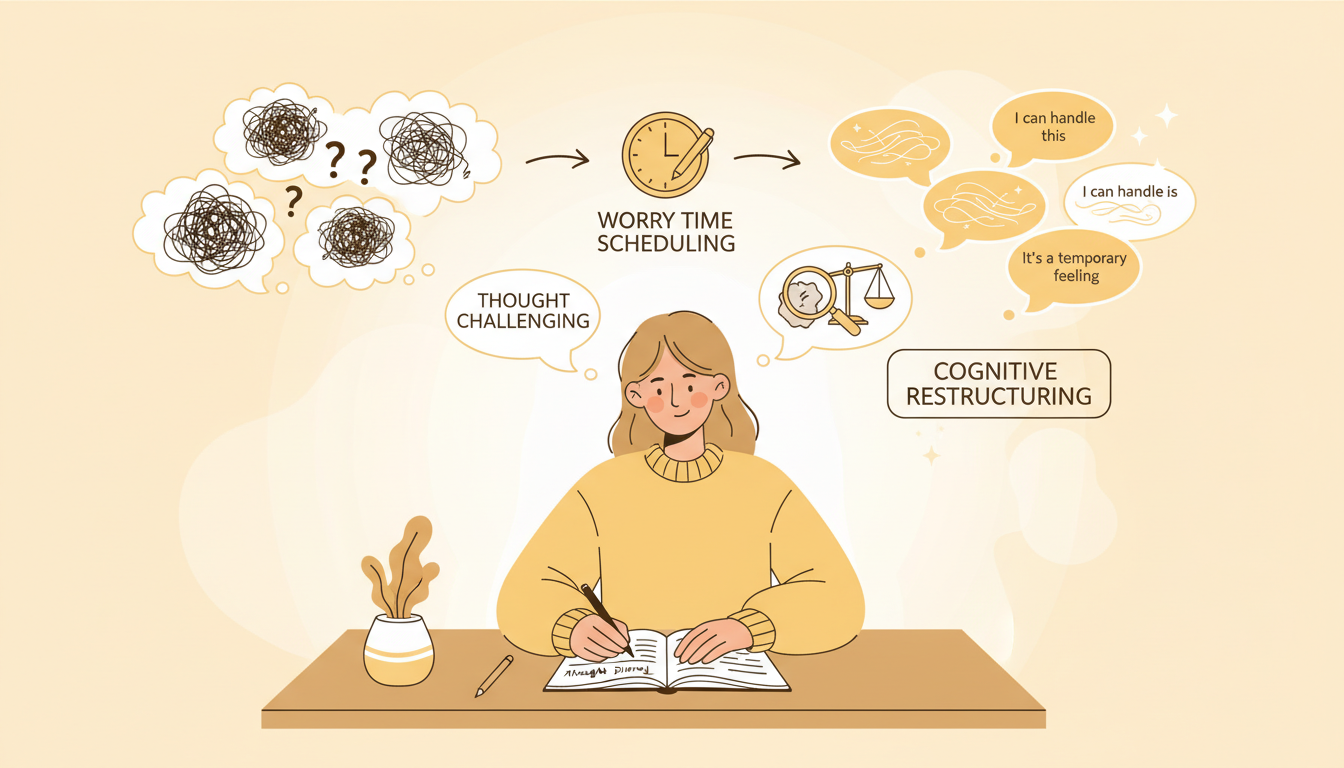
When you notice an anxious thought, ask yourself:
- What is the evidence for this thought?
- What is the evidence against it?
- Am I confusing a thought with a fact?
- What would I say to a friend who had this thought?
- What is the most realistic outcome?
This is not about positive thinking or dismissing your concerns. It is about examining your thoughts with curiosity rather than accepting them as absolute truths.
The Worry Journal
Writing down your worries externalises them, making them feel less overwhelming and more manageable. Research supports journaling as an effective anxiety management tool.
How to use a worry journal:
- When a worry arises, write it down briefly.
- Rate the intensity of the worry from 1 to 10.
- Note whether the worry is about something you can control or something you cannot.
- For worries within your control, write one small action step you can take.
- For worries outside your control, practise letting them go (this is a skill that improves with time).
Scheduled Worry Time
This counterintuitive technique involves setting aside a specific 15 to 20 minute period each day as your designated “worry time.” When anxious thoughts arise outside this period, you acknowledge them and postpone them: “I will think about this during my worry time.”
Research shows that this technique reduces the overall time spent worrying by giving your brain permission to delay rather than suppress anxious thoughts. Many people find that by the time their worry period arrives, the concerns feel less pressing.
Social Connection and Support
Anxiety often drives people towards isolation, but social connection is one of the most powerful protective factors for mental health. Mind emphasises that maintaining relationships, even when it feels difficult, is a key part of managing anxiety.
Practical steps:
- Tell at least one trusted person about your anxiety. Sharing the burden can be profoundly relieving.
- Join a local support group — Mind and Anxiety UK both offer groups across the UK.
- Consider online communities if face-to-face interaction feels too challenging initially.
- Volunteer — helping others can shift your focus and provide a sense of purpose.
- Maintain regular contact with friends and family, even if it is just a short text message.
Mindfulness and Relaxation
NICE guidelines recognise mindfulness-based approaches as beneficial for anxiety management. Mindfulness involves paying attention to the present moment without judgement, and research consistently shows it reduces anxiety symptoms.
Getting started with mindfulness:
- Try a free guided meditation app — the NHS Apps Library lists several that are clinically reviewed.
- Start with just 5 minutes a day and gradually increase.
- Practise informal mindfulness during everyday activities: washing up, walking, or eating.
- Be patient with yourself. Mindfulness is a practice, not a performance.
Creating Your Anxiety Management Plan
An effective anxiety management plan is personal and flexible. Consider creating one that includes:
- Daily non-negotiables: The one or two practices you will do every day, no matter what (e.g., morning breathing, evening walk).
- Early warning signs: Physical or emotional signals that tell you your anxiety is increasing.
- Go-to coping strategies: The techniques that work best for you when anxiety rises.
- Emergency plan: What to do during a panic attack or anxiety crisis, including helpline numbers.
- Support network: People you can contact when you need help.
Professional Support Options in the UK
If self-management strategies are not sufficient, the UK offers excellent professional support:
- NHS Talking Therapies — Free talking therapy, including CBT, that you can self-refer to. Visit the NHS website to find your local service.
- Your GP — Can discuss medication options and make referrals to specialist services.
- Mind — Offers information, support groups, and an Infoline (0300 123 3393).
- Anxiety UK — Provides support, helplines (03444 775 774), and access to therapists.
- Samaritans — Available 24/7 on 116 123 for anyone in emotional distress.
Moving Forward With Confidence
Managing anxiety is a journey, not a destination. There will be good days and difficult days, and that is entirely normal. The key is consistency — the small, daily practices that gradually rewire your brain’s response to stress.
Be compassionate with yourself. You are not failing if anxiety returns; you are learning. Every time you use a coping strategy, every time you choose not to avoid something because of anxiety, you are building resilience that will serve you for years to come.
Start with one technique from this guide. Practise it for a week. Then add another. Over time, you will build a personalised toolkit that helps you navigate anxiety with greater ease and confidence.
Related Articles

Breathing Exercises for Anxiety: 7 Techniques to Calm Your Mind
Breathing exercises are one of the fastest ways to calm anxiety. Try these 7 techniques and feel the difference in minutes.
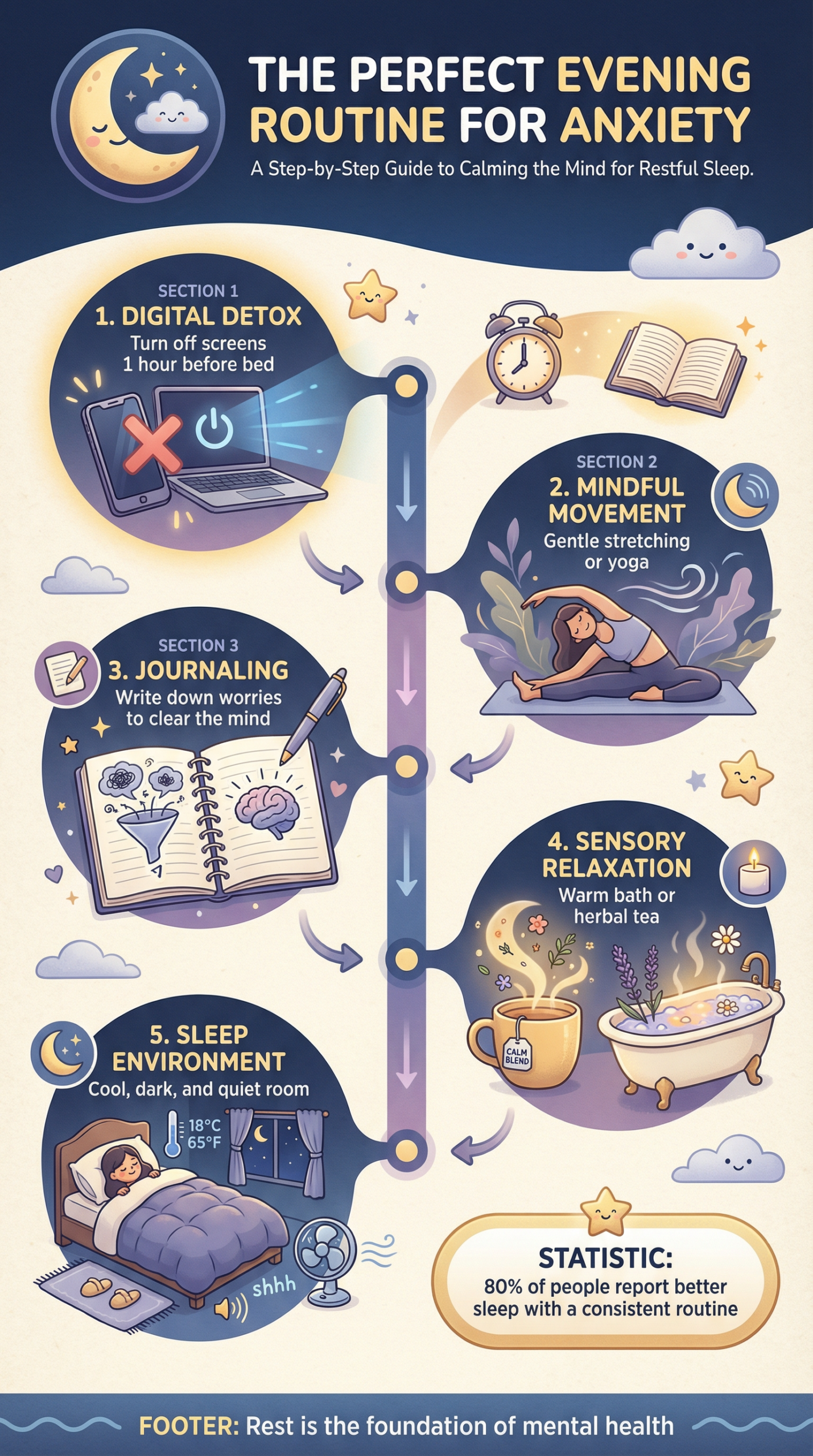
Calm Anxiety: The Perfect Evening Routine
Evening Routine to Ease Down Anxiety: A Comprehensive Guide Anxiety has become a common part of modern life, affecting millions worldwide. With the constant demands of work, social...

CBT for Anxiety: How It Works, Techniques and How to Access It
Learn how CBT helps with anxiety, including 5 proven techniques you can practise at home. Find out how to access CBT on the NHS or privately in the UK.