
How to Get Rid of Anxiety: Evidence-Based Approaches
Last updated:
Can You Really Get Rid of Anxiety?
If you have searched for “how to get rid of anxiety,” you are likely looking for something permanent — a way to stop the racing thoughts, the physical discomfort, and the constant worry once and for all. It is an understandable desire, and it is important to be honest about what is achievable.
Anxiety is a fundamental human emotion. Like fear, sadness, or anger, it serves an important purpose — it alerts us to potential threats and prepares us to respond. You cannot, and would not want to, eliminate it entirely. A life without any anxiety would actually be quite dangerous, as you would have no internal alarm system to keep you safe.
However, what you can do — and what the evidence strongly supports — is reduce anxiety to a level where it no longer dominates your life. You can reach a point where anxious moments are brief, manageable, and do not prevent you from doing the things that matter to you. That is a realistic and achievable goal.
Understanding What Keeps Anxiety Going
The Maintenance Cycle
Anxiety disorders persist not because of the initial trigger, but because of the patterns that develop around them. Understanding these maintenance factors is crucial for breaking free:
Avoidance: The more you avoid anxiety-provoking situations, the more your brain learns to treat them as genuinely dangerous. Avoidance provides short-term relief but long-term reinforcement of anxiety.
Safety behaviours: These are subtle things you do to “protect” yourself — carrying medication you never take, always sitting near exits, over-preparing for every scenario. While they feel helpful, they prevent you from discovering that you can cope without them.
Rumination: Going over the same worries repeatedly, analysing past events, and trying to think your way out of anxiety actually increases it. The mind becomes like a hamster wheel, generating more anxiety with every revolution.
Hypervigilance: Constantly scanning for threats — monitoring your body for symptoms, watching for signs of danger — keeps your nervous system in a heightened state of alert.
The Role of Core Beliefs
Beneath the surface of daily anxiety often lie deeper beliefs about yourself and the world. Common core beliefs in anxiety include:
- “The world is a dangerous place.”
- “I cannot cope with difficult situations.”
- “If something can go wrong, it will.”
- “I must be in control at all times.”
These beliefs, often formed in childhood or through difficult life experiences, act as a lens through which you interpret everything. Addressing them is where deeper, lasting change happens — and this is typically where professional therapy is most valuable.
Evidence-Based Treatments That Work
Cognitive Behavioural Therapy (CBT)
NICE recommends CBT as the first-line treatment for anxiety disorders. It has the strongest evidence base of any psychological therapy for anxiety, with research consistently showing that 50-60% of people experience significant improvement.
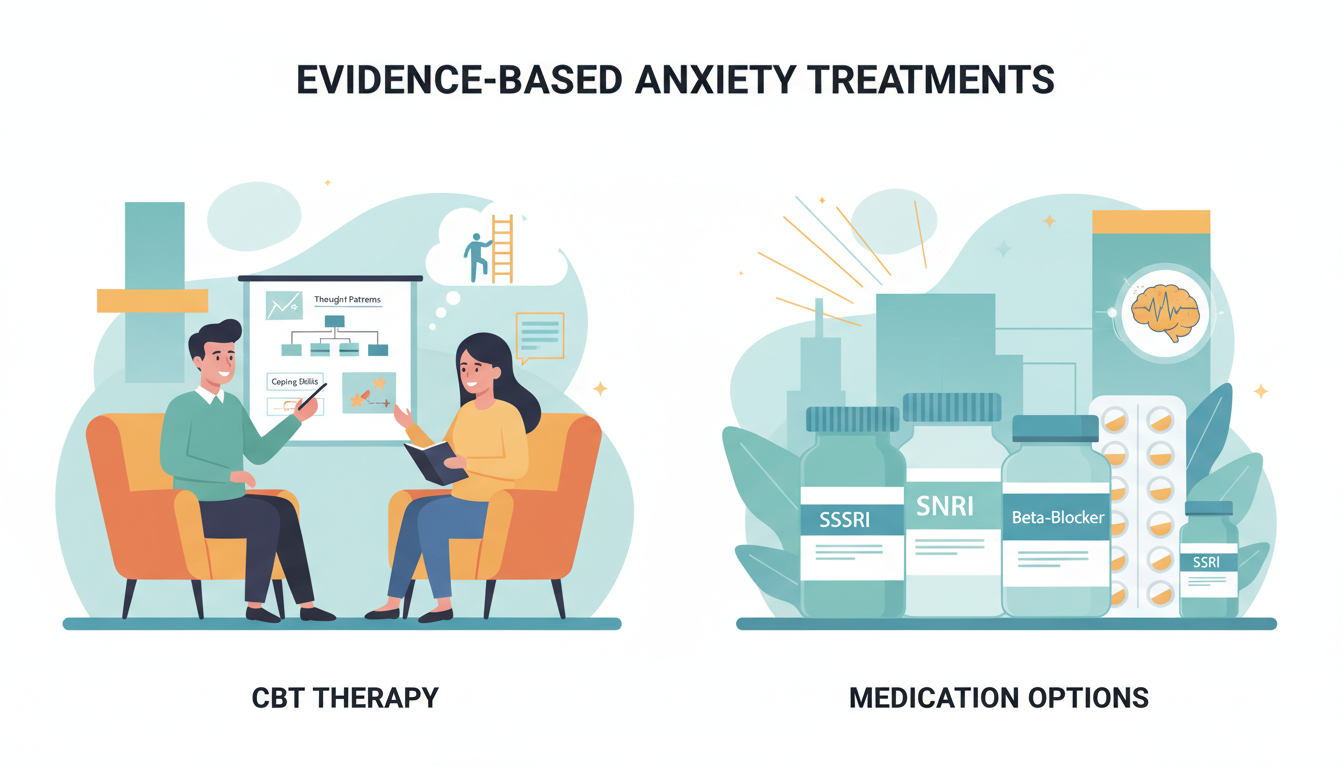
CBT for anxiety typically involves:
- Psychoeducation — understanding how anxiety works.
- Cognitive restructuring — identifying and challenging unhelpful thinking patterns.
- Graded exposure — systematically facing feared situations.
- Behavioural experiments — testing anxious predictions against reality.
- Relapse prevention — developing strategies to maintain progress.
NHS Talking Therapies offers CBT free of charge across England. You can self-refer in most areas without needing a GP referral. Waiting times vary by region, but guided self-help (a lighter version of CBT delivered with therapist support) is often available more quickly.
Applied Relaxation
NICE also recommends applied relaxation as a treatment for generalised anxiety disorder. This involves learning to recognise the earliest signs of tension and applying relaxation techniques before anxiety escalates. Over time, you learn to relax quickly and effectively in any situation.
Medication
For moderate to severe anxiety, medication can be an important part of treatment. NICE guidelines recommend:
- Sertraline as the first-choice SSRI for most anxiety disorders.
- Other SSRIs or SNRIs if sertraline is not suitable or effective.
- Pregabalin for generalised anxiety disorder when other treatments have not worked.
It is important to understand that medication typically takes 2-4 weeks to begin working, and side effects may occur initially before settling. Always discuss medication thoroughly with your GP and never stop taking prescribed medication abruptly without medical advice.
Benzodiazepines (such as diazepam) are no longer recommended for regular use due to the risk of dependence. They may occasionally be prescribed for very short-term use during acute crises.
Self-Help Strategies With Strong Evidence
Regular Physical Exercise
The evidence for exercise as an anxiety treatment is remarkably strong. A meta-analysis published in the British Journal of Sports Medicine found that exercise was as effective as medication for mild to moderate anxiety. The NHS recommends 150 minutes of moderate-intensity activity per week.
Exercise reduces anxiety through multiple mechanisms:
- Burning off excess stress hormones (adrenaline, cortisol).
- Releasing endorphins and other mood-boosting neurochemicals.
- Improving sleep quality.
- Providing a sense of achievement and self-efficacy.
- Offering a healthy distraction from rumination.
Mindfulness-Based Stress Reduction (MBSR)
Developed by Jon Kabat-Zinn, MBSR is an 8-week structured programme that teaches mindfulness meditation and yoga. Research, including studies cited in NICE guidance, shows that MBSR can significantly reduce anxiety symptoms. Some NHS trusts offer MBSR programmes, and many courses are available privately across the UK.
Reducing Stimulants and Depressants
Caffeine and alcohol are two of the most common substances that worsen anxiety. Caffeine directly stimulates the fight-or-flight response, while alcohol disrupts GABA and serotonin systems, often causing rebound anxiety the following day.
If you consume significant amounts of caffeine (more than 3-4 cups of coffee daily), consider reducing gradually. Many people report a noticeable improvement in anxiety within a week of reducing caffeine intake.
Digital Detox
Research from the Royal Society for Public Health in the UK has linked excessive social media use with increased anxiety. The constant stream of information, comparisons, and notifications keeps your nervous system in a state of heightened alertness that is incompatible with calm. Consider:
- Setting specific times for checking social media rather than constant scrolling.
- Turning off non-essential notifications on your phone and computer.
- Unfollowing accounts that trigger anxiety or make you feel inadequate.
- Having phone-free periods, particularly in the evening and first thing in the morning.
- Using apps that track and limit your screen time to build awareness of your habits.
Journaling and Expressive Writing
Research published in the journal Psychotherapy Research has shown that expressive writing — writing about your thoughts and feelings for 15 to 20 minutes — can significantly reduce anxiety symptoms over time. This works because writing externalises anxious thoughts, making them feel more manageable and less overwhelming. It also helps you identify patterns in your thinking that you might not notice otherwise.
You do not need to be a good writer. No one needs to read what you write. The act of putting pen to paper (or fingers to keyboard) is itself therapeutic.
Social Connection and Community
Anxiety tends to drive people towards isolation, yet social connection is one of the strongest protective factors against mental health problems. The Campaign to End Loneliness, a UK-based organisation, highlights that loneliness is as harmful to health as smoking 15 cigarettes a day. Maintaining meaningful connections — even when anxiety makes it difficult — is an important part of reducing anxiety over time.
This does not mean forcing yourself into large social gatherings. A meaningful conversation with one trusted person, a walk with a friend, or participation in an online support community all count. Mind and Anxiety UK both facilitate peer support groups across the UK that can be a gentle starting point if socialising feels daunting.
Addressing Root Causes
Trauma
For some people, anxiety has its roots in past traumatic experiences. If this resonates with you, trauma-focused therapies such as EMDR (Eye Movement Desensitisation and Reprocessing) or trauma-focused CBT may be particularly helpful. Both are recommended by NICE and available through the NHS.
Chronic Stress
If your anxiety is primarily driven by ongoing stressful circumstances — an overwhelming job, a difficult relationship, financial pressure — addressing those circumstances directly may be as important as learning to manage the anxiety itself. This might involve setting boundaries, seeking practical support, or making difficult decisions about your situation.
Physical Health Conditions
Several physical health conditions can cause or worsen anxiety, including thyroid disorders, vitamin deficiencies (particularly B12 and vitamin D), hormonal changes, and chronic pain. If your anxiety is unexplained or has come on suddenly, ask your GP to investigate potential physical causes.
A Practical Plan for Reducing Anxiety
Weeks 1-2: Foundation
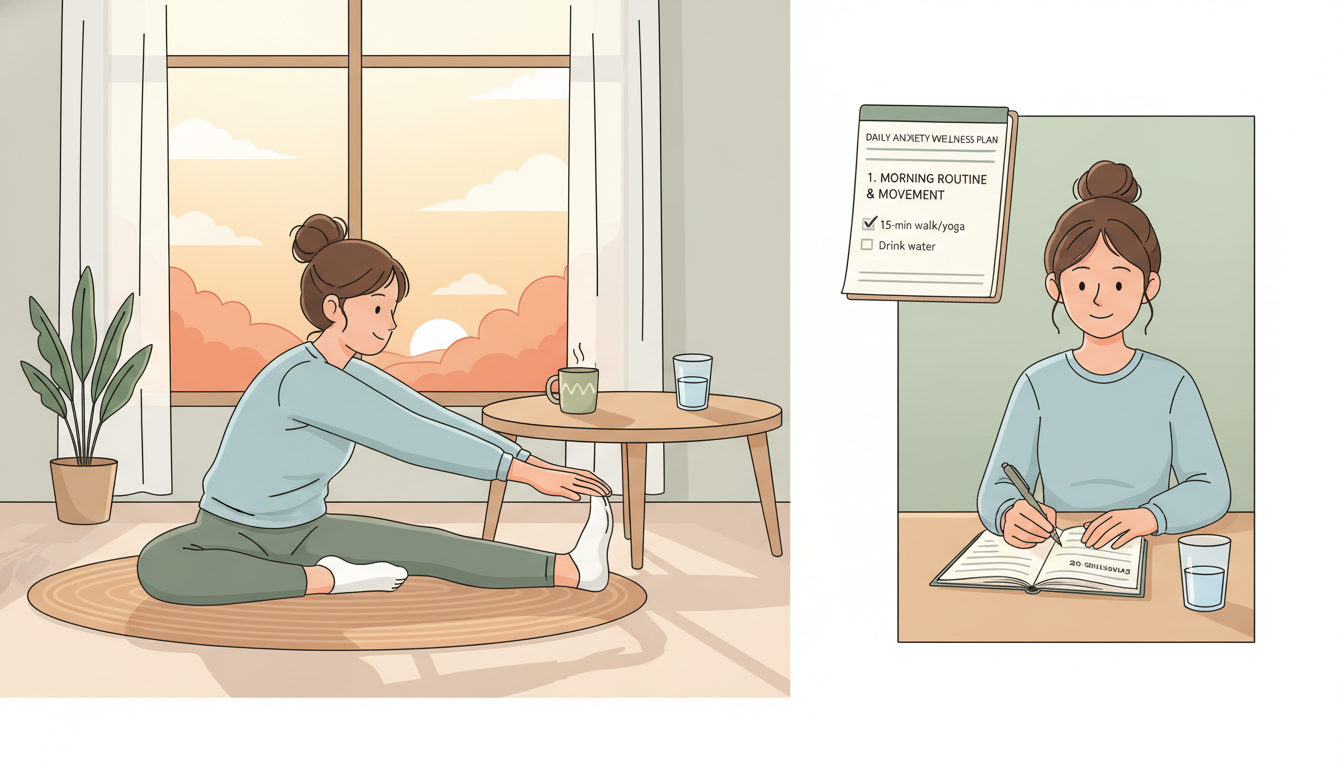
- Begin a daily breathing practice (5-10 minutes).
- Start a worry journal.
- Audit your caffeine and alcohol intake.
- Establish a consistent sleep routine.
Weeks 3-4: Building
- Add regular exercise (start with 3 sessions per week).
- Begin small exposure exercises.
- Try a mindfulness app or course.
- Reduce caffeine if applicable.
Weeks 5-8: Expanding
- Increase exposure challenges gradually.
- Practise thought challenging techniques.
- Consider self-referring to NHS Talking Therapies.
- Build social support.
Ongoing:
- Maintain the practices that work for you.
- Be prepared for setbacks and respond with self-compassion.
- Regularly review your progress and adjust your approach.
UK Support and Resources
- NHS Talking Therapies: Free psychological therapy — self-refer online.
- Mind: Infoline 0300 123 3393 — information and support.
- Anxiety UK: Helpline 03444 775 774 — specialist anxiety support.
- Every Mind Matters: Free NHS tool for creating a personalised action plan.
- Samaritans: 116 123 (free, 24/7) — for anyone in emotional distress.
- SHOUT: Text SHOUT to 85258 — crisis text support.
Getting rid of anxiety, in the sense of reducing it to a manageable level, is absolutely possible. It requires patience, persistence, and often a combination of approaches. But with the right support and strategies, you can reclaim your life from anxiety’s grip and build something genuinely good in its place.
Related Articles

Breathing Exercises for Anxiety: 7 Techniques to Calm Your Mind
Breathing exercises are one of the fastest ways to calm anxiety. Try these 7 techniques and feel the difference in minutes.
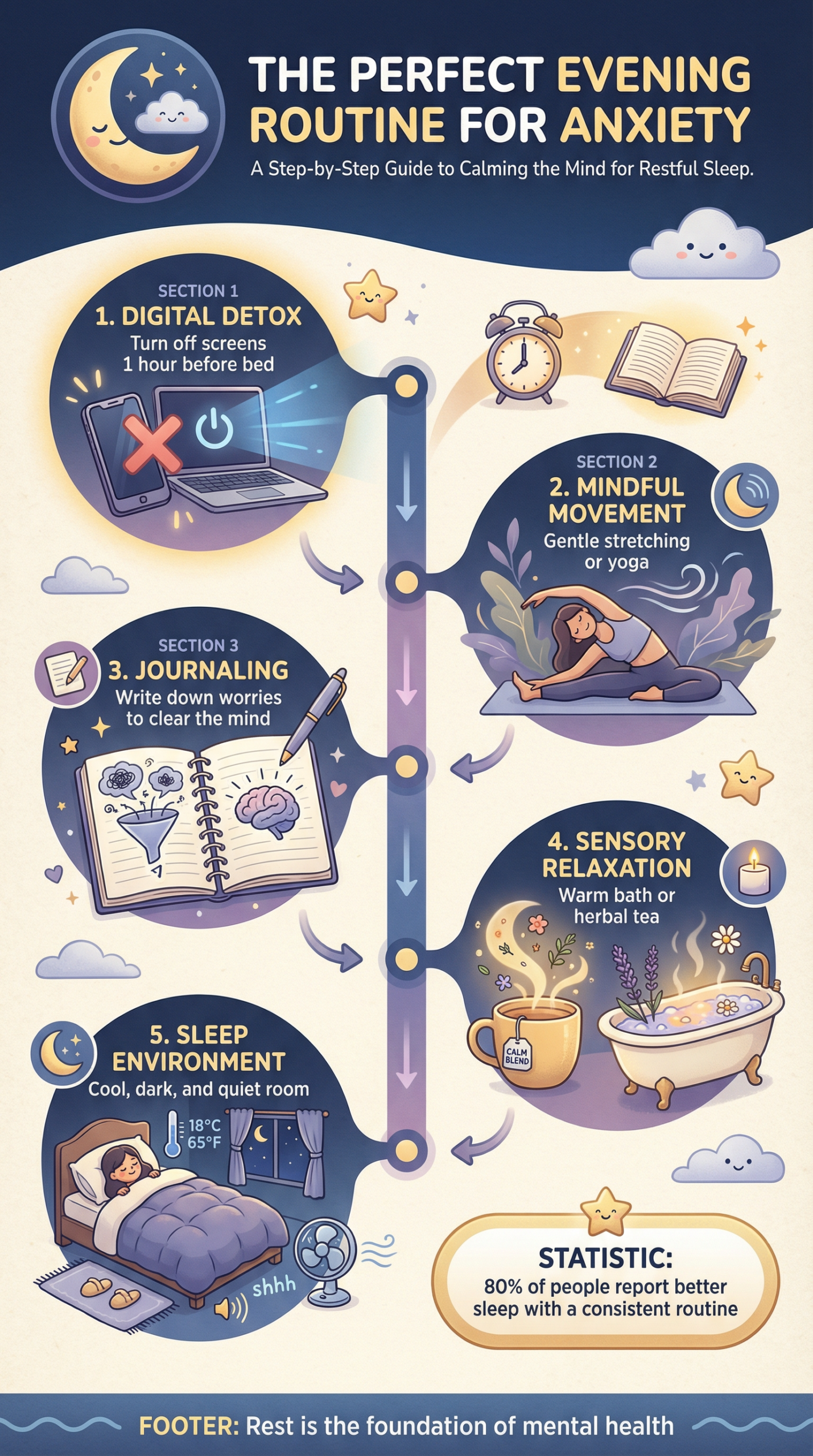
Calm Anxiety: The Perfect Evening Routine
Evening Routine to Ease Down Anxiety: A Comprehensive Guide Anxiety has become a common part of modern life, affecting millions worldwide. With the constant demands of work, social...
CBT for Anxiety: How It Works, Techniques and How to Access It
Learn how CBT helps with anxiety, including 5 proven techniques you can practise at home. Find out how to access CBT on the NHS or privately in the UK.