How to Calm Anxiety Fast: Practical Tips That Actually Work
Last updated:
Understanding Why Anxiety Feels So Urgent
When anxiety strikes, it can feel as though your world is closing in. Your heart races, your palms sweat, and your mind spins with worst-case scenarios. In these moments, you need something that works quickly — not a lengthy programme or a waiting list, but immediate, practical relief.
The good news is that decades of research, including guidance from the NHS and the National Institute for Health and Care Excellence (NICE), have identified a range of techniques that can genuinely help calm anxiety within minutes. These are not gimmicks or quick fixes that paper over deeper issues. They are evidence-based strategies that work with your body’s own stress response system.
According to the Mental Health Foundation, anxiety is one of the most common mental health conditions in the UK, affecting millions of people. Whether you experience generalised anxiety, panic attacks, or situational anxiety, the techniques in this guide can help you regain a sense of calm when you need it most.
The Science Behind Quick Anxiety Relief
To understand why certain techniques work so quickly, it helps to know what happens in your body when anxiety takes hold. When you perceive a threat — whether real or imagined — your sympathetic nervous system activates, triggering the “fight or flight” response. This floods your body with adrenaline and cortisol, leading to the physical symptoms you recognise: rapid heartbeat, shallow breathing, muscle tension, and that churning feeling in your stomach.
The techniques that calm anxiety fast work by activating your parasympathetic nervous system — the “rest and digest” system that counteracts the stress response. By deliberately engaging this system, you can signal to your brain that the perceived threat has passed, allowing your body to return to a calmer state.
Why Some Techniques Work Faster Than Others
Techniques that involve the body tend to work faster than purely cognitive approaches. This is because your nervous system responds more quickly to physical signals — like controlled breathing or cold temperature — than to rational thoughts. That does not mean cognitive techniques are less valuable; they simply work on a different timescale and are better suited to longer-term anxiety management.
7 Evidence-Based Techniques to Calm Anxiety Fast
1. The 4-7-8 Breathing Technique
Developed by Dr Andrew Weil and recommended by many NHS practitioners, the 4-7-8 technique is one of the most effective ways to calm anxiety quickly. It works by forcing your body into a state of relaxation through controlled breathing.
How to do it:
- Breathe in quietly through your nose for 4 seconds.
- Hold your breath for 7 seconds.
- Exhale slowly through your mouth for 8 seconds, making a gentle whooshing sound.
- Repeat this cycle 3 to 4 times.
The extended exhale is the key element here. It stimulates the vagus nerve, which activates your parasympathetic nervous system and slows your heart rate. Most people notice a difference after just two or three cycles.
2. The 5-4-3-2-1 Grounding Technique
When anxiety pulls you into spiralling thoughts, grounding techniques bring you back to the present moment. The 5-4-3-2-1 method is widely recommended by Mind, the mental health charity, and by NHS mental health services across the UK.
How to do it:
- Identify 5 things you can see around you.
- Identify 4 things you can touch and notice how they feel.
- Identify 3 things you can hear right now.
- Identify 2 things you can smell (or like the smell of).
- Identify 1 thing you can taste (or enjoy the taste of).
This technique works by redirecting your attention away from anxious thoughts and towards your immediate sensory experience, effectively interrupting the anxiety cycle.
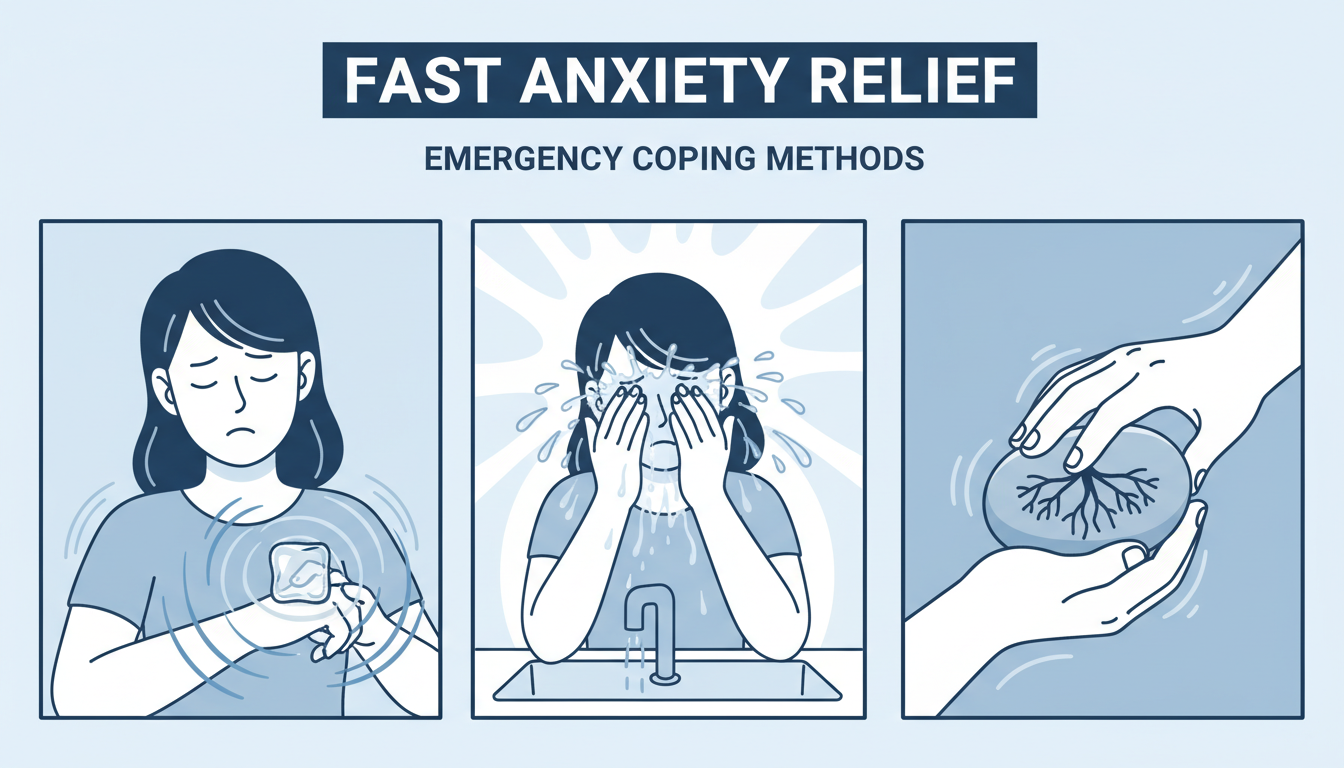
3. Cold Water Technique
Splashing cold water on your face or holding a cold object against your wrists can trigger what is known as the “dive reflex” — a physiological response that slows your heart rate and redirects blood flow. Research published in the British Journal of Sports Medicine has confirmed the calming effects of cold water immersion on the nervous system.
How to do it:
- Splash cold water on your face, focusing on your forehead and cheeks.
- Alternatively, hold ice cubes in your hands or place a cold flannel on the back of your neck.
- If possible, run your wrists under cold water for 30 seconds.
4. Progressive Muscle Relaxation
Recommended in NICE guidelines for the management of generalised anxiety disorder, progressive muscle relaxation involves deliberately tensing and then releasing different muscle groups. This helps you recognise the difference between tension and relaxation, and physically releases the muscle tightness that accompanies anxiety.
How to do it:
- Starting with your feet, tense the muscles as tightly as you can for 5 seconds.
- Release the tension suddenly and notice the feeling of relaxation for 10 seconds.
- Move upward through your body: calves, thighs, abdomen, hands, arms, shoulders, and face.
- The entire sequence takes about 5 to 10 minutes.
5. Movement and Physical Activity
The NHS recommends physical activity as a frontline treatment for mild to moderate anxiety. You do not need to run a marathon — even a brisk 10-minute walk can make a significant difference. Movement burns off the excess adrenaline and cortisol that fuel anxiety symptoms, and releases endorphins that improve your mood.
Quick options:
- Walk briskly around the block.
- Do 20 star jumps or jog on the spot for 2 minutes.
- Shake your hands and arms vigorously for 30 seconds to release tension.
- Stretch your neck, shoulders, and back.
6. Box Breathing
Used by military personnel and emergency services, box breathing is a simple technique that regulates your autonomic nervous system. It is particularly effective during acute anxiety or the early stages of a panic attack.
How to do it:
- Breathe in for 4 seconds.
- Hold your breath for 4 seconds.
- Breathe out for 4 seconds.
- Hold your breath for 4 seconds.
- Repeat for 4 to 6 cycles.
7. Name Your Anxiety
Research from UCLA found that simply labelling your emotions — a technique known as “affect labelling” — can reduce the intensity of those emotions. When you notice anxiety rising, try saying to yourself: “I notice that I am feeling anxious right now. This is anxiety, and it will pass.”
This technique creates psychological distance between you and the feeling, helping you recognise that anxiety is a temporary state rather than a permanent reality.
What to Do During a Panic Attack
If you are experiencing a full panic attack — with symptoms such as a racing heart, difficulty breathing, dizziness, or a sense of impending doom — the NHS recommends the following:
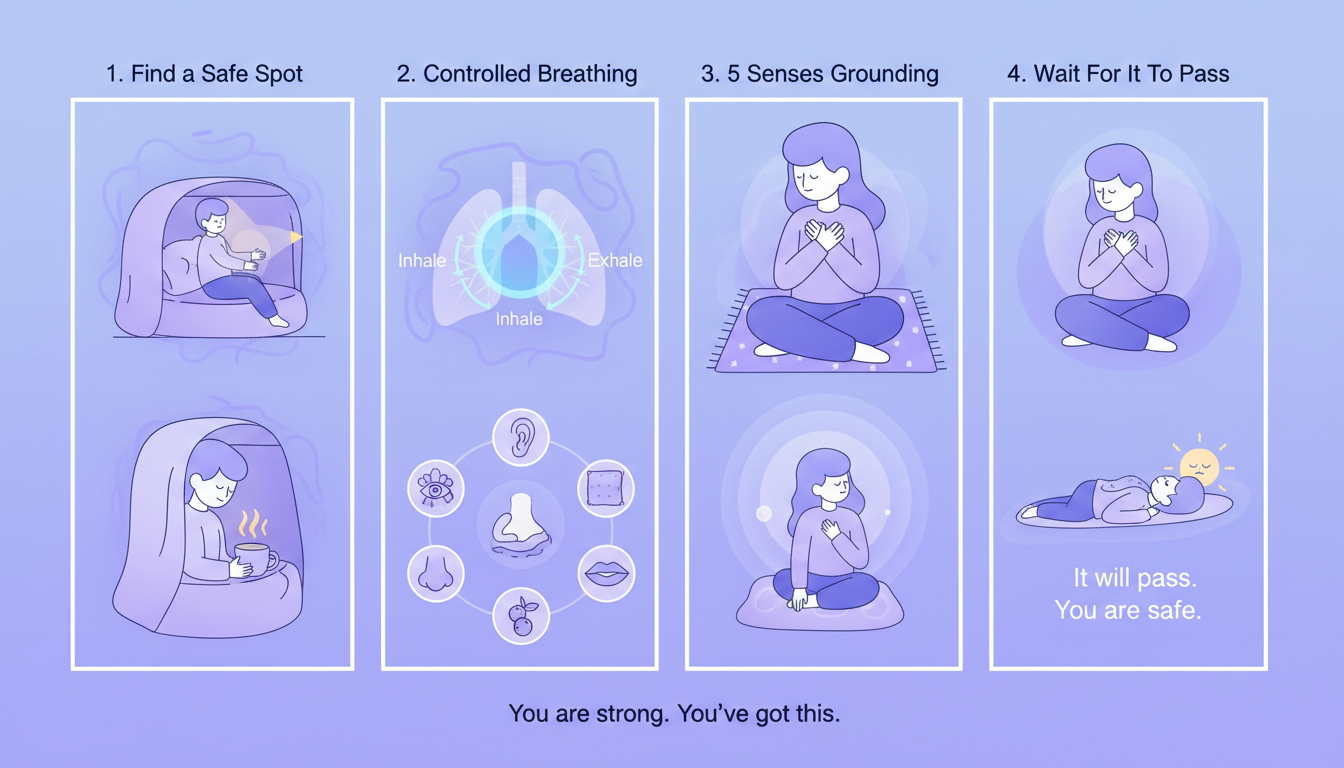
- Stay where you are if possible. Panic attacks typically peak within 10 minutes and subside within 20 to 30 minutes.
- Focus on your breathing. Use the 4-7-8 or box breathing technique.
- Remind yourself that this is a panic attack, that it is not dangerous, and that it will end.
- Stamp your feet on the ground to help ground yourself physically.
If you experience frequent panic attacks, it is important to speak with your GP. NICE guidelines recommend cognitive behavioural therapy (CBT) as the first-line treatment for panic disorder, and your GP can refer you through the NHS Talking Therapies programme (formerly IAPT).
Building These Techniques Into Your Daily Routine
While these techniques are designed to help in the moment, they become significantly more effective with regular practice. Think of it like learning any skill — the more you practise when you are calm, the more naturally these responses will come when you are anxious.
Practical suggestions:
- Practise one breathing technique for 5 minutes each morning.
- Use the 5-4-3-2-1 grounding exercise during your commute or lunch break.
- Try progressive muscle relaxation before bed to improve sleep quality.
- Set a daily reminder on your phone to check in with your body and notice any tension.
When to Seek Professional Help
Self-help techniques are valuable, but they are not a substitute for professional support when anxiety is significantly affecting your daily life. You should speak with your GP if:
- Anxiety is preventing you from doing things you normally enjoy.
- You are avoiding everyday situations because of anxiety.
- Your symptoms have persisted for several weeks.
- You are using alcohol, drugs, or other substances to cope.
- You are having thoughts of self-harm or suicide.
The NHS offers several free services, including NHS Talking Therapies, which you can self-refer to without needing a GP appointment. You can also contact Mind’s Infoline on 0300 123 3393 for information and advice, or text SHOUT to 85258 for immediate crisis support.
Moving Forward
Calming anxiety fast is about having the right tools ready when you need them. Not every technique will work for every person, and that is perfectly normal. Experiment with the methods described here, notice which ones resonate with you, and build them into your regular routine.
Remember: anxiety is not a sign of weakness. It is your brain’s alarm system working overtime, and it can be managed. By learning to calm your nervous system quickly, you are taking an important step towards greater wellbeing and a life that is not dictated by fear.
Related Articles
Breathing Exercises for Anxiety: 7 Techniques to Calm Your Mind
Breathing exercises are one of the fastest ways to calm anxiety. Try these 7 techniques and feel the difference in minutes.
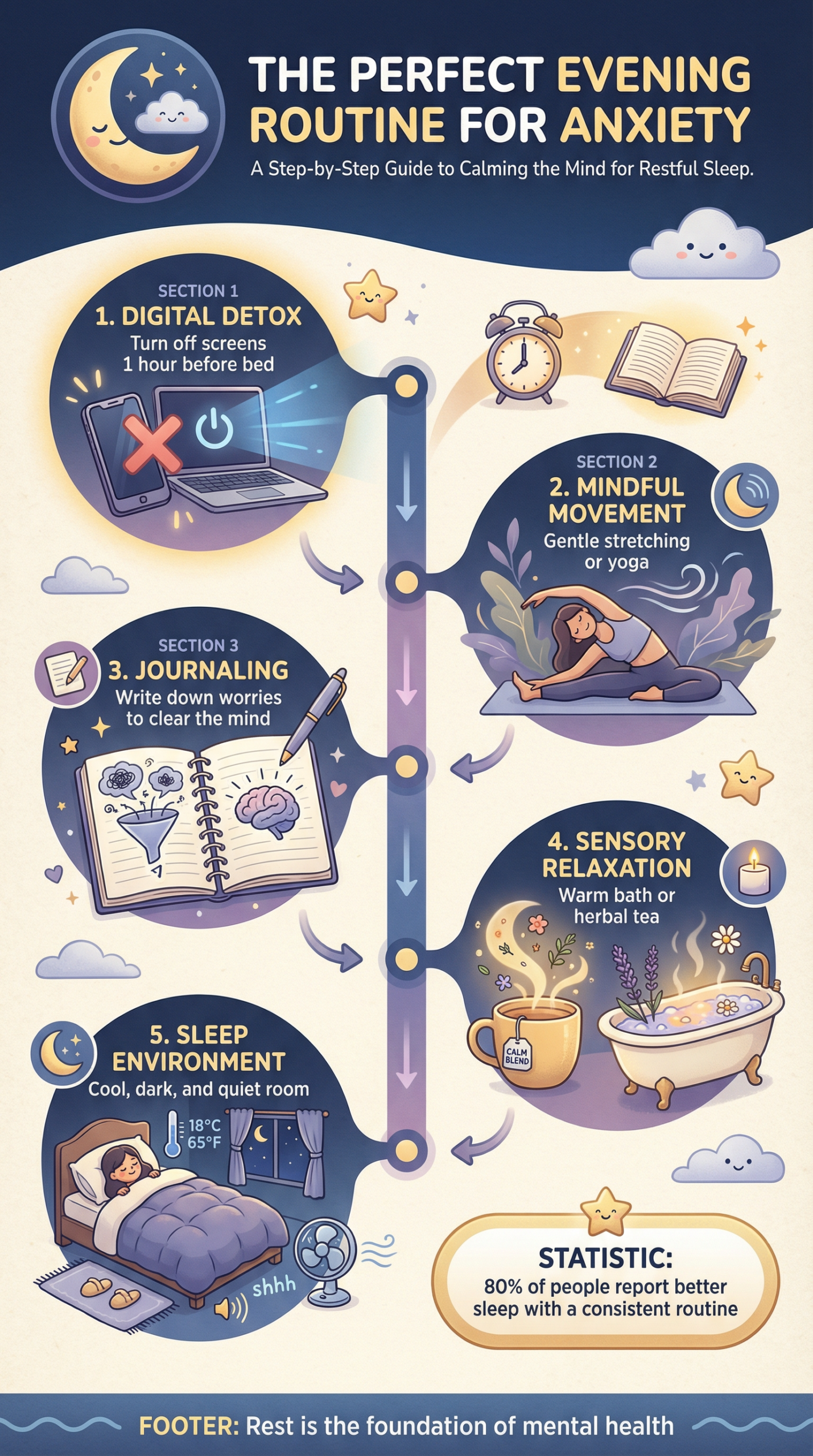
Calm Anxiety: The Perfect Evening Routine
Evening Routine to Ease Down Anxiety: A Comprehensive Guide Anxiety has become a common part of modern life, affecting millions worldwide. With the constant demands of work, social...
CBT for Anxiety: How It Works, Techniques and How to Access It
Learn how CBT helps with anxiety, including 5 proven techniques you can practise at home. Find out how to access CBT on the NHS or privately in the UK.