Last updated:
Evening Routine to Ease Down Anxiety: A Comprehensive Guide
Anxiety has become a common part of modern life, affecting millions worldwide. With the constant demands of work, social obligations, and personal challenges, anxiety can often feel overwhelming. Establishing an effective evening routine can be a powerful tool in managing anxiety, providing a structured way to unwind and prepare for restful sleep.
Understanding Anxiety
Anxiety is a natural response to stress, characterized by feelings of worry, nervousness, or unease. Common symptoms include restlessness, rapid heartbeat, and difficulty concentrating. These symptoms can significantly impact daily life, particularly by disrupting sleep and relaxation. Routines play a crucial role in managing anxiety by providing predictability and a sense of control.
The Science Behind Evening Routines
Routines help reduce stress and anxiety by signaling to our bodies that it’s time to wind down. Consistent evening routines align with the circadian rhythm, the natural internal process that regulates the sleep-wake cycle and repeats roughly every 24 hours. Research shows that maintaining a regular evening routine can improve mental health by reducing anxiety levels, enhancing sleep quality, and boosting overall well-being.
Setting the Stage for Relaxation
Creating a calming environment is essential for an effective evening routine. Consider the following:
- Lighting: Dim lights, use candles, or soft lamps to create a soothing atmosphere.
- Scent: Incorporate essential oils or incense like lavender or chamomile to promote relaxation.
- Decluttering: Organize your space to eliminate stress triggers and promote peace.
Incorporating Mindfulness and Meditation
Mindfulness involves being present and fully engaged in the moment, which can significantly reduce anxiety. Try simple mindfulness exercises such as focusing on your breath or body scans. Guided meditation practices, available through apps or online, can also help ease anxiety before bed, making them an ideal addition to your evening routine.
Unplugging from Technology
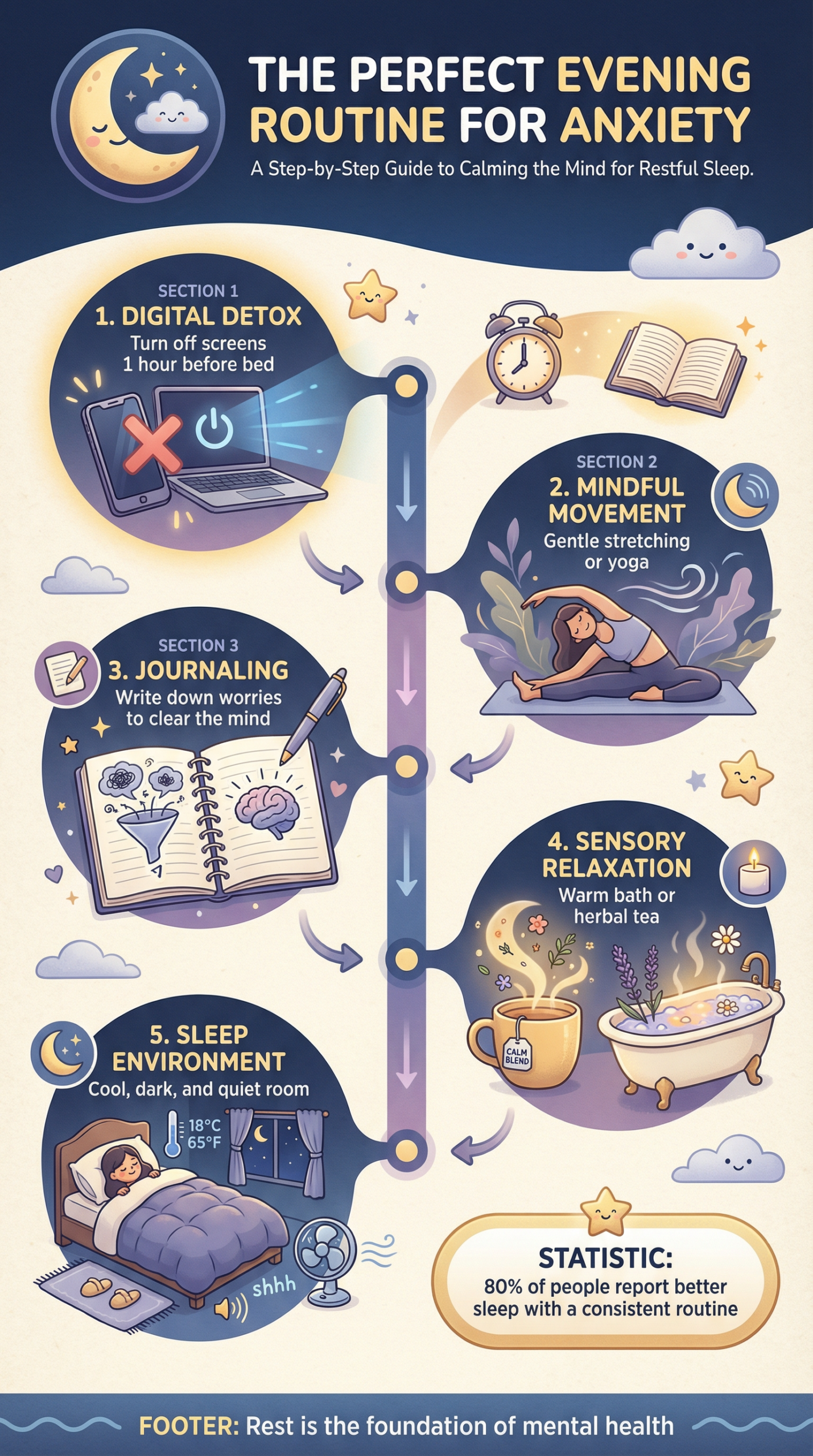
Screens emit blue light that can interfere with sleep quality and increase anxiety. Set boundaries by turning off devices at least an hour before bedtime. Instead, engage in activities like reading, journaling, or listening to calming music to prepare your mind for rest.
Establishing a Relaxing Bedtime Routine
Consistency in bedtime routines is key to reducing anxiety. Consider these calming activities:
- Reading: Choose a book that relaxes and captivates you.
- Gentle Yoga or Stretching: Engage in light exercises to release tension.
- Warm Bath or Shower: Use this time to unwind and soothe tired muscles.
- Journaling: Reflect on your day or practice gratitude to shift focus from stress to positivity.
Nutrition and Evening Diet
Diet can influence anxiety and sleep. Avoid caffeine and heavy meals before bed. Opt for calming teas like chamomile or peppermint and snacks such as almonds or bananas to promote relaxation and support restful sleep.
Conclusion
A well-structured evening routine is essential for reducing anxiety and improving sleep quality. Experiment with different elements to discover what works best for your lifestyle and preferences. By making these practices an enjoyable and sustainable part of your daily life, you can better manage anxiety and enjoy a more peaceful evening.
Frequently Asked Questions
Which technique works fastest in the moment?
For Calm Anxiety, this question is best answered with personalised guidance. If you are concerned, speak to your GP or contact NHS 111. The article above outlines the most relevant evidence-based approaches.
How long does it take to see results?
For Calm Anxiety, this question is best answered with personalised guidance. If you are concerned, speak to your GP or contact NHS 111. The article above outlines the most relevant evidence-based approaches.
What evidence supports these techniques?
For Calm Anxiety, this question is best answered with personalised guidance. If you are concerned, speak to your GP or contact NHS 111. The article above outlines the most relevant evidence-based approaches.
Related Articles
Breathing Exercises for Anxiety: 7 Techniques to Calm Your Mind
Breathing exercises are one of the fastest ways to calm anxiety. Try these 7 techniques and feel the difference in minutes.

Feeling Overwhelmed by Anxiety: How to Cope When It’s Too Much
Feeling overwhelmed by anxiety? Discover practical coping strategies for when anxiety feels like too much to handle on your own.

How to Get Rid of Anxiety: Evidence-Based Approaches
Want to get rid of anxiety for good? Explore evidence-based approaches that tackle anxiety at its root and deliver lasting results.