
Anxiety Fatigue: Why Anxiety Makes You So Tired
Last updated:
Introduction: The Exhaustion That Anxiety Brings
There is a particular kind of tiredness that comes with anxiety. It is not the satisfying fatigue you feel after a long walk or a productive day at work. It is a deep, pervasive exhaustion that settles into your bones and refuses to lift, no matter how much rest you get. You might sleep for ten hours and wake feeling as though you have not slept at all. You might find yourself too tired to do the things you enjoy, too tired to concentrate, too tired even to feel properly anxious, replaced instead by a numb, heavy fog.
This is anxiety fatigue, and it affects millions of people across the United Kingdom. Despite being one of the most common symptoms of anxiety disorders, fatigue is often overshadowed by the more dramatic symptoms, the racing heart, the panic attacks, the churning stomach. Yet for many people, the relentless exhaustion is the symptom that most significantly impacts their quality of life.
Understanding why anxiety makes you so tired is the first step toward reclaiming your energy.
Why Does Anxiety Cause Fatigue?
The Energy Cost of the Stress Response
The fight-or-flight response is an energy-intensive process. When your body goes into high alert, it mobilises glucose from the liver, increases heart rate and breathing, tenses muscles, and produces a surge of adrenaline and cortisol. In the short term, this gives you a burst of energy. But when anxiety is chronic and the stress response is activated repeatedly or continuously, the body’s energy reserves become depleted.
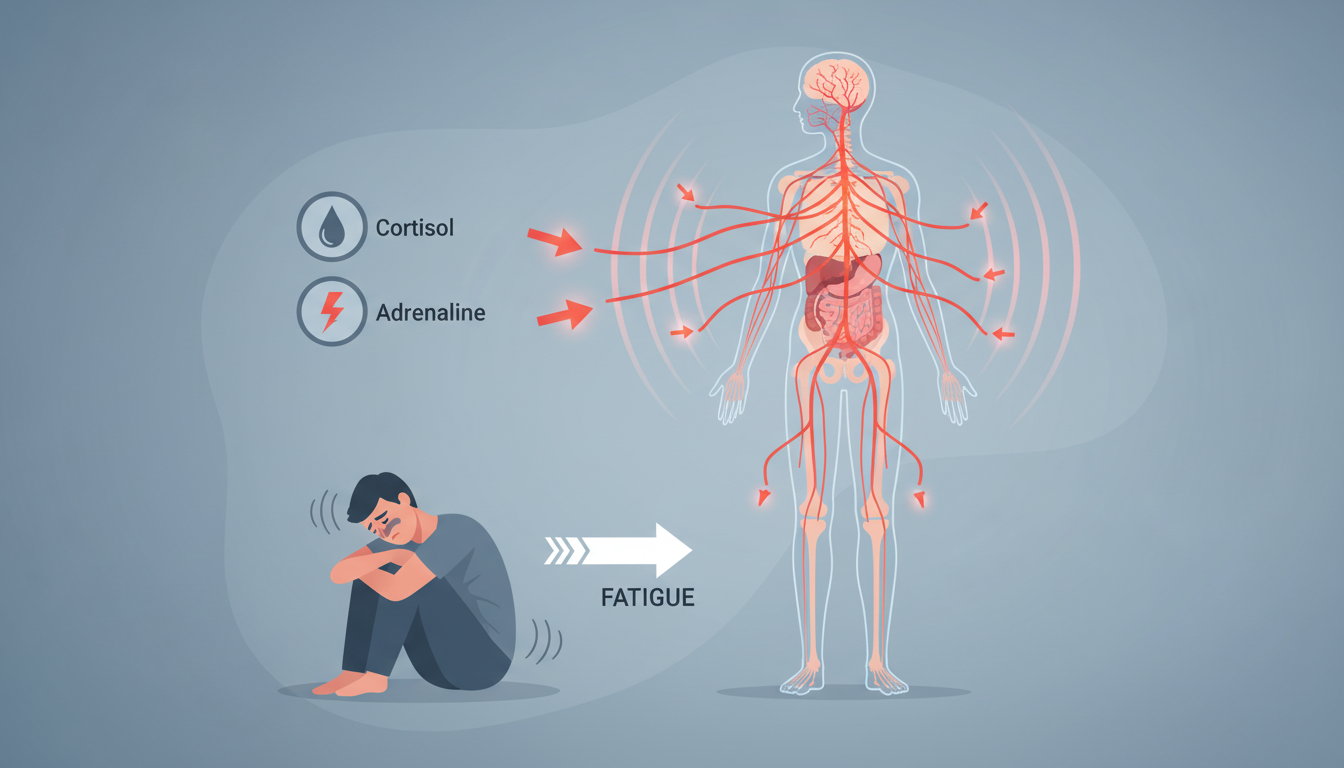
Think of it like running your car engine at high revs all day. Even if you are parked in your driveway, the fuel tank will eventually empty. Your body operates on the same principle. Chronic anxiety keeps your system running at full capacity, and the result is exhaustion.
The Adrenaline Crash
After a period of heightened anxiety, whether a panic attack, a stressful meeting, or hours of worry, adrenaline levels drop. This adrenaline crash can leave you feeling drained, weak, and heavy. Many people describe a distinctive pattern: intense anxiety followed by profound tiredness. The bigger the anxiety spike, the more severe the subsequent crash.
Cortisol and Adrenal Fatigue
Cortisol, the body’s primary stress hormone, follows a natural daily rhythm, peaking in the morning and declining through the day. In people with chronic anxiety, this rhythm can become disrupted. Cortisol levels may remain elevated throughout the day or spike at inappropriate times. Over time, some researchers suggest the adrenal system becomes less efficient at producing cortisol, though this concept, sometimes called “adrenal fatigue,” remains debated in medical literature. What is well-established is that chronic cortisol dysregulation is associated with fatigue, brain fog, and reduced physical performance.
Mental Exhaustion
Anxiety is not just a feeling; it is an intensely cognitive experience. Worrying requires enormous mental processing power. When you are anxious, your brain is constantly scanning for threats, running through worst-case scenarios, and trying to problem-solve situations that may never occur. This mental hyperactivity is exhausting in the same way that studying for an exam or concentrating on a difficult task is tiring. Research in cognitive neuroscience has shown that mental fatigue activates the same brain regions as physical fatigue and produces similar subjective feelings of tiredness.
Muscle Tension
Chronic muscle tension is a hallmark of anxiety, and it is remarkably energy-draining. Holding your muscles in a state of constant contraction requires continuous energy expenditure. It is the equivalent of doing a very long, very slow workout without ever recovering. This is why many people with anxiety report feeling physically sore and exhausted, even though they have not been physically active.
Disrupted Sleep
Perhaps the most significant contributor to anxiety fatigue is poor sleep. Anxiety and sleep have a complex, bidirectional relationship. Anxiety makes it harder to fall asleep, harder to stay asleep, and harder to achieve the deep, restorative stages of sleep. Even when someone with anxiety manages to sleep for a full eight hours, the quality of that sleep is often compromised. They may spend more time in lighter sleep stages and less time in slow-wave sleep (deep sleep) and REM sleep, which are essential for physical and mental recovery.
According to the Mental Health Foundation, approximately one-third of people in the UK have insomnia, and anxiety is one of the leading causes. The NHS recognises the strong link between mental health and sleep quality.
What Does Anxiety Fatigue Feel Like?
Anxiety fatigue can manifest in many ways, and people describe it differently. Common experiences include:
- A heavy, leaden feeling in the body, particularly in the limbs
- Difficulty getting out of bed in the morning despite adequate sleep
- Brain fog: difficulty concentrating, remembering things, or making decisions
- Lack of motivation to engage in activities you normally enjoy
- Feeling “wired but tired,” as though your mind is racing but your body is too exhausted to function
- Irritability and emotional sensitivity
- Physical weakness or a sense that everyday tasks require enormous effort
- Needing to rest after activities that would not normally be tiring
The Wired-But-Tired Paradox
One of the most confusing aspects of anxiety fatigue is the seemingly contradictory state of being simultaneously exhausted and unable to relax. Your body is crying out for rest, but your mind will not switch off. You lie in bed, bone-tired, but your thoughts spin relentlessly. This “wired but tired” state occurs because while your energy reserves are depleted, your sympathetic nervous system remains activated. Adrenaline and cortisol are still circulating, keeping you in a state of alertness even as your body desperately needs to recover.
This paradox can be incredibly frustrating and is often misunderstood by others. “If you’re so tired, just go to sleep” is advice that fails to grasp the fundamental dysfunction at the heart of anxiety fatigue.
Managing Anxiety Fatigue
Address the Underlying Anxiety
The most effective long-term strategy for combating anxiety fatigue is to treat the anxiety itself. As the anxiety reduces, the stress response will activate less frequently, and your body will have the opportunity to recover its energy reserves.
CBT: Recommended by NICE as a first-line treatment for anxiety disorders. CBT addresses the cognitive and behavioural patterns that maintain anxiety and can be accessed through NHS Talking Therapies.
Medication: SSRIs such as sertraline may be appropriate for moderate to severe anxiety. Discuss options with your GP. Note that fatigue can sometimes be a side effect of medication in the first few weeks, but this usually resolves.
Improve Sleep Quality
Given the central role of disrupted sleep in anxiety fatigue, improving sleep quality is crucial:
- Maintain a consistent sleep schedule, going to bed and waking up at the same time every day, including weekends
- Create a cool, dark, quiet sleeping environment
- Avoid screens for at least 30 minutes before bed
- Limit caffeine after midday
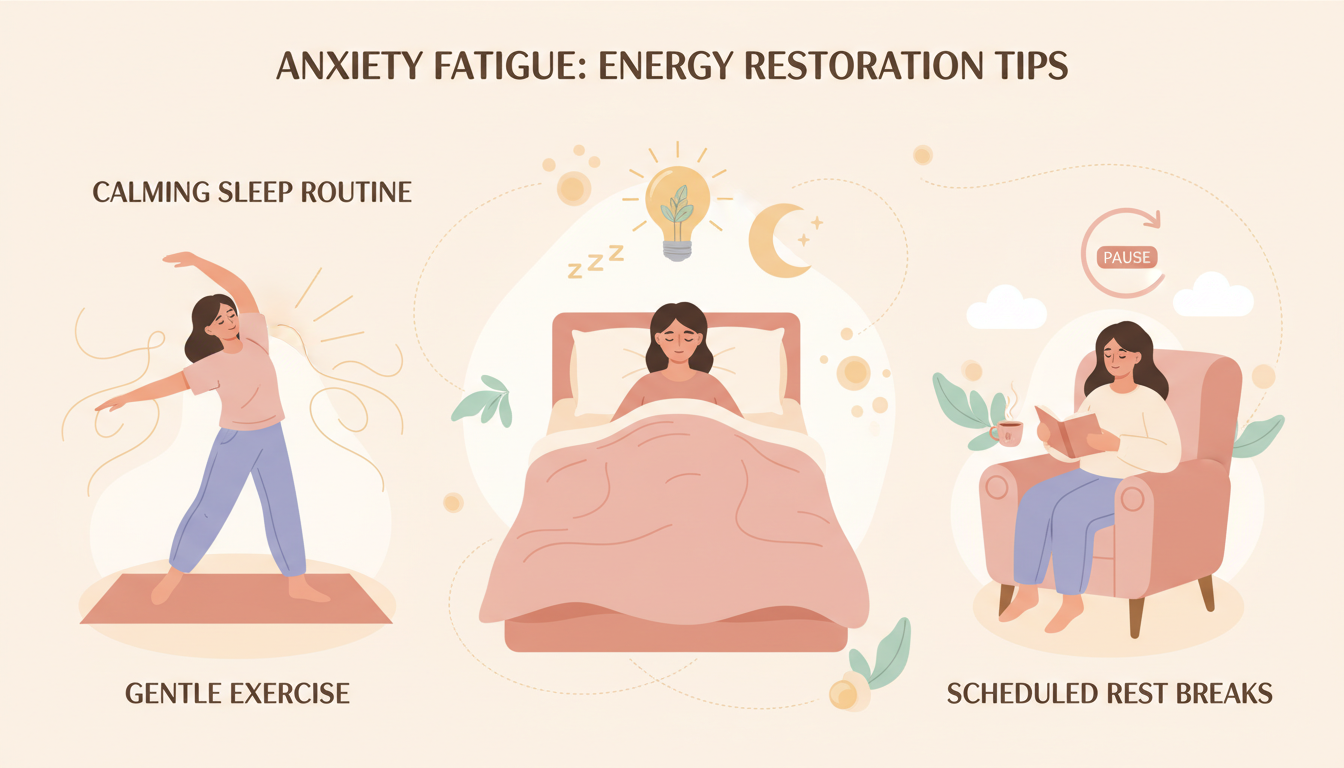
- Try a relaxation routine before bed, such as a warm bath, gentle stretching, or reading
- If you cannot sleep after 20 minutes, get up and do something calming in low light until you feel sleepy
The NHS website offers a comprehensive guide to improving sleep, and NHS Talking Therapies now offers CBT for insomnia (CBT-I), which is recommended by NICE as the first-line treatment for chronic insomnia.
Pacing and Energy Management
When you are experiencing anxiety fatigue, it is important to manage your energy carefully. This does not mean doing nothing; in fact, complete inactivity can worsen both anxiety and fatigue. Instead, try pacing: alternating periods of activity with periods of rest, and gradually increasing your activity levels as your energy improves.
- Break tasks into smaller, manageable steps
- Prioritise the most important activities and give yourself permission to let less important things wait
- Schedule rest periods into your day
- Celebrate small achievements rather than focusing on what you have not managed to do
Gentle Exercise
While vigorous exercise may feel impossible during periods of severe anxiety fatigue, gentle movement can actually help restore energy. Walking, gentle yoga, stretching, or swimming can improve circulation, reduce muscle tension, and release endorphins without overtaxing the body. Research consistently shows that regular physical activity improves both anxiety and fatigue. Start with what feels manageable and build up gradually.
Nutrition
When you are exhausted, it is tempting to reach for caffeine and sugar for quick energy boosts. However, these can create energy spikes and crashes that worsen fatigue in the long run. Instead, focus on regular, balanced meals that include complex carbohydrates, protein, healthy fats, and plenty of fruits and vegetables. Iron deficiency and vitamin B12 deficiency can also cause fatigue; your GP can check these with a simple blood test.
Social Support
Fatigue can make you want to withdraw from others, but isolation tends to worsen both anxiety and tiredness. Even small amounts of social contact, a brief phone call with a friend, a short walk with a neighbour, can help lift your mood and energy. Be honest with people you trust about how you are feeling; most people will understand and want to help.
When to See Your GP
Fatigue is a symptom of many conditions, not just anxiety. If your fatigue is severe, persistent, or not improving with self-help measures, see your GP. They can check for other causes such as anaemia, thyroid problems, diabetes, vitamin deficiencies, or chronic fatigue syndrome. They can also review any medications you are taking that might be contributing to tiredness.
UK Resources
- NHS Talking Therapies: Free therapy for anxiety and insomnia. Self-referral available.
- Mind: Mental health support and information. Infoline: 0300 123 3393.
- Anxiety UK: Helpline: 03444 775 774.
- Action for ME: If fatigue is your dominant symptom and is severe and prolonged, this charity may be helpful. Website: actionforme.org.uk.
Conclusion
Anxiety fatigue is a real, physiological consequence of living in a state of chronic stress. It is not laziness, it is not weakness, and it is not “all in your head.” Your body is doing an enormous amount of work every day to manage the stress response, and the exhaustion you feel is the natural result. By addressing the underlying anxiety, improving your sleep, managing your energy thoughtfully, and seeking professional support when needed, you can begin to reclaim the vitality that anxiety has stolen. Recovery may be gradual, but it is absolutely possible.
Frequently Asked Questions
Why Does Anxiety Cause Fatigue?
The fight-or-flight response is an energy-intensive process. When your body goes into high alert, it mobilises glucose from the liver, increases heart rate and breathing, tenses muscles, and produces a surge of adrenaline and cortisol. In the short term, this gives you a burst of energy. But when anxiety is chronic and the stress response is activated repeatedly or continuously, the body’s energy reserves become depleted.
What Does Anxiety Fatigue Feel Like?
Anxiety fatigue can manifest in many ways, and people describe it differently. Common experiences include:
When to See Your GP?
Fatigue is a symptom of many conditions, not just anxiety. If your fatigue is severe, persistent, or not improving with self-help measures, see your GP. They can check for other causes such as anaemia, thyroid problems, diabetes, vitamin deficiencies, or chronic fatigue syndrome. They can also review any medications you are taking that might be contributing to tiredness.
Related Articles
Anxiety Headache: Types, Triggers and Relief
Anxiety headaches are more common than you think. Identify your triggers, understand the types and find lasting relief today.
Anxiety and Stomach Problems: Why Anxiety Affects Your Gut
Discover why anxiety causes stomach problems and what you can do about it. Learn about the brain-gut connection, common symptoms, and evidence-based relief.
Anxiety Tremors: Why You Shake and How to Manage It
Anxiety tremors can be distressing but are very common. Understand why anxiety makes you shake and how to manage it effectively.