
Relationship Anxiety: Signs, Causes and How to Cope
Last updated:
What Is Relationship Anxiety?
Relationship anxiety is a pattern of excessive worry, doubt and fear centred on your close relationships. It involves persistent, intrusive concerns about whether your partner truly loves you, whether the relationship will last, or whether you are somehow not good enough for the people in your life. While it is not a standalone clinical diagnosis, relationship anxiety is widely recognised by psychologists and therapists as a significant source of distress that can affect romantic partnerships, friendships and family connections.
Relationship anxiety goes beyond the ordinary nervousness that most people feel at the start of a new relationship or during times of conflict. It is characterised by a near-constant undercurrent of doubt and insecurity that persists even when there is no evidence of a problem. You might be in a loving, stable partnership and still find yourself lying awake at night wondering whether your partner is secretly unhappy, or whether a casual comment they made was a sign that something is wrong.
In the United Kingdom, where approximately 8 million people are living with an anxiety disorder at any given time, the relational impact of this condition is substantial. According to the charity Relate, mental health difficulties are one of the most common reasons couples seek relationship counselling, and anxiety is frequently at the centre of these challenges.
Is Relationship Anxiety Normal?
If you are reading this and recognising yourself, the first thing to know is that you are not alone, and you are not broken. Relationship anxiety is remarkably common. A certain degree of anxiety in relationships is not only normal but healthy. It reflects the fact that you care about the people in your life and that your relationships matter to you.
The line between normal relationship concerns and problematic relationship anxiety lies in intensity, duration and impact. It is normal to occasionally wonder whether your partner is happy or to feel a flutter of nerves before a difficult conversation. It becomes a problem when these worries are constant, consume significant time and energy, lead you to behave in ways that damage your relationships, or cause you significant emotional distress.
Research published in the Journal of Social and Personal Relationships suggests that some degree of relationship vigilance may even serve an adaptive purpose, helping people attend to genuine relationship threats. However, when anxiety becomes the dominant emotional experience within a relationship, it shifts from helpful awareness to harmful hypervigilance.
Recognising that relationship anxiety exists on a spectrum can be validating. You do not need to meet a clinical threshold to deserve support, and acknowledging your anxiety is not a sign of weakness but of self-awareness.
Signs of Relationship Anxiety
Relationship anxiety can manifest in many different ways, and it often looks different from person to person. However, several common patterns tend to emerge. If you recognise several of these signs in yourself, it may be worth exploring whether relationship anxiety is affecting your connections.
1. Excessive Reassurance-Seeking
One of the most recognisable signs of relationship anxiety is the repeated need to hear that everything is okay. You may find yourself asking your partner whether they love you, whether they are angry with you, or whether the relationship is solid, sometimes multiple times a day. Each reassurance brings temporary relief, but the doubt returns quickly, often within hours or even minutes. Over time, this pattern can exhaust both you and your partner.
2. Doubting Your Partner’s Feelings
Even when your partner expresses love and commitment clearly and consistently, you struggle to fully believe it. You might interpret neutral behaviour as evidence that they are losing interest, or you might dismiss their expressions of affection as insincere. This persistent doubt is one of the most painful aspects of relationship anxiety because it robs you of the ability to enjoy the love that is genuinely being offered to you.
3. Fear of Abandonment
A deep, sometimes overwhelming fear that your partner will leave you, often without warning or clear reason. This fear can be triggered by small events such as a delayed text reply, a change in tone of voice, or your partner spending time with friends. The fear may feel utterly real and urgent, even when there is no objective evidence to support it.
4. Self-Sabotage
Paradoxically, relationship anxiety can lead you to engage in behaviours that undermine the very relationship you are afraid of losing. You might pick fights to test your partner’s commitment, push them away before they can reject you, or create drama as a way of seeking reassurance. This self-sabotage is rarely conscious; it is driven by anxiety’s distorted logic that it is better to control the end of a relationship than to be blindsided by it.
5. Overthinking and Rumination
You spend excessive time analysing your partner’s words, behaviours and body language for hidden meanings. A brief conversation can generate hours of post-event rumination. You might replay interactions endlessly, looking for evidence that something is wrong, or spend time comparing your relationship to others on social media. This constant mental analysis is exhausting and rarely produces any useful insight.
6. Avoiding Vulnerability
Because vulnerability feels dangerous when you have relationship anxiety, you may hold back from sharing your true feelings, needs or concerns. You might present a version of yourself that you believe is more acceptable, suppressing the parts of you that feel too messy, needy or real. This avoidance of vulnerability prevents the deep emotional intimacy that healthy relationships require.
Causes of Relationship Anxiety
Relationship anxiety rarely has a single cause. It typically develops through a combination of early life experiences, individual psychological factors and current relationship dynamics.
Attachment Styles
One of the most significant contributors to relationship anxiety is your attachment style, a pattern of relating to others that develops in early childhood based on your experiences with primary caregivers. Attachment theory, originally developed by John Bowlby and later expanded by Mary Ainsworth, identifies several key attachment styles that profoundly influence adult relationships.
Anxious attachment: If your caregivers were inconsistent in their availability, sometimes responsive and sometimes emotionally absent, you may have developed an anxious attachment style. As an adult, this manifests as a deep need for closeness and reassurance, heightened sensitivity to perceived rejection, and a tendency to become preoccupied with your relationships. People with anxious attachment often experience the most intense forms of relationship anxiety.
Avoidant attachment: If your caregivers were emotionally unavailable or dismissive of your needs, you may have learned to suppress your attachment needs and rely primarily on yourself. In adult relationships, this can look like emotional distance, discomfort with intimacy, and a tendency to withdraw when things feel too close. While avoidant individuals may not experience the classic signs of relationship anxiety, they often feel a deep-seated anxiety about losing their independence or being consumed by a relationship.
Disorganised attachment: If your caregivers were a source of both comfort and fear, perhaps due to abuse or severe unpredictability, you may have developed a disorganised attachment style. This can create a push-pull dynamic in adult relationships: you desperately want closeness but are simultaneously terrified of it. This style is often associated with the most intense and confusing forms of relationship anxiety.
Secure attachment: If your caregivers were consistently warm, responsive and reliable, you are more likely to have developed a secure attachment style. Securely attached individuals tend to feel comfortable with intimacy, communicate their needs effectively, and manage relationship challenges with greater resilience. They are not immune to relationship anxiety, but they typically experience it less intensely and recover from it more quickly.
It is important to note that attachment styles are not fixed. With self-awareness, therapy and positive relationship experiences, it is possible to move towards a more secure attachment style at any age.
Past Relationship Experiences
Previous experiences of betrayal, infidelity, abandonment or emotional abuse can leave lasting imprints that shape how you approach future relationships. If a past partner was unfaithful, for example, you may carry that vigilance into new relationships, looking for warning signs even when there are none. These responses are understandable protective mechanisms, but they can become problematic when they are applied indiscriminately to a trustworthy partner.
Low Self-Esteem
If you hold a deep belief that you are not good enough, not loveable, or fundamentally flawed, relationship anxiety often follows naturally. You may struggle to understand why someone would choose to be with you, leading to constant doubt about their feelings. Research from the University of Waterloo found that people with low self-esteem tend to underestimate their partner’s love and are more likely to interpret ambiguous relationship events negatively.
Existing Anxiety Disorders
If you already live with generalised anxiety disorder, social anxiety or another anxiety condition, it is common for this anxiety to extend into your relationships. The same cognitive patterns that drive generalised worry, catastrophising, intolerance of uncertainty, overestimation of threat, can readily attach themselves to relationship concerns.
How Anxiety Affects Romantic Relationships
Jealousy and Insecurity
Anxiety can fuel intense jealousy and insecurity that is disproportionate to the reality of the relationship. You might worry about your partner’s interactions with colleagues, feel threatened by their friendships, or catastrophise about the possibility of infidelity. These fears are driven not by evidence but by anxiety’s tendency to generate worst-case scenarios.
People-Pleasing and Boundary Difficulties
Anxiety can drive a pattern of people-pleasing in which you sacrifice your own needs, opinions and boundaries to avoid conflict or rejection. You might agree to things you do not want, suppress your feelings to keep the peace, or take on an unfair share of emotional labour. Over time, this can lead to resentment, burnout and a loss of self within the relationship.
Difficulty with Conflict
For many people with anxiety, conflict feels catastrophic. Even a mild disagreement can trigger a surge of panic, a fear that the relationship is ending, or an overwhelming urge to fix the situation immediately. This can lead to either avoiding conflict entirely, allowing problems to fester, or overreacting to minor issues, escalating small disagreements into major arguments.
How Anxiety Affects Friendships
Anxiety can be just as damaging to friendships as it is to romantic relationships, though it often operates more subtly.
Social Withdrawal
When anxiety is high, socialising can feel overwhelming. You may cancel plans at the last minute, stop reaching out to friends, or decline invitations because the thought of social interaction feels like too much. Over time, this withdrawal can lead to friendships fading, which in turn increases loneliness and worsens anxiety.
Overthinking Social Interactions
After spending time with friends, you might spend hours replaying conversations, analysing your words for potential mistakes, and worrying that you said something wrong or that your friends are secretly annoyed with you. This post-event rumination can make socialising feel exhausting and reduce the enjoyment you get from your friendships.
Difficulty Asking for Help
Anxiety can make you reluctant to lean on friends for support. You might worry about being a burden, about driving people away with your problems, or about being judged. This reluctance can leave you isolated at the times when you most need connection.
How Anxiety Affects Family Relationships
Parenting and Anxiety
Anxiety can significantly affect parenting. You may worry excessively about your children’s safety, health or wellbeing. You might find it difficult to allow age-appropriate independence, or you may become irritable and short-tempered due to the exhaustion that anxiety brings. Research published in the Journal of Child Psychology and Psychiatry suggests that parental anxiety can also increase the risk of anxiety in children, partly through modelling anxious behaviours and partly through overprotective parenting styles.
Relationships with Parents and Siblings
Anxiety can complicate relationships with your own parents and siblings. You may feel misunderstood if your family does not recognise or take your anxiety seriously. Family dynamics, particularly if they contributed to the development of your anxiety, can trigger symptoms during family gatherings. Setting boundaries with family members can be particularly challenging for people with anxiety.
The Anxiety Self-Fulfilling Prophecy
Perhaps the most painful aspect of anxiety in relationships is its tendency to create the very outcomes it fears. If you are afraid of being abandoned, your constant reassurance-seeking may push your partner away. If you are afraid of being judged, your withdrawal may cause friends to feel rejected and stop reaching out. If you are afraid of conflict, your avoidance may allow problems to grow until they become genuinely relationship-threatening.
Understanding this pattern is not about blame. It is about recognising that anxiety distorts your behaviour in ways that are counterproductive, and that by addressing the anxiety, you can break the cycle. The self-fulfilling prophecy of relationship anxiety is powerful, but it is not inevitable. Once you become aware of it, you gain the ability to respond differently.
How to Cope with Relationship Anxiety
Managing relationship anxiety is an ongoing process, not a one-off fix. The following strategies are drawn from evidence-based approaches and can help you build healthier, more secure connections.
Communicate Openly About Your Anxiety
Telling the people you are close to about your anxiety can be a powerful step. It helps them understand your behaviour, reduces the likelihood of misinterpretation, and opens the door for them to offer appropriate support. You do not need to share everything; simply explaining that you have anxiety and how it sometimes affects you can make a significant difference.
For example: “I want you to know that I sometimes get anxious about our relationship, and when I do, I might ask for a lot of reassurance. It is not because I do not trust you; it is because my anxiety makes me doubt things that I logically know are fine.”
Challenge Reassurance-Seeking
When you feel the urge to seek reassurance, try sitting with the discomfort for a period of time before acting on it. Ask yourself: “Is this anxiety talking, or is there a genuine issue that needs addressing?” Over time, learning to tolerate the uncertainty without seeking external reassurance builds resilience and reduces the compulsive quality of the behaviour. Start small, perhaps delaying the reassurance request by 10 minutes, and gradually increase the interval.
Identify and Challenge Anxious Thoughts
Cognitive behavioural techniques can help you recognise when anxiety is distorting your thinking. Common cognitive distortions in relationship anxiety include mind-reading (assuming you know what your partner is thinking), catastrophising (jumping to the worst possible conclusion), and emotional reasoning (assuming that because you feel anxious, something must be wrong). When you notice these patterns, ask yourself what evidence supports and contradicts the anxious thought.
Develop Tolerance for Uncertainty
Much of relationship anxiety is driven by an intolerance of uncertainty, a need to know for certain that everything is and will continue to be fine. The reality is that all relationships involve some degree of uncertainty, and learning to sit with that uncertainty without needing to resolve it immediately is one of the most powerful skills you can develop. Mindfulness practices can be particularly helpful for building this tolerance.
Work on Your Anxiety Individually
The most important thing you can do for your relationships is to work on your anxiety. This is not because the relationship problems are “your fault,” but because reducing your anxiety will naturally reduce the behaviours that strain your connections.
CBT: Recommended by NICE for anxiety disorders, CBT can help you challenge the thought patterns that fuel relationship anxiety. It is available through NHS Talking Therapies, which you can self-refer to without seeing your GP first.
Schema therapy: If your anxiety is deeply rooted in early experiences, schema therapy may be particularly helpful. It addresses long-standing patterns such as abandonment, defectiveness or emotional deprivation that underlie relationship difficulties.
Emotion-focused therapy (EFT): Originally developed for couples, EFT helps individuals and partners understand and regulate the emotional patterns that drive relationship distress. It has a strong evidence base for improving attachment security.
Set Healthy Boundaries
Learning to set and maintain boundaries is essential for people with anxiety. This includes boundaries with others, such as saying no, expressing your needs, and limiting contact with people who worsen your anxiety. It also includes boundaries with yourself, such as not checking your partner’s phone, limiting how many times you seek reassurance, and not cancelling plans because of anxiety.
Practise Self-Compassion
Anxiety in relationships often comes with a heavy burden of guilt and self-criticism. You may feel guilty for being “difficult” or “needy.” Practising self-compassion, treating yourself with the same kindness and understanding you would offer a friend, can reduce the shame that surrounds relationship anxiety and help you respond to yourself more constructively. Research by Kristin Neff at the University of Texas has consistently shown that self-compassion is associated with greater emotional resilience and healthier relationship behaviours.
Consider Couples or Family Therapy
If anxiety is significantly affecting your relationship, couples therapy can help both partners understand the dynamic, improve communication, and develop strategies for managing anxiety within the relationship. In the UK, Relate offers affordable counselling both in person and online.
Supporting a Partner with Relationship Anxiety
If someone you love has relationship anxiety, your role matters more than you might realise. Here are some ways you can help.
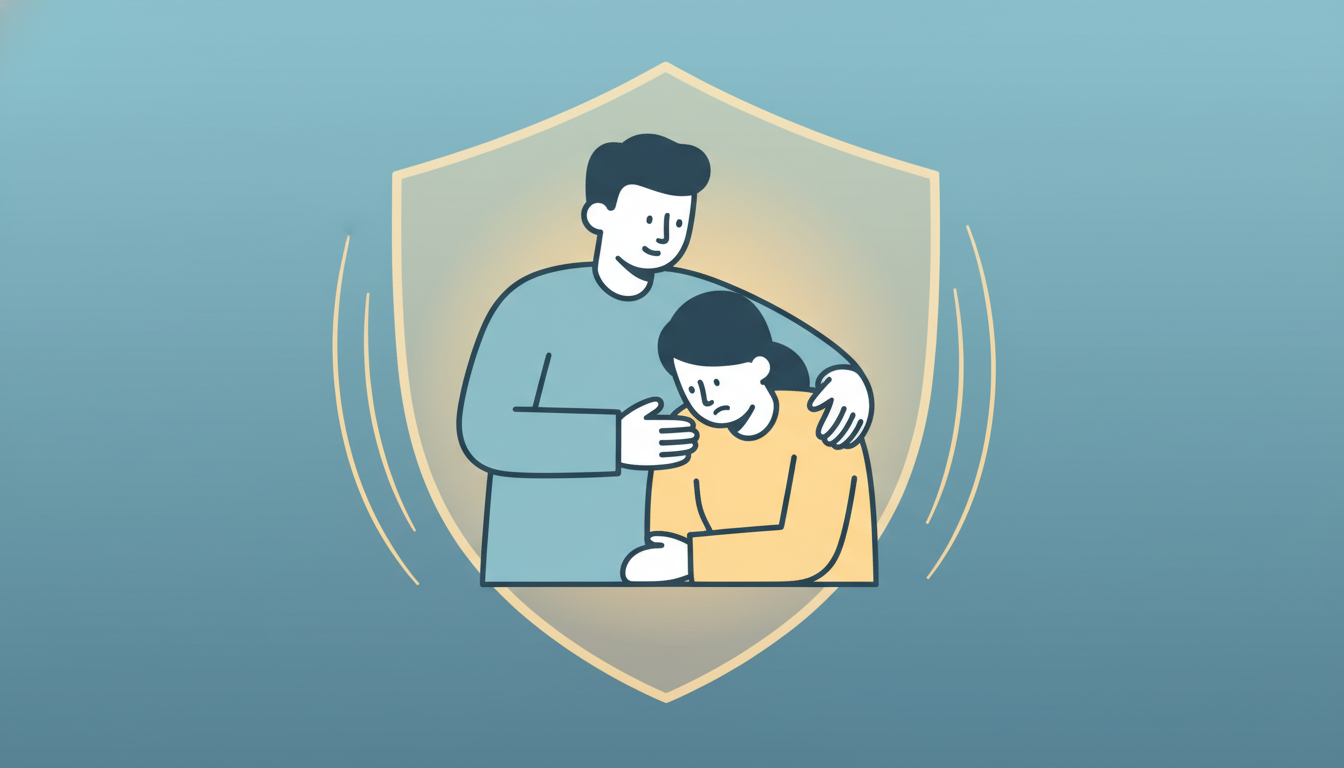
Educate Yourself
Understanding anxiety as a condition, not a choice or a character flaw, helps you respond with empathy rather than frustration. Learn about how anxiety affects thinking and behaviour, so that you can recognise when anxiety is driving your partner’s actions rather than taking those actions at face value.
Offer Reassurance, but Set Limits
It is natural and kind to reassure your partner. However, if reassurance-seeking has become a compulsive pattern, providing unlimited reassurance can actually reinforce the anxiety cycle. Work together to find a balance. You might agree on a compassionate phrase you can both use when anxiety is driving the conversation, something like: “I understand your anxiety is speaking right now. I love you, and we are okay.”
Do Not Take It Personally
Your partner’s anxiety is not a reflection of your worth or your relationship’s quality. Their doubts and fears are generated by anxiety, not by anything you have done wrong. Remembering this can help you stay calm and supportive during difficult moments.
Encourage Professional Support
Gently encourage your partner to seek professional help if their anxiety is significantly affecting their wellbeing or your relationship. Frame this as an act of care, not criticism. You might say: “I can see how much this is affecting you, and I want you to get the support you deserve.”
Look After Yourself
Supporting someone with anxiety can be emotionally demanding. Make sure you are also getting the support you need, whether through friends, your own therapy, or a support group. You cannot pour from an empty cup, and looking after your own wellbeing is not selfish; it is essential.
Be Patient with Progress
Recovery from anxiety takes time. Progress is often non-linear, with good days and bad days. Celebrate small victories and try not to become discouraged by setbacks. Your consistent presence and patience can be one of the most healing forces in your partner’s recovery.
When to Seek Professional Help
While some degree of relationship anxiety is manageable with self-help strategies, there are times when professional support is important. Consider seeking help if:
- Your anxiety about relationships is constant and feels uncontrollable
- You are unable to enjoy your relationships because of persistent worry and doubt
- Your anxiety-driven behaviours are causing significant conflict or distress in your relationships
- You are avoiding relationships entirely because of fear
- Your anxiety is accompanied by depression, panic attacks, or other mental health difficulties
- You are using alcohol, drugs or other substances to cope with relationship anxiety
- Your anxiety is significantly affecting your ability to work, sleep or carry out daily activities
A GP, therapist or counsellor can help you understand the roots of your relationship anxiety and develop a tailored plan for managing it. You do not need to wait until things are severe to ask for help; early intervention often leads to better outcomes.
UK Resources
- NHS Talking Therapies: Free talking therapy for anxiety disorders. You can self-refer without seeing your GP first. Visit nhs.uk to find your local service.
- Relate: The UK’s largest provider of relationship counselling for couples, families and individuals. Available in person and online. Website: relate.org.uk.
- Mind: Information and support for mental health. Infoline: 0300 123 3393. Website: mind.org.uk.
- Anxiety UK: Support for people living with anxiety disorders. Helpline: 03444 775 774. Website: anxietyuk.org.uk.
- Family Lives: Support for parents and families. Helpline: 0808 800 2222.
- Carers UK: If caring for someone with anxiety is affecting you. Helpline: 0808 808 7777.
- Samaritans: If you need to talk to someone urgently, call 116 123 (free, 24 hours a day).
Moving Forward
Anxiety does not just affect the person who has it; it ripples outward into every relationship in their life. But anxiety does not have to define or destroy your connections. With self-awareness, open communication, professional support and the willingness to work on both the anxiety and the relational patterns it creates, it is possible to build and maintain deeply fulfilling relationships.
You are not too anxious to be loved. Your anxiety is not a reason to give up on the connections that matter to you. Help is available, recovery is possible, and healthier, happier relationships are within reach. If relationship anxiety is affecting your life, consider reaching out to your GP, self-referring to NHS Talking Therapies, or contacting one of the organisations listed above. You deserve relationships that bring you joy, not just anxiety.
Frequently Asked Questions
Is relationship anxiety normal?
A certain level of anxiety in relationships is entirely normal and reflects the fact that your relationships matter to you. Most people experience some degree of nervousness or worry in their close relationships, particularly during the early stages of a partnership, during times of change, or when conflict arises. Relationship anxiety becomes a concern when it is persistent, disproportionate to the situation, and significantly affects your ability to enjoy and maintain your relationships. If your anxiety is causing you regular distress or driving behaviours that damage your connections, it is worth seeking support.
Can relationship anxiety ruin a relationship?
Left unaddressed, relationship anxiety can place significant strain on a relationship. The patterns it drives, such as excessive reassurance-seeking, jealousy, withdrawal and self-sabotage, can erode trust and intimacy over time. However, relationship anxiety does not have to be a death sentence for your partnership. Many couples work through relationship anxiety successfully, often emerging with a stronger and more honest connection. The key is recognising the anxiety, communicating openly about it, and seeking appropriate support. Couples therapy through organisations like Relate can be particularly helpful.
How do I stop overthinking in my relationship?
Overthinking in relationships is often driven by a need for certainty and control. Strategies that can help include practising mindfulness to stay grounded in the present moment rather than getting lost in hypothetical scenarios, scheduling a specific “worry time” each day and postponing anxious thoughts until then, challenging catastrophic thoughts by asking “What is the evidence for and against this thought?”, and engaging in activities that fully absorb your attention. CBT, available free through NHS Talking Therapies, is particularly effective at addressing the cognitive patterns that fuel overthinking.
What causes sudden relationship anxiety?
Sudden onset of relationship anxiety can be triggered by several factors. These include a specific event within the relationship (such as a disagreement, a perceived slight, or discovering something unexpected about your partner), external stressors (such as job loss, bereavement, or health concerns) that spill over into your relationship, hormonal changes (such as during pregnancy, postpartum, or the menopause), a partner’s change in behaviour (such as working longer hours or seeming more distant), or reminders of past relationship trauma. Sometimes, relationship anxiety surfaces when a relationship reaches a new level of commitment, such as moving in together, getting engaged, or having a child, because the stakes feel higher.
What are the signs of relationship anxiety?
The most common signs of relationship anxiety include excessive reassurance-seeking, persistent doubt about your partner’s feelings despite evidence of their commitment, fear of abandonment, self-sabotaging behaviours, overthinking and analysing your partner’s words and actions, avoiding emotional vulnerability, difficulty trusting your partner, comparing your relationship to others, feeling anxious when your partner is not in contact, and experiencing physical symptoms of anxiety (such as a racing heart, nausea, or difficulty sleeping) in response to relationship concerns.
How does anxiety affect intimacy?
Anxiety can affect both emotional and physical intimacy in significant ways. Emotionally, anxiety can make it difficult to be fully present with your partner, to share your true feelings, or to allow yourself to be vulnerable. You may hold back parts of yourself out of fear of rejection or judgement. Physically, anxiety activates the sympathetic nervous system, which can reduce desire, make it difficult to relax during intimate moments, and contribute to difficulties with arousal or sexual function. The performance anxiety that can develop around physical intimacy often creates its own self-reinforcing cycle. Open communication with your partner and, if needed, support from a therapist experienced in sexual health can help address these difficulties.
Can you have relationship anxiety with a good partner?
Absolutely. This is one of the most confusing and frustrating aspects of relationship anxiety. You can have a loving, committed, trustworthy partner and still experience intense anxiety about the relationship. This is because relationship anxiety is often driven by internal factors, such as your attachment style, past experiences, self-esteem and general anxiety levels, rather than by anything your current partner is doing. Recognising that the anxiety is coming from within you, rather than from the relationship itself, can be an important first step towards addressing it.
Related Articles
Sleep Anxiety: Causes, Symptoms and How to Break the Cycle
Sleep anxiety keeps millions awake at night. Learn what causes it, how to recognise the symptoms, and evidence-based techniques to finally get restful sleep.

Anxiety at Work: Managing Workplace Anxiety Effectively
Workplace anxiety affects millions in the UK. Discover practical strategies to manage anxiety at work and protect your performance.

Anxiety in Social Situations: Practical Coping Strategies
Social situations can trigger anxiety for many people. Find practical coping strategies to face social anxiety with more confidence.